Description
Key Technical Specifications
| Parameter | CP451-50 |
|---|---|
| Manufacturer | Yokogawa |
| Model | CP451-50 |
| Product Type | Processor Module |
| Processor Module Family | CP451 |
| Applicable FCS | AFV300 / AFV400 |
| System | Yokogawa CENTUM family |
| Explosion Protection | Standard type, no explosion protection |
| Basic Type | Basic |
| Legacy Replacement | CP451-10 |
| Typical Function | FCS control processing |
| Mounting | System-specific module installation |
| Application | Process automation / DCS |
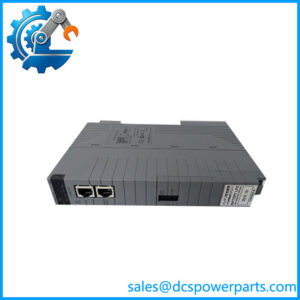
Public technical listings agree that CP451-50 is a Yokogawa processor module and specifically associate the CP451 family with AFV300/AFV400 field control stations.
There is substantial conflicting information online concerning processor speed, memory, dimensions, voltage, and communication interfaces. I would not publish those values as confirmed -50 specifications without the Yokogawa hardware manual or the module nameplate. Some listings even incorrectly describe -50 as an analog I/O module, which is inconsistent with the processor-module identification.
Product Introduction
Yokogawa -50 Processor Module
The is a processor module used in Yokogawa field control station architectures. Available documentation identifies the as a processor module for AFV300/AFV400, while current equipment records also aste with CENTUM-family DCS applications.
One important procurement detail is the relationship to the older . is listed as its replacement, but that does not mean it should be treated as a blind plug-in substitute; the installed FCS generation, module revision, system software, and redundancy configuration still need to be checked.
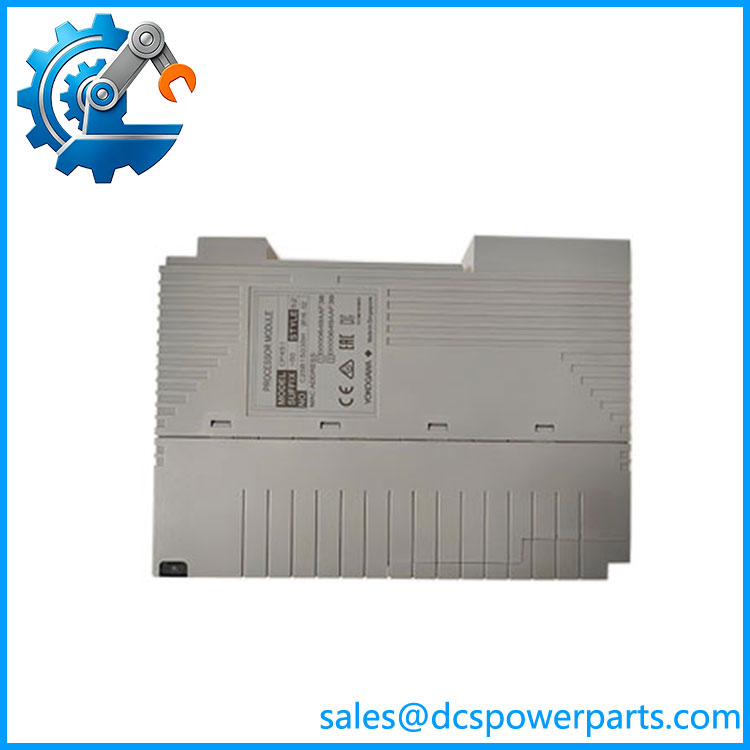
CP451-50
Application Scenarios & Field Pitfalls — Engineer’s Perspective
Engineering Pain Point
The processor is one of the least forgiving components to substitute in an operating DCS. A physically compatible module can still create commissioning problems if the FCS generation, firmware level, application database, or redundancy arrangement does not match.
Typical Applications
- CENTUM-family FCS installations requiring -series processor hardware.
- AFV300/AFV400 field control stations, which are specifically identified for the processor family.
- -10 replacement projects where the legacy processor is no longer suitable for maintenance inventory.
- DCS spare-parts programs where an identified processor module is held for planned shutdown or emergency replacement.
Technical Pitfalls to Avoid
- Do not confhe with an I/O module.
Some current web listings incorrectly classify it as a digital I/O or analog-output device. The stronger model-specific references identify it as a processor module. - Verify the FCS generation before replacing -10.
Agh is listed as the replacement for -10, confirm the installed station architecture and software compatibility before removing the existing processor. - Do not rely on generic electrical specifications found online.
Published listings disagree substantially on voltage, CPU architecture, memory, dimensions, and interfaces. For a shutdown-critical replacement, the Yokogawa system documentation and module identification label should take priority.
Related Products
- — Earlier processor vn; is documented as its replacement.
- AFV300 — Field control station platform specifically associated with the processor family.
- AFV400 — Another FCS platform listed for processor application.
- — A separately med S2 variant; do not assume S2 and srd are interchangeable without checking the system documentation.
- Yokogawa CENTUM VP FCS hardware — Relevant system family for evaluating processor, I/O, power, and communication compatibility.
Procurement Note
For a replacement, I would record the identification as:
Ywa + processor family + AFV300/AFV400 application + installed CENTUM system revision
If replacing , verify the complete FCS configuration rather than relying on the part-number cross-reference alone. The conflicting public specifications make the original module label and Yokogawa hardware documentation especially important for final approval.