Description
Key Technical Specifications
| Parameter | Value |
|---|---|
| Manufacturer | Yokogawa |
| Model | AVR10D-A22010 |
| Product Type | Dual-Redundant V-Net Router |
| Network Protocol | Yokogawa V-Net |
| Network Architecture | Duplex / redundant |
| Primary Function | V-Net network routing |
| Application | Process-control / DCS communication |
| System Role | Communication infrastructure |
| Redundancy | Dual communication paths |
| Typical System | Yokogawa legacy DCS |
| Configuration | AVR10D series |
| Related Variants | AVR10D-Q22010, AVR10D-Q22041 |
| Lifecycle | Legacy |
| I/O Function | None — not a conventional process I/O module |
The AVR10D family is consistently listed with Yokogawa V-Net communication hardware, and AVR10D-A22010 is specifically described as a dual-redundant V-Net router.
Specification caution: I would not publish unsupported claims such as “16 isolated analog inputs,” “350 kHz output,” or “1200 W power.” Those values appear in some generic secondary listings but conflict with the established identification of -A22010 as a V-Net network router.
Product Introduction
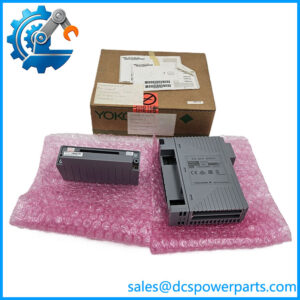
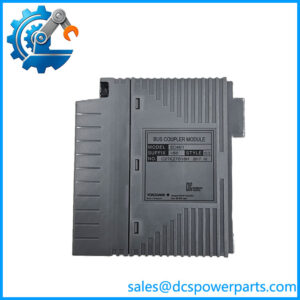
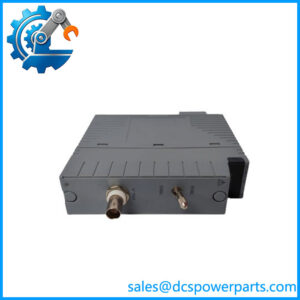
Yokogawa -A22010
The Yokogawa -A22010 is a dual-redundant V-Net router used within Yokogawa process-control communication architectures. Its purpose is network-level communication and routing rather than direct acquisition of field analog or digital signals.
For plants maintaining legacy Yokogawa DCS installations, this type of hardware is important because V-Net infrastructure can be deeply integrated into the control-system architecture. A failed router can affect communication between control stations, controllers, and other V-Net nodes even when the individual controllers and I/O modules remain operational.
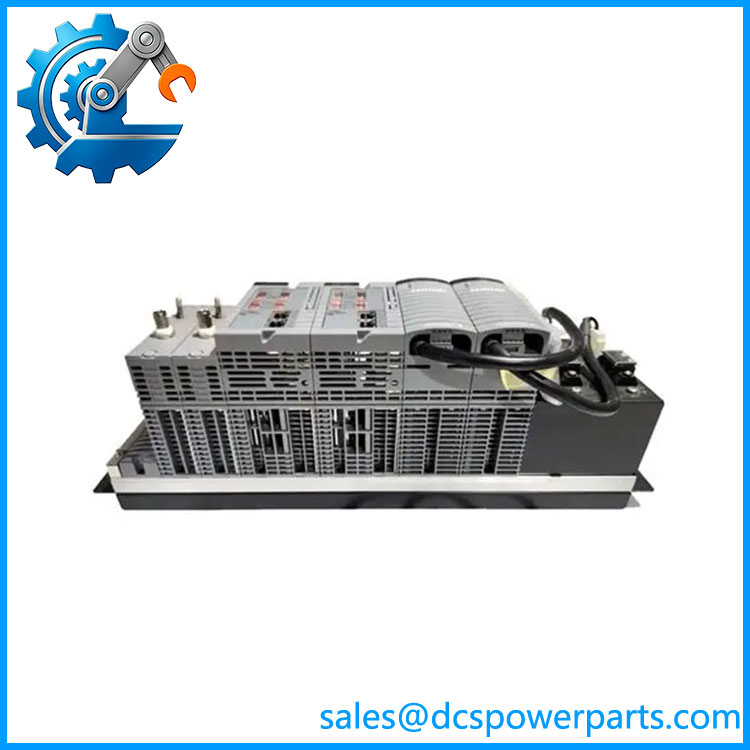
AVR10D-A22010
Application Scenarios & Field Pitfalls
Engineering Pain Point
A V-Net router failure can look like a controller failure from the operator station. Multiple nodes may disappear simultaneously, communication alarms can cascade, and engineers may start replacing healthy control cards. Check the network layer first. With redundant V-Net equipment, determining whether one path, both paths, or the router itself has failed is critical.
Typical Applications
- Oil & Gas — Yokogawa DCS communication networks for refinery and upstream process-control systems.
- Chemical Processing — Redundant V-Net communication between DCS control components and network segments.
- Power Generation — Legacy Yokogawa control-system communication infrastructure.
- Pulp & Paper — Process-control networks supporting large distributed Yokogawa installations.
Technical Pitfalls to Avoid
- Do not treat -A22010 as an I/O card.
Its documented role is V-Net routing. If a plant reports an analog-input problem, replacing this module is unlikely to solve the problem. - Check both redundant paths.
The “D” designation is associated with the dual/redundant architecture. A single communication-path failure does not necessarily mean the router itself has failed. - Check upstream and downstream V-Net equipment.
Network faults can originate from another node, cable, connector, termination, or adjacent router. Do not condemn the based solely on a communication alarm. - Do not confuse variants.
The family includes variants such as AVR10D-Q2and AVR10D-Q22041. The suffix must be matched against the existing system documentation. - Preserve the original network configuration.
Legacy DCS networks often depend on established node addressing and network topology. Record the existing configuration before replacing communication hardware. - Check the physical V-Net cabling.
A damaged connector or degraded cable can produce intermittent communication faults that look like a router failure. - Avoid unnecessary controller replacement.
If multiple controllers or stations report communication errors simultaneously, investigate the common V-Net infrastructure before replacing individual processors. - Check redundancy behavior after replacement.
A replacement should not merely power up. Verify both communication paths and confirm that the redundant architecture returns to its expected operating state. - Use the exact hardware designation.
Do not order solely by “.” The complete designation should be matched against the installed unit. - Treat this as legacy network hardware.
For an old Yokogawa installation, the greatest risk is often documentation and configuration loss rather than the physical installation itself. Record the original connections before removal.
Related Products
- Yokogawa -Q22010 — Related dual-redundant V-Net router variant. It belongs to the same communication family, but the suffix differs and should not be assumed to be a drop-in replacement.
- Yokogawa -Q22041 — Another variant listed within the same Yokogawa V-Net hardware family. Verify system compatibility and exact option configuration before substitution.
- Yokogawa YNT511D-V42 — V-Net bus repeater hardware. It serves a different physical network function and may be used elsewhere in a V-Net communication architecture.
- Yokogawa VI451-10 — Yokogawa communication module associated with older DCS systems. It serves a communication/interface role but is not equivalent to the router.
- Yokogawa PW441-10 — Communication module used in Yokogawa control architectures. It is complementary network hardware rather than a direct replacement.
- Yokogawa VC401-10 — Coupler/interface module used within Yokogawa control-system architectures. Its function differs from the V-Net routing functi.
- Yokogawa VI702 — Vnet/IP interface card. It belongs to a newer Ethernet-based Yokogawa communication architecture and can be relevant when evaluating migration from legacy V-Net infrastructure.
- Yokogawa ALR121-S00 — Serial communication module used for serial device integration. It operates at the device-interface layer rather than providing ‘s V-Net routing function.
- Yokogawa AIP171 — Transceiver/coupler hardware associated with Yokogawa communication architectures. It has a different physical communication role from the .
- Yokogawa ANR10D — V-Net node/interface hardware. It is related to the V-Net architecture but is not the same function as the dual-redundant router.