Description
Product Overview
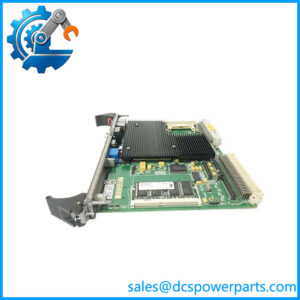
IS200JPDMG1ACC is a board-level DC power distribution card from GE’s Speedtronic Mark VI generation, and the part number itself establishes more than any dealer page will tell you. The IS200 prefix is the Mark VI board designation in GE’s turbine control nomenclature — Mark V boards carry DS200, Mark VI boards carry IS200 and IS215, Mark VIe I/O packs carry IS220, and the Mark VIeS safety range carries IS230. A part number that begins with IS200 therefore belongs to Mark VI hardware, whatever a seller’s description says about Mark VIe.
What such a card does is straightforward to describe in functional terms, even without a GE datasheet for this specific build. In a Mark VI panel the DC distribution function takes the panel’s DC bus and fans it out to a number of board-level consumers through plug connectors, with branch protection at the outputs and a pluggable interface at each destination. The reasons a turbine control panel uses a dedicated board for this, rather than wiring each consumer back to the source, are the ones that matter at commissioning and at 3 a.m. during an outage: harness consolidation, so a rack’s worth of DC feeds becomes one assembly and one set of connectors; branch fusing localised to one replaceable board, so a faulted output does not take down the whole DC rail; and serviceability, because a distribution card can be unplugged and replaced without disturbing the field wiring that lands on the surrounding terminal boards.
The family is where the uncertainty begins. GE’s JPD boards exist in several variants, and the letter immediately after JPD is the field that separates them. Sellers describe IS200JPDDG1AAA as a DC distribution board with fuse protection rated to 250 V and 15 A; IS200JPDBG1A as carrying a 20 A maximum capacity; IS200JPDLG1A as a 15 A variant positioned as the lower-load alternative to the JPDB; and IS200JPDPG1A as another power distribution module. Against that background, the M in IS200JPDMG1ACC is one more build in the same series, and the reliable statement about it is that it is a different build from its siblings — not that any sibling’s current rating transfers to it. GE has not published a per-variant rating table that this research could locate, and the capacity figures in circulation belong to the variants named beside them.
Which brings the dealer claims into focus, because they do not survive contact with each other. One page describes IS200JPDMG1ACC as a “high-density power distribution card” for Mark VI. Another calls it a “Jumper Power Distribution Card,” gives 13 plug connectors, a maximum input of 35 A, a weight of approximately 3 lb, “DIN-Rail Mounting,” and UL 1604 compliance for Class I Division 2. A third offers “16 precisely calibrated input channels,” 145 mm × 98 mm, and a 30 % cabinet-space saving over two 8-channel modules — a description of an analog input module, not a distribution card, and impossible for a board whose entire purpose is routing DC. A fourth labels it a Mark VIe power distribution module with redundant 24 V DC inputs and multiple fused 24 V DC outputs. Only the 13-connector count, the Mark VI attribution and the distribution function are consistent across sources; the DIN-rail claim in particular conflicts with the IS200 form factor, since these boards seat in a Mark VI board rack rather than clipping to a DIN rail.
So the honest position is that the identity is settled at the level that matters for sourcing — a Mark VI JPD-series DC distribution card, board-level, with plug connectors and branch distribution — while the electrical rating remains unresolved and must be read from the board. Anyone buying this part is buying harness compatibility and physical fit more than a specification: the connector count and type on the card, the input voltage and fuse ratings silkscreened on it, and the assembly code printed beside the model. That is why the label, not the listing, is the document.
Technical Specifications
| Parameter | Value |
|---|---|
| Model | IS200JPDMG1ACC — base IS200JPDMG1A, suffix CC |
| Second string | S1AT005-09 — printed assembly/revision code, not a catalog number |
| Manufacturer | GE (General Electric), Speedtronic turbine control |
| Platform | Mark VI — IS200 board designation (DS200 = Mark V, IS220 = Mark VIe I/O packs, IS230 = Mark VIeS) |
| Product type | DC power distribution card, board-level |
| Functional acronym | JPDM — JPD-series power distribution board |
| Family variants | IS200JPDDG1AAA, IS200JPDBG1A, IS200JPDLG1A, IS200JPDPG1A, IS200JPDMG1ADC — the letter after JPD separates builds |
| Connectors | 13 plug connectors (seller-quoted; verify on the board) |
| Input rating | Not published by GE; siblings quoted at 15 A and 20 A; one seller states 35 A maximum — unconfirmed |
| Branch protection | Fused outputs per the family’s sibling descriptions (250 V / 15 A fuse rating quoted for JPDD) — unconfirmed for this variant |
| Board format | G1 group field in the IS200 naming scheme |
| Mounting | Mark VI board rack (board-level); a DIN-rail claim in circulation is inconsistent with this form factor |
| Weight | Approximately 3 lb, as quoted — unverified |
| Environment / certification | UL 1604 Class I Division 2 quoted by one seller — unverified |
| Documentation status | No per-variant GE datasheet located; specification to be read from the board label |
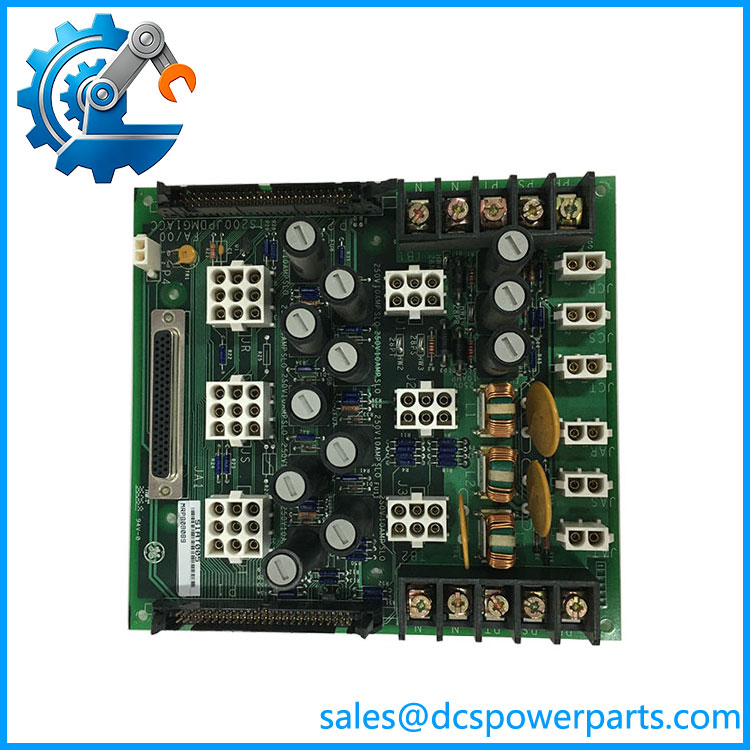
IS200JPDMG1ACC S1AT005-09
Key Features and Advantages
One board instead of a rack’s worth of feeds: the distribution function consolidates DC branch wiring into a single pluggable assembly, which is what makes a Mark VI rack serviceable without cutting into harness runs.
Branch protection where it can be replaced: fusing localised to a board-level part means a faulted output is a card swap rather than a panel rewire — the family’s siblings are described with 250 V fuse ratings for exactly this reason.
Pluggable at both ends: the connector interface is the purchase criterion, because the harness on the machine side is fixed and the replacement must land on the same connectors. Thirteen plug connectors are quoted; the board itself is the authority.
Platform certainty from the part number: establishes Mark VI without ambiguity, so the part can be matched to a Mark VI panel even when a listing mislabels it as Mark VIe.
Board-level replacement economics: for a panel with an obsolete Mark V or Mark VI architecture, a distribution card is a fraction of the cost of a rack rewire, and it keeps the existing field termination intact.
Honest specification boundary: the rating is unresolved in public sources, so the specification table above stops where the evidence stops — a deliberate choice over inventing a current figure for a power-distribution part where an overstated rating is a fire risk, not a marketing claim.
Applications
Mark VI turbine control panels: DC distribution for the boards of a Mark VI rack in gas and steam turbine control, where the card fans the panel DC bus out to multiple board connectors.
Excitation cabinets: one seller places the JPDM board in Mark VI excitation control, which is consistent with an exciter needing its own DC distribution within the panel; treat the attribution as a lead rather than a confirmed scope.
Trip and I/O DC circuits: where branch distribution and local fusing are wanted between the panel DC source and the consumers, and where a replaceable board is preferable to permanent wiring.
Retrofit and spares holding: panels that remain in service on Mark VI hardware need board-level spares that physically match the installed rack — the connector count is the compatibility check.
Harness-matched replacement: where an existing card has failed and the machine-side harness must not be touched, the replacement’s connector layout and fuse positions are the acceptance criteria.
Not applicable to Mark VIe I/O pack positions, and not a substitute for a Mark V DS200 power board — those are different platforms with different form factors and terminal arrangements.
Related Products
IS200JPDDG1AAA — sibling JPD variant described with fuse protection rated to 250 V and 15 A; the fused-distribution reference point in this family. IS200JPDBG1A — sibling quoted at 20 A maximum capacity, the higher-capacity build in circulation. IS200JPDLG1A — sibling quoted at 15 A, positioned by sellers as the lower-load alternative to the JPDB. IS200JPDPG1A — another JPD power distribution build; specifications in circulation for it are inconsistent and should not be transferred. IS200JPDMG1ADC — the same base model with the DC suffix as sold under a different revision/assembly designation. DS200TCPDG2BEC — Mark V TC2000 power distribution board; the previous-generation counterpart, not interchangeable with hardware. IS200TDBTH6ABC — Mark VI terminal board from the same generation, the kind of board a distribution card typically feeds. DS200DCFBG2BNC — Mark V DC power and feedback board, useful as a platform contrast when a panel is being identified as Mark V rather than Mark VI.
Installation and Maintenance
Before installation: read the board and not the listing. Record the model string, the assembly code beside it — S1AT005-09 on this example — the input voltage and fuse ratings silkscreened on the board, and count the plug connectors and their keying. Compare those against the failed card before removing anything, because the JPD family’s letter variants are physically similar and a mismatched build will either not seat or will distribute to the wrong branches.
Installation: de-energise the DC source and verify it is isolated before unplugging a distribution card, since the outputs remain connected to loads that may hold charge. Seat the replacement fully on its rack guides, confirm every connector is latched rather than merely inserted, and check fuse continuity and rating against the panel’s drawings. Where a card carries branch fuses, confirm the fitted values match the drawing rather than the previous card’s improvisation, because an oversized fuse in a distribution board removes the protection the board exists to provide.
Maintenance: keep the removal record — which connector came from which position — because the harness is the only map of the distribution on many older panels. Inspect connectors for discoloration, which indicates a branch that has been carrying more than its share, and check fuse holders for heat marks. Hold spares at the exact assembly code where possible; where only a sibling variant can be found, treat it as a different part until the labels and fuse positions have been compared, and never assume that a 20 A sibling may replace a 15 A build or the reverse. Record the ASM code so the next buyer inherits the identity rather than re-deriving it.
Warranty and Quality
Every IS200JPDMG1ACC unit is supplied as a Mark VI JPD-series DC power distribution card, identified by base model IS200JPDMG1A with the CC revision/assembly suffix, and described with the limits of the public record stated plainly: the electrical rating is not published by GE, the 13-connector count and the 3 lb weight are seller-quoted, and the 35 A figure in circulation is one seller’s claim rather than a manufacturer specification. Units are inspected for connector condition and keying, fuse holder condition, board-edge and rack-guide wear, silkscreen legibility of input voltage and fuse ratings, the printed assembly code, and for evidence of prior repair, rework or component replacement. Claims that this part offers “16 calibrated input channels” or “DIN-rail mounting” are rejected on technical grounds: a distribution card has no analog input function, and the G1 board format seats in a Mark VI board rack rather than a DIN rail. Its Mark VI attribution is asserted on the strength of the designation, which is the platform code the part number itself carries. A 12-month repair, replacement or refund commitment applies. Technical support is offered on the terms this part actually requires — reading the label rather than the listing, matching connector count and fuse positions to the installed harness, distinguishing JPDM from its JPDD / JPDB / JPDL / JPDP siblings, and confirming Mark VI rather than Mark VIe before a card is shipped into a panel.