Description
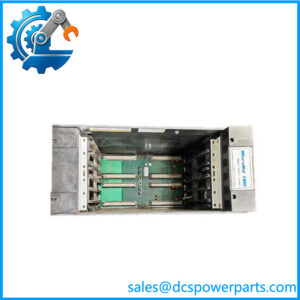
WOODWARD 5466-253
Key Technical Specifications
| Parameter | Specification |
|---|---|
| Manufacturer | Woodward |
| Part Number | 5466-253 |
| Product Family | MicroNet HDCombo |
| Product Type | TMR High Density Combo I/O |
| Architecture | TMR |
| Analog Inputs | 8 |
| Analog Input Type | 0–5 V |
| Analog Outputs | 4 |
| Analog Output Type | 4–20 mA |
| Speed Inputs | 4 |
| Proportional Actuator Outputs | 2 |
| Associated FTM | 2 × 5501-365 |
| Typical Application | Steam turbine / 5009 control |
| Operating Temperature | -20 to +55°C reported in secondary references |
| Status | Preferred; approximate inactive date 2030 |
| Replacement Family | 5466-1115 / 5466-1105, application-dependent |
Woodward’s product documentation describes 5466-253 as a TMR Combo I/O module containing four MPU-related channels, eight 0–5 V inputs, four 4–20 mA outputs, and two proportional actuator outputs. The associated field termination module is 5501-365, with two FTMs used for the 5466-253 configuration.
Product Introduction
The WOODWARD 5466-253 is a MicroNet HDCombo module designed for TMR turbine-control applications. It combines several functions that would otherwise require separate I/O hardware: eight analog inputs, four analog outputs, four speed inputs, and two proportional actuator outputs. That combination is particularly useful in established steam-turbine control systems where cabinet space, existing wiring, and the installed MicroNet architecture are already fixed.
The proportional actuator capability is one of the important reasons this module remains relevant for legacy systems. Woodward notes that newer combo modules such as 5466-1115 do not provide the same onboard proportional-actuator capability and may require separate two-channel actuator modules. A migration therefore cannot be evaluated by I/O count alone.
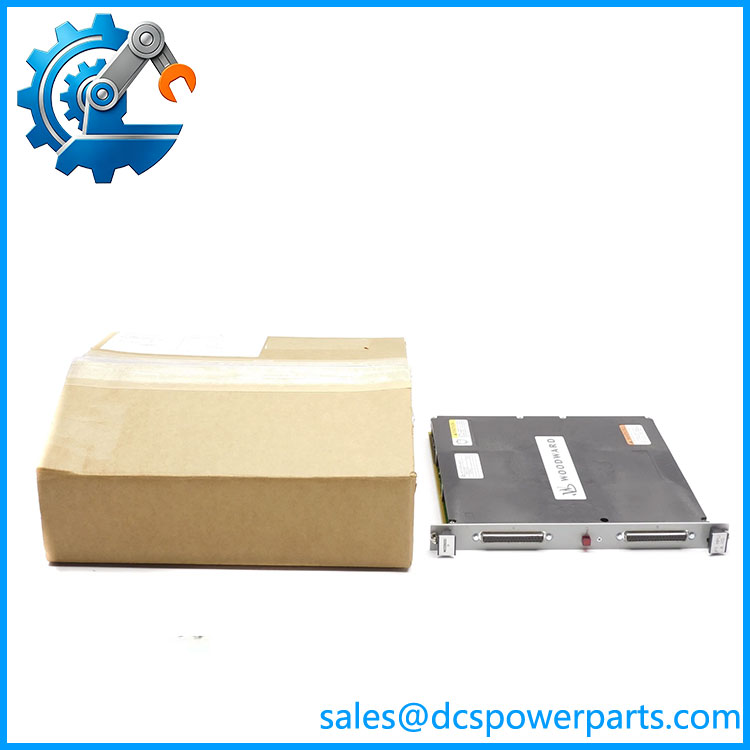
5466-253
Application Scenarios & Field Pitfalls — The Engineer’s Perspective
Engineering Pain Point
Replacing a MicroNet I/O module becomes difficult when the original card combines several signal types in one assembly. The 5466-253 is not simply an eight-channel analog input card. Its speed inputs, analog channels, and proportional actuator outputs all participate in the turbine-control configuration. Replacing it with a newer module may require different FTMs, cables, software configuration, and additional actuator hardware.
Typical Applications
- Steam turbine control — High-density acquisition and output for turbine operating parameters and valve control.
- Woodward 5009 systems — TMR control configurations using proportional actuators.
- Turbine governor systems — Speed measurement, analog process acquisition, and control outputs in one I/O assembly.
- Legacy MicroNet maintenance — Direct spare replacement where the original HDCombo architecture remains installed.
- Control-system upgrades — Evaluation point when deciding whether to retain the existing HDCombo architecture or migrate to newer Smart-Plus hardware.
Technical Pitfalls
1. Do not call 5466-253 a generic analog I/O card.
Its actual function is broader: 8 analog inputs + 4 analog outputs + 4 speed inputs + 2 proportional actuator outputs.
2. Verify the analog input range.
Woodward’s product-change documentation identifies the 5466-253 configuration with eight 0–5 V inputs. Do not copy conflicting secondary listings that describe the inputs as 4–20 mA or 0–25 mA.
3. Confirm the proportional actuator requirement.
This is a major selection criterion. If the turbine uses proportional actuators, the integrated actuator outputs of the 5466-253 can be important. Woodward specifically discusses this difference when comparing the HDCombo with newer modules.
4. Match the FTM and cable arrangement.
The 5466-253 uses two 5501-365 FTMs. Newer replacement architectures can use different FTMs and cables, so a module-level replacement is not necessarily a wiring-level replacement.
5. Verify the controller generation and software.
Woodward notes that older 040 or Pentium/NT CPU systems should continue using 5466-253/5466-316 hardware for spare parts and system expansion. A newer Smart-Plus module can require a different software/configuration environment.
6. Check the TMR arrangement.
The 5466-253 is the TMR version. Do not substitute the superficially similar 5466-316, which is the simplex HDCombo version with a different FTM arrangement.
7. Do not judge a used unit only by power-up status.
A complete acceptance test should cover analog input channels, analog outputs, speed inputs, and proportional actuator outputs that are actually used by the turbine application.
8. Plan around the long-term availability status.
Woodward’s October 2024 notice lists 5466-253 as Preferred and gives an approximate 2030 inactive date. Woodward explicitly warns that the date is an estimate and may change because of component availability.
Related Products
- WOODWARD 5466-316 — Simplex HDCombo module; similar combined I/O concept but intended for simplex architecture and uses a different FTM arrangement.
- WOODWARD 5466-1115 — Newer standard-accuracy Speed/Analog combination module; does not provide the same onboard proportional-actuator function.
- WOODWARD 5466-1105 — Newer high-accuracy Speed/Analog combination module; intended for applications requiring higher speed/analog performance.
- WOODWARD 5501-365 — Field Termination Module used with the 5466-253; two are specified for the TMR HDCombo configuration.
- WOODWARD 5501-371 — FTM associated with the simplex 5466-316 configuration.
- WOODWARD 5501-372 — TMR FTM used with newer replacement configurations.
- WOODWARD 5501-502 — Associated FTM used in the newer replacement architecture.
- WOODWARD 5466-5027 — TMR/Dataforth high-density I/O module with 24 × 0–5 V inputs and 8 × 4–20 mA outputs; different I/O architecture.
- WOODWARD 5466-5026 — Simplex high-density analog I/O module with 24 × 4–20 mA inputs; not a functional replacement for 5466-253.
Procurement Note
For WOODWARD 5466-253, specify the complete configuration as “MicroNet TMR HDCombo I/O — 8 × 0–5 V AI, 4 × 4–20 mA AO, 4 speed inputs, 2 proportional actuator outputs.” Confirm the installed MicroNet CPU generation, two 5501-365 FTMs, cabling, application software, and TMR configuration before accepting an alternative.
For surplus or refurbished stock, request the actual module label and revision, then test the I/O functions used by the turbine. In a proportional-actuator application, I would give particular attention to the actuator-output channels rather than accepting an analog-only functional test.