Description
Key Technical Specifications
| Parameter | Value |
|---|---|
| Manufacturer | Woodward |
| Product Family | MicroNet |
| Model | 5453-277 |
| Product Type | Discrete I/O Module |
| Configuration | Simplex |
| Discrete Inputs | 16 |
| Discrete Outputs | 8 |
| Input Voltage | 48–125 VDC |
| Input Type | Discrete / digital |
| Output Type | Relay contact |
| Output Arrangement | Form C relay outputs |
| Application | Industrial turbine and machinery control |
| Installation | MicroNet chassis |
| Field Interface | MicroNet field terminal arrangement |
| Architecture | Simplex |
Identification caution: Woodward MicroNet discrete-I/O modules exist in several closely related voltage and channel configurations. The 5453-277 should therefore be matched by the complete part number rather than by the generic description “MicroNet discrete I/O.”
Product Introduction
Woodward 5453-277 Product Introduction
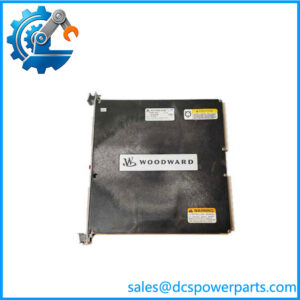
The Woodward 5453-277 is a MicroNet discrete I/O module used to interface digital field signals with the turbine or machinery controller. Its 16 discrete inputs can monitor external status and permissive signals, while eight relay outputs provide switching interfaces to downstream control or indication circuits.
For legacy MicroNet installations, this type of card is commonly involved in start permissives, valve-position indications, trips, alarms, breaker status, and other binary control signals. The key replacement issue is voltage compatibility: the field input/output arrangement must match the original system wiring.
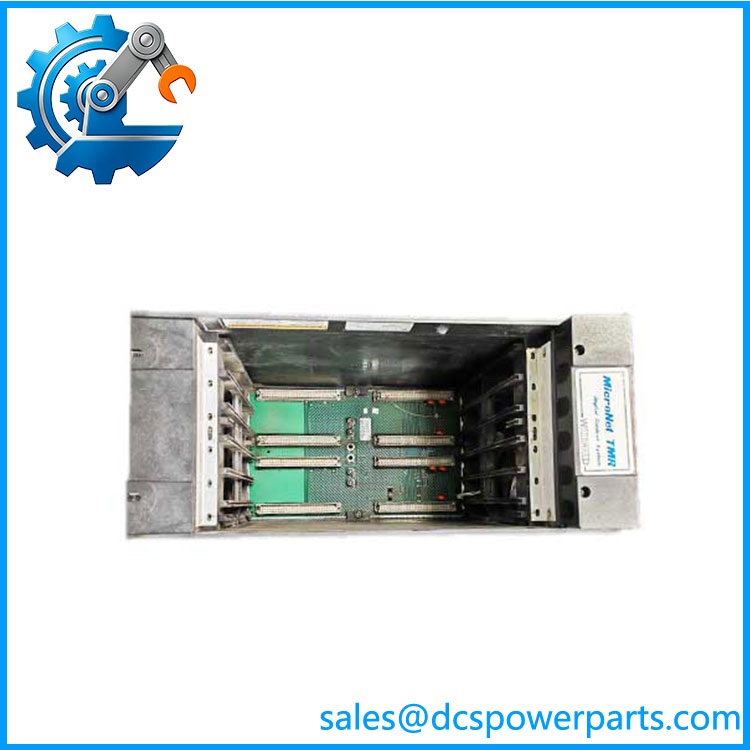
5453-277
Application Scenarios & Field Pitfalls
Engineering Pain Point
A discrete I/O failure can look deceptively simple: one alarm disappears, a valve permissive will not make, or the controller refuses to complete a start sequence. On a turbine package, however, several discrete signals may participate in the same permissive chain. Before replacing the I/O card, trace the complete field circuit.
Typical Applications
- Gas Turbine Control — Start permissives, valve limit switches, trip indications, and auxiliary-equipment status.
- Steam Turbine Control — Valve position, lube-oil permissives, trip status, and auxiliary-system monitoring.
- Power Generation — Generator breaker status, synchronization permissives, and turbine shutdown inputs.
- Industrial Compressors — Interlocks, motor/drive status, valve feedback, and equipment protection signals.
Technical Pitfalls to Avoid
- Verify the field voltage before substitution.
The 5453-277 belongs to a specific discrete-voltage configuration. Do not substitute another MicroNet discrete card simply because it has the same number of channels. - Check relay contact loading.
A relay output may switch a control circuit, but that does not mean it can directly drive every solenoid or inductive load. Check the actual contact rating and the load’s inrush current. - Trace common returns carefully.
Multiple discrete inputs can share field-reference arrangements. A loose common or damaged return can make several apparently unrelated inputs fail simultaneously. - Inspect suppression on inductive loads.
Solenoids, contactors, and relay coils can generate substantial transient voltage. Proper suppression protects the output contacts and reduces electrical interference. - Do not overlook the controller configuration.
If the hardware input changes state correctly but the control logic does not recognize it, the fault may be in configuration, scaling, logic, or the field wiring rather than the 5453-277 itself.
Related Products
- Woodward 5453-277 — The subject 16-input/8-output MicroNet discrete I/O module. Intended for binary field interfacing in legacy MicroNet control systems.
- Woodward MicroNet Simplex I/O Modules — Complementary MicroNet input/output cards used when additional discrete, analog, or specialty signals are required. Selection depends on field voltage and signal type.
- Woodward MicroNet TMR I/O Modules — TMR versions of MicroNet I/O hardware used where redundant input/output architectures are required. They should not be substituted for simplex hardware without checking the control-system architecture.
- Woodward MicroNet Analog I/O Modules — Used for continuous signals such as pressure, temperature, speed-related measurements, valve demand, and process transmitters. They perform a different function from the 5453-277.
- Woodward MicroNet CPU Modules — Provide the control processor for the MicroNet system. The 5453-277 is an I/O card and does not perform the controller’s application execution.
- Woodward MicroNet Power Supply Modules — Provide the required DC power to the MicroNet chassis and installed modules. A power problem can create multiple I/O symptoms and should be checked before condemning a discrete card.
- Woodward MicroNet Chassis — Provides the backplane and mechanical mounting for MicroNet CPU, I/O, and power-supply modules.
- Woodward 505 Digital Governor — A related Woodward turbine-control platform. Depending on the installation, MicroNet I/O can be part of the wider turbine control architecture, while the 505 is a dedicated turbine-governor platform.