Description
Key Technical Specifications
| Parameter | Value |
|---|---|
| Manufacturer | Woodward |
| Series | MicroNet |
| Model | 5466-425 |
| Product Type | High-Density Analog I/O Module |
| Application | MicroNet TMR |
| Analog Inputs | 24 channels |
| Analog Input Type | 0–5 VDC |
| Input Range | 0–5 VDC |
| Input Resolution | 16 bit |
| Input Update Time | 5 ms |
| Input Filtering | 2-pole, 10 ms; reduced filtering on channels 23 and 24 |
| Analog Outputs | 8 channels |
| Output Signal | 4–20 mA |
| Output Full-Scale Range | 0–25 mA |
| Maximum Output Load | 600 Ω |
| Output Update Time | 5 ms |
| Output Resolution | 14 bit |
| Output Accuracy | Software calibrated to 0.2% of 0–25 mA full scale |
| Input Common-Mode Rejection | 200 VDC |
| Input Isolation | No galvanic isolation between channels |
| FTM Interface | Dataforth High-Density Analog FTM |
| Installation | MicroNet chassis card guides |
| Application Architecture | TMR / turbine control |
| Replacement Family | 5466-5027 |
| Replacement Compatibility | 5466-5027 is documented as backward compatible with 5466-425 |
Woodward’s product-change documentation identifies 5466-425 specifically as a 24-input, 0–5 V high-density analog module with eight 4–20 mA outputs, intended for TMR and Dataforth FTM applications.
The Woodward MicroNet documentation gives the 24/8 analog architecture a 5 ms update time, 16-bit input resolution, and eight 4–20 mA outputs capable of driving up to 600 Ω load resistance.
Product Introduction
Woodward 5466-425 Product Introduction
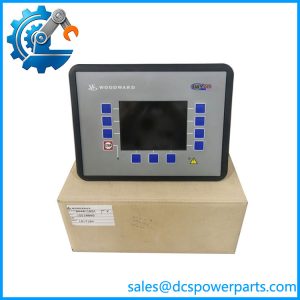
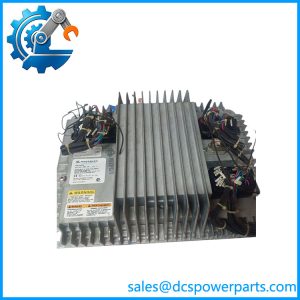
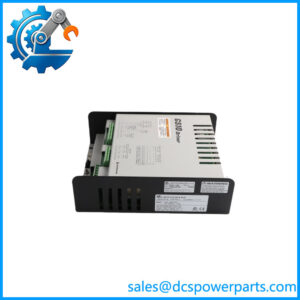
The Woodward 5466-425 is a high-density analog I/O module for the MicroNet control platform, particularly legacy MicroNet TMR systems. It provides 24 analog voltage inputs and eight 4–20 mA outputs, allowing a single module to acquire a substantial number of turbine/process measurements while providing analog commands to control devices.
The important detail is its Dataforth configuration. The 5466-425 is not simply another 24/8 analog card; it is intended for use with the Dataforth FTM arrangement and uses 0–5 V inputs. Channels 23 and 24 have reduced filtering, which matters when replacing the module or evaluating its Smart-Plus successor.
Application Scenarios & Field Pitfalls
Engineering Pain Point
A turbine-control cabinet can have dozens of analog signals: pressures, temperatures, valve feedback, actuator commands, and other process measurements. When one legacy HDA module fails, the problem is not just losing one instrument. A significant group of control signals can disappear simultaneously. The 5466-425 was designed specifically to concentrate that signal density inside the MicroNet chassis.
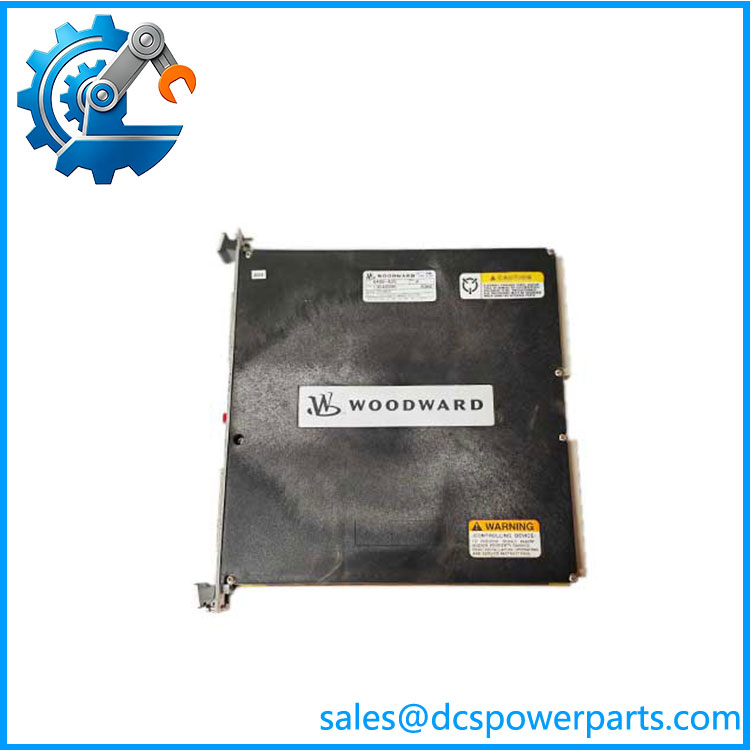
5466-425
Typical Applications
- Gas Turbine Control — Analog acquisition from pressure, temperature, and process transmitters.
- Power Generation — Turbine auxiliary-system monitoring and analog actuator command signals.
- Industrial Turbomachinery — High-density process feedback and control outputs.
- MicroNet TMR Systems — Fault-tolerant analog I/O architecture using Dataforth termination hardware.
Technical Pitfalls to Avoid
- Do not confuse the 5466-425 with the 5466-315.
The 5466-315 is a 24-channel 4–20 mA input module, while the 5466-425 is the 0–5 V Dataforth configuration. They are not interchangeable simply because both provide 24 inputs and eight outputs. - Check the FTM before installing the replacement.
The 5466-425 is specifically associated with the Dataforth FTM. Woodward’s documentation states that the module uses two high-density analog/discrete cables to connect to the applicable 24/8 analog FTMs. - Pay attention to channels 23 and 24.
These channels use reduced filtering compared with the other analog inputs. This is not a cosmetic firmware difference; it can affect dynamic signal behavior and should be considered when migrating an application. - Do not assume galvanic channel isolation.
The legacy 24/8 analog architecture uses common-mode rejection rather than channel-to-channel galvanic isolation. Woodward specifies 200 VDC common-mode rejection and recommends appropriate isolation when interfacing with non-isolated field devices that can exceed the permitted common-mode range. - Check the Coder version before using a replacement.
Woodward identifies 5466-5027 as the backward-compatible replacement for 5466-425 and notes compatibility with Coder 4.06 and later. The newer 5466-5025 has different software requirements and should not be treated as the same replacement path.
Related Products
- Woodward 5466-5027 — Smart-Plus successor to the 5466-425. It provides the same basic 24 × 0–5 V analog input / 8 × 4–20 mA output function and is specifically documented by Woodward as backward compatible with the 5466-425. This is the first replacement to investigate for an existing compatible MicroNet TMR installation.
- Woodward 5466-257 — Another legacy 24/8 high-density analog configuration with 24 analog inputs at 0–5 V and eight 4–20 mA outputs. It is closely related electrically but is not the same Dataforth-specific configuration as the 5466-425.
- Woodward 5466-315 — Legacy 24/8 analog module using 24 × 4–20 mA inputs and eight × 4–20 mA outputs. Suitable where the field transmitters are current-output devices rather than the 0–5 V Dataforth architecture.
- Woodward 5466-332 — Legacy 24/8 module with 24 × 4–20 mA inputs, eight 4–20 mA outputs, and reduced filtering on channels 23/24. It is associated with simplex applications and is therefore a different system configuration from the 5466-425.
- Woodward 5466-5025 — Newer Smart-Plus 24/8 module with software-selectable 4–20 mA or 0–5 V inputs and isolated I/O. It offers more flexibility than the 5466-425, but Woodward requires a newer Coder version for this module. Do not treat it as a blind drop-in replacement.
- Woodward 5503-904 — Legacy high-density analog module providing a mixed input configuration: 12 × 4–20 mA, 12 × 0–5 V, and eight × 4–20 mA outputs. It belongs to the same MicroNet HDA family but has a different signal arrangement.
- Woodward 5466-5026 — Smart-Plus replacement for the 5466-315/332 family. It is primarily relevant to 4–20 mA input applications rather than the 0–5 V Dataforth configuration of the 5466-425.
- Woodward MicroNet TMR Chassis — The rack/chassis platform into which the 5466-425 is installed. The module slides into the chassis card guides and connects to the motherboard; the field I/O is brought out through the applicable FTM cables.