Description
Key Technical Specifications
| Parameter | Value |
|---|---|
| Product Model | VM-5T-21010-111-111-011-0EX5 |
| Manufacturer | Shinkawa Sensor Technology |
| Product Series | VM-5 |
| Product Type | Dual Thrust Monitor |
| Measurement Function | Axial Shaft Position / Thrust Displacement |
| Input Channels | 2 |
| Compatible Transducers | FK Series, VK Series, VC Series |
| Standard Measurement Range | -2.0 to 0 to +2.0 mm |
| Equivalent Measurement Range | -80 to 0 to +80 mils |
| Alarm Setpoints | 8 |
| Alarm Functions | High/Low Danger and Alert for Both Channels |
| Recorder Output | 1–5 VDC or 4–20 mA DC |
| Recorder Output Channels | 2 |
| Recorder Accuracy | ±0.5% FS at 25°C; ±2.0% FS at 0–65°C |
| Operating Temperature | 0 to 65°C |
| Rack Compatibility | VM-5H3 / VM-5W1 / VM-5G, subject to configuration |
| Monitoring Standard | VM-5 Series designed in accordance with API 670 |
Important configuration note: The technical values above describe the documented VM-5T monitor family. The complete ordering suffix 21010-111-111-011-0EX5 requires confirmation against the original factory configuration record. Do not assume that every optional output, supply, or approval is included.
SHINKAWA of America+1
Product Introduction
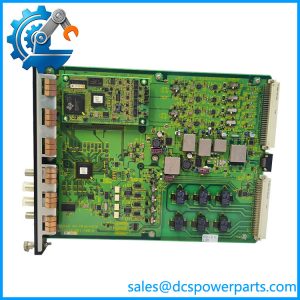
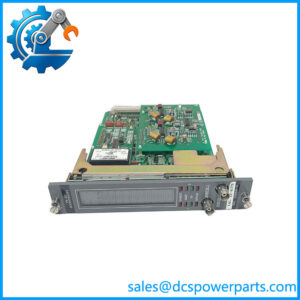
Shinkawa VM-5T-21010-111-111-011-0EX5 Dual Thrust Monitor
The Shinkawa VM-5T-21010-111-111-011-0EX5 is a dual-channel thrust position monitoring unit within the VM-5 rotating machinery protection system. It measures axial shaft displacement through compatible FK, VK, and VC series transducers. The monitor provides independent measurement and alarm functions for two input channels, helping operators detect abnormal shaft movement in turbine installations.
Its main engineering value is continuous thrust-position supervision. Eight configurable alarm setpoints support high and low ALERT and DANGER conditions across both channels. For power generation facilities maintaining existing turbine protection systems, retaining the original VM-5 architecture can reduce the need for extensive panel modifications.
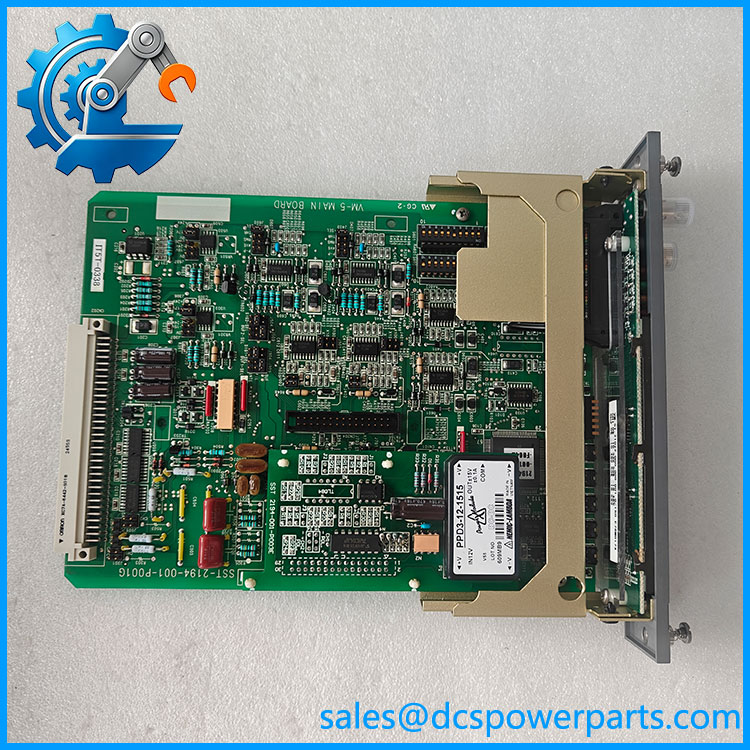
VM-5T-21010-111-111-011-0EX5
Application Scenarios & Field Pitfalls (The Engineer’s Perspective)
Engineering Pain Point
A turbine can experience axial shaft movement without immediately producing an obvious change in operating conditions. If thrust-bearing wear, lubrication problems, or abnormal rotor loading develops, delayed detection can lead to serious mechanical damage.
The Shinkawa VM-5T addresses this monitoring requirement by measuring shaft displacement at two points. Its alarm functions provide operators with separate warning and danger indications, supporting earlier investigation of abnormal thrust conditions.
This is particularly important during turbine startup, load changes, and long-duration operation.
Typical Applications
- Thermal Power Generation: Axial displacement monitoring of steam turbine rotors and thrust-bearing systems.
- Gas Turbine Facilities: Continuous shaft position supervision during turbine operation and load transitions.
- Petrochemical Plants: Thrust displacement monitoring on critical rotating machinery.
- Industrial Power Stations: Integration into turbine supervisory instrumentation (TSI) panels for machinery protection.
Technical Pitfalls to Avoid
1. Transducer compatibility must be verified.
The VM-5T accepts specified FK, VK, and VC series transducer signals. Do not assume that a generic proximity probe can replace the original sensor. Check sensor characteristics, sensitivity, measuring range, cable arrangement, and polarity before connecting the monitor.
2. Incorrect alarm settings can compromise machinery protection.
The VM-5T provides eight alarm setpoints covering two channels. Verify the existing H-DANGER, H-ALERT, L-ALERT, and L-DANGER values against the turbine protection documentation. Do not copy alarm thresholds from another turbine simply because it uses the same monitor family.
3. Check the complete ordering configuration.
The suffix 21010-111-111-011-0EX5 contains configuration information that should not be decoded from assumptions. Confirm the power supply, recorder output, relay configuration, and approval requirements against the original equipment records.
4. Never bypass protection logic during commissioning.
Verify alarm relay operation, external reset wiring, signal polarity, and monitoring-channel response. Any temporary bypass used during maintenance must follow the plant’s approved machinery protection procedure.
Field recommendation: Before replacing an installed VM-5T, photograph the front panel and rear connections, record the transducer model numbers, and document the existing alarm settings. This information is often more useful than the monitor model number alone.
Related Products
The following Shinkawa models belong to the VM-5 monitoring architecture or provide complementary machinery monitoring functions.
VM-5K – Dual Vibration Monitor
Monitors two shaft vibration channels using compatible FK/VK series transducers. Used for radial shaft vibration protection rather than axial thrust position measurement.
VM-5C – Eccentricity Monitor
Measures rotor shaft eccentricity and displacement. Particularly useful during turbine startup and turning operations. Complements the VM-5T’s axial thrust monitoring function.
VM-5D – Dual Differential Expansion Monitor
Monitors relative thermal expansion between the rotor and casing. Used when turbine thermal growth must be supervised independently of thrust position.
VM-5N – Ramp Differential Expansion Monitor
Measures rotor differential expansion using a ramp-based sensing arrangement. Relevant to turbine installations requiring differential expansion compensation.
VM-5S – Dual Tachometer
Provides two-channel shaft speed monitoring. Used for turbine speed supervision and speed-related alarm functions, not axial displacement measurement.
VM-5Y – Relay Module
Provides relay functions within the VM-5 rack architecture. Relevant when checking alarm output configuration and replacement requirements.
VM-5Z – Power Supply Unit
Supplies the VM-5 monitoring rack. Important for maintenance involving rack power distribution or power supply replacement.
VM-53 – Dual Communication Unit
Handles communication functions within the VM-5 system, allowing measurement and status information to be transferred to supervisory computers.
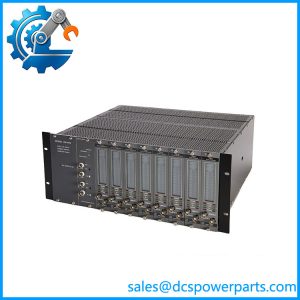
VM-5H3 – 8-Slot Instrument Rack
Rack infrastructure for installing compatible VM-5 monitor and supporting units. Relevant when expanding or maintaining an existing rack-based turbine monitoring installation.
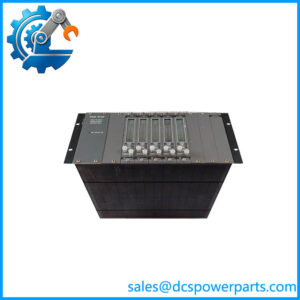
VM-5W1 – 10-Slot Dual Power Supply Rack
Supports larger VM-5 configurations and accommodates two power supply units. Useful for installations requiring rack-level power redundancy.
Related model functions and rack architecture are documented in the manufacturer’s VM-5 Series catalog. These models are complementary products, not automatic replacements for the VM-5T.
SHINKAWA of America+1
Procurement and Quality Control Notes
The Shinkawa VM-5T is a machinery protection instrument. A replacement decision should be based on electrical and measurement compatibility, not appearance alone.
Before purchasing, request:
- Full nameplate photographs showing the complete ordering code.
- Confirmation of the original power supply configuration.
- Transducer compatibility documentation.
- Recorder output and relay configuration.
- Factory test or functional inspection records.
- Confirmation of the unit’s condition and manufacturing revision.
Important: Shinkawa’s official documentation identifies the