Description
Key Technical Specifications
| Parameter | Specification |
|---|---|
| Product Model | VM-5G0-2 |
| Manufacturer | Shinkawa Electric |
| Product Series | VM-5 |
| System Type | Rotating Machinery Monitoring |
| Product Type | Dual-Channel Vibration Monitoring Unit |
| Number of Channels | 2 |
| Primary Measurement | Radial shaft vibration |
| Sensor Technology | Eddy-current proximity probes |
| Compatible Rack Family | VM-5H3 / VM-5W1 system architecture |
| Application | Turbines, compressors, rotating machinery |
| Alarm Function | Warning / Danger monitoring |
| Analog Output | 4–20 mA reported for individual channels |
| Dynamic Signal Output | BNC |
| Sensor Diagnostics | Probe break / short-circuit detection |
| Monitoring Standard | VM-5 system designed for API 670 applications |
| Condition | New Surplus / Used / Tested Refurbished |
Shinkawa’s official VM-5 product information identifies the VM-5G0 as a single-unit housing/rack option within the VM-5 system and lists the VM-5K as the dual-vibration monitor.
There is an important naming issue worth catching before procurement: VM-5G0-2 is associated with the VM-5G housing/rack designation in Shinkawa documentation, while secondary sellers also use the complete number to describe a dual-channel vibration-monitor configuration. Do not infer the exact internal monitor board solely from the suffix. Confirm the physical nameplate and installed VM-5 architecture before ordering.
Application Scenarios & Pain Points
Rotating-equipment protection becomes expensive when a vibration channel disappears at the wrong moment. A turbine may still look normal from the control room while the protection layer has already lost reliable measurement.
- Steam turbines: Dual vibration monitoring can be used to observe radial shaft vibration and provide alarm/protection signals for critical turbine trains.
- Centrifugal compressors: Continuous vibration measurement helps identify developing mechanical conditions such as imbalance, misalignment, or bearing-related problems.
- Power-generation equipment: The VM-5 platform is designed around rotating-machinery monitoring and can form part of turbine monitoring instrumentation.
- Petrochemical rotating machinery: Vibration outputs can be integrated into plant monitoring and protection arrangements, with analog signals available for control-room indication where the installed configuration supports them.
Field note: If both channels suddenly become abnormal at exactly the same time, suspect the common signal path before blaming two separate machine faults. Check rack power, probe supply, common wiring, and interface hardware first.
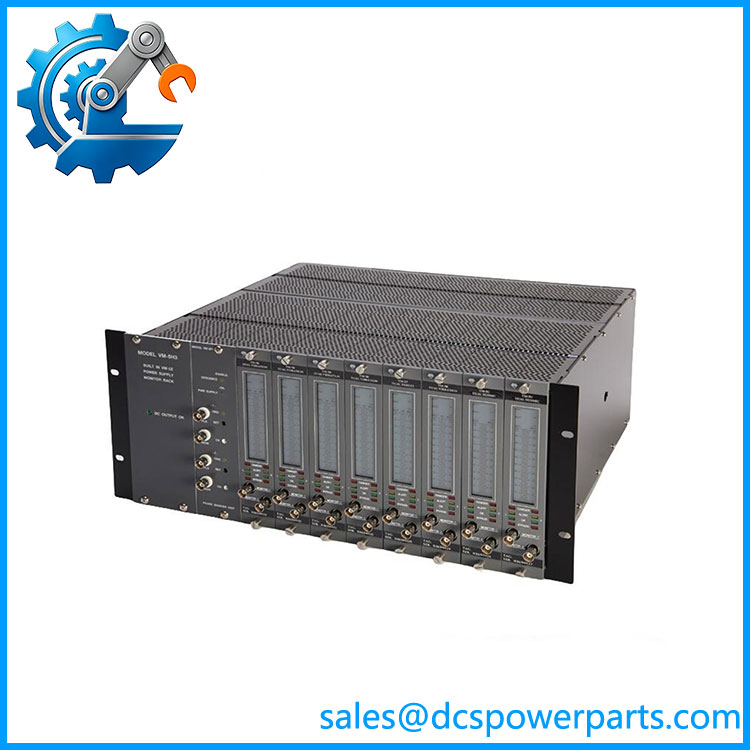
VM-5G0-2
Related Products
- Shinkawa VM-5K — Dual vibration monitor within the VM-5 family. It is the most directly related monitoring function for two-channel vibration measurement.
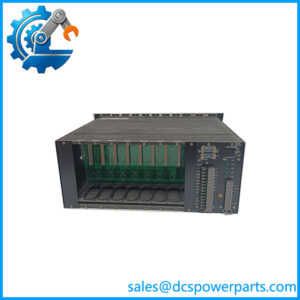
- Shinkawa VM-5H3 — Eight-slot VM-5 rack used for modular monitoring installations. It provides the rack environment for multiple VM-5 monitoring units.
- Shinkawa VM-5W1 — Ten-slot VM-5 rack for larger monitoring configurations. It is useful when multiple machine variables must be monitored in the same cabinet.
- Shinkawa VM-5U — Dual seismic monitor. It handles absolute/seismic vibration measurements rather than the same relative shaft-vibration function.
- Shinkawa VM-5T — Dual thrust monitor for shaft axial-position monitoring. It complements vibration monitoring but measures a different machine variable.
- Shinkawa VM-5C — Eccentricity monitor for turbine rotor eccentricity measurement during startup and turning operations.
- Shinkawa VM-5S — Dual tachometer for rotor speed and zero-speed monitoring. It is useful when rotational-speed information is required alongside vibration data.
- Shinkawa VM-5Z — VM-5 power-supply unit. It supports the monitoring rack rather than directly measuring vibration.
- Shinkawa VM-5X — Interface unit within the VM-5 system. It provides supporting system-level interfacing rather than serving as the primary vibration measurement channel.
The Engineer’s Guide: Field Pitfalls to Avoid
⚠️ Do not confuse VM-5G0-2 with VM-5K.
The Shinkawa documentation identifies VM-5K as the dual vibration monitor and VM-5G0/1/2 as single-unit housing/rack variants. Secondary product catalogs sometimes collapse these designations into a single product description.
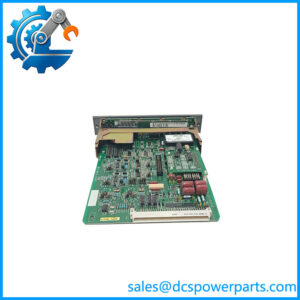
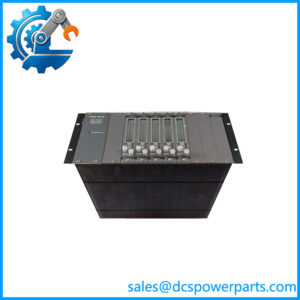
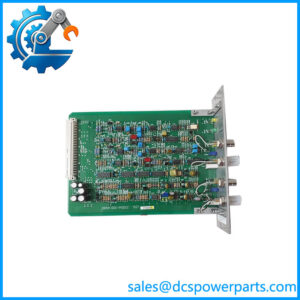
How to avoid it: Photograph the front panel, rear connectors, nameplate, and rack position. Confirm whether the requested item is the complete monitor, housing, or a specific internal unit.
⚠️ Do not replace the monitor before checking the proximity probes.
A damaged probe cable, incorrect probe gap, or unstable sensor supply can generate implausible vibration readings.
How to avoid it: Verify probe condition, cable continuity, sensor supply, and installation gap before condemning the monitoring electronics.
⚠️ Do not assume every VM-5 unit has identical outputs.
The VM-5 family contains different monitor types for vibration, thrust, speed, temperature, eccentricity, and other variables.
How to avoid it: Match the exact monitor designation and machine variable. A physically compatible slot does not make every VM-5 monitor functionally interchangeable.
Frequently Asked Questions (FAQ)
What is Shinkawa VM-5G0-2?
Shinkawa VM-5G0-2 is a designation associated with the Shinkawa VM-5 rotating-machinery monitoring system. Secondary equipment references describe it as a dual-channel shaft-vibration monitoring configuration, while Shinkawa’s official documentation identifies VM-5G0/1/2 as single-unit housing variants.
Is VM-5G0-2 a vibration monitor or a rack?
This is the main point requiring verification. Shinkawa’s official VM-5 documentation lists VM-5G0, VM-5G1, and VM-5G2 as single-unit storage/rack configurations, while commercial descriptions frequently identify the complete VM-5G0-2 as a dual-channel vibration-monitor product.
For procurement, the physical unit and nameplate should settle the question.
How many vibration channels does the associated VM-5K monitor provide?
The VM-5K is a dual vibration monitor, providing two measurement channels. Shinkawa lists it as one of the principal monitor units in the VM-5 family.
What type of machinery can use a VM-5 system?
The VM-5 family is intended for rotating machinery monitoring, including large turbines and other critical equipment. The product range covers vibration, shaft displacement, thrust, eccentricity, speed, temperature, and related measurements.
Does the VM-5 system provide a 4–20 mA signal?
The VM-5 system documentation identifies 4–20 mA as an available recorder-output format, with output proportional to the monitoring range. Exact output configuration depends on the specific monitor and system arrangement.
Can I hot-swap VM-5G0-2?
Do not assume hot swapping is permissible simply because a commercial listing says so. The safe procedure depends on the specific VM-5 rack, monitor type, protection architecture, and plant operating procedure. For a turbine protection system, removing a live protection module without confirming the bypass and voting consequences can create a serious protection gap.
What should I check when buying a used VM-5G0-2?
Ask for:
- Clear photographs of the complete unit and nameplate.
- Exact VM-5 designation and revision.
- Rack compatibility.
- Functional test results on both monitoring channels where applicable.
- Alarm relay verification.
- Analog-output verification.
- Probe input and signal-conditioning checks.
- Evidence that the display, indicators, and configuration controls operate correctly.