Description
Moog G771K202 S19FOFA4VA4 — Product Page
Product Overview
The Moog G771K202 S19FOFA4VA4 is an electrohydraulic servo valve intended for precision flow control in hydraulic actuation systems. Supplier listings associate the G771K202 model with gas-turbine applications and report a maximum supply pressure of 3,000 psi, together with a command-current range of −7.2 to +8.8 mA. In a turbine control system, a servo valve converts an electrical command into controlled hydraulic flow, allowing a hydraulic actuator to adjust a mechanism in response to the control system’s demand. Depending on the installed circuit, this type of control can be associated with fuel-valve actuation or other turbine mechanisms requiring controlled hydraulic movement.
The complete designation G771K202 S19FOFA4VA4 matters during procurement. A model number alone does not establish that two valves have the same coil arrangement, spool configuration, hydraulic characteristics, electrical response, or mounting details. The suffix should therefore be checked against the installed component’s nameplate, equipment bill of materials, and applicable turbine drawings. The reported command signal should also be verified against the actual output stage and wiring arrangement; using a signal range taken from a different configuration can cause incorrect valve response or prevent the actuator from reaching its intended operating position.
For maintenance teams, the Moog G771K202 S19FOFA4VA4 is best treated as a configuration-specific replacement component rather than a generic hydraulic valve. Supplier information indicates that the G771K202 model has been discontinued and that G771K202A is offered as a replacement candidate. That information is useful for sourcing, but it does not independently prove that every suffix can be exchanged without engineering review. Before releasing a replacement for installation, verify the complete part and type codes, pressure requirements, electrical command characteristics, port arrangement, and required inspection or calibration records. This is particularly important when the valve participates in a turbine fuel or speed-control loop.
Product Introduction — Practical Field Focus
The is relevant to maintenance teams supporting hydraulic actuation on industrial gas turbines. A replacement decision should start with the installed valve’s nameplate and equipment-specific documentation, not just the base model number.
For incoming inspection, record the full type code, visible condition, connector and mounting details, and any available test documentation. If the proposed replacement is marked G771K202A, obtain written confirmation that it matches the installed S19FOFA4VA4 configuration and the turbine manufacturer’s requirements.
Key Technical Specifications
| Parameter | Details |
|---|---|
| Product Model | |
| Full Type Code | S19FOFA4VA4 |
| Manufacturer | Moog |
| Product Category | Electrohydraulic servo valve |
| Control Function | Electrical-command-to-hydraulic-flow control |
| Typical Application | Gas-turbine hydraulic actuation |
| Command Signal | −7.2 to +8.8 mA, supplier-listed; verify against nameplate |
| Maximum Supply Pressure | 3,000 psi reported; confirm the exact configuration and circuit limits |
| Hydraulic Fluid | Confirm the approved fluid and cleanliness requirements in the applicable Moog documentation |
| Electrical Connection | Verify connector, coil wiring, and polarity from the unit drawing |
| Mounting Method | Confirm port pattern and mounting dimensions against the installed valve |
| Operating Temperature | Confirm from the applicable model/type-code documentation |
| Lifecycle Status | Listed as discontinued by a supplier |
| Potential Replacement | G771K202A; engineering confirmation required |
| Commissioning Requirement | Verify command response, hydraulic operation, leakage, and actuator behavior under the approved procedure |
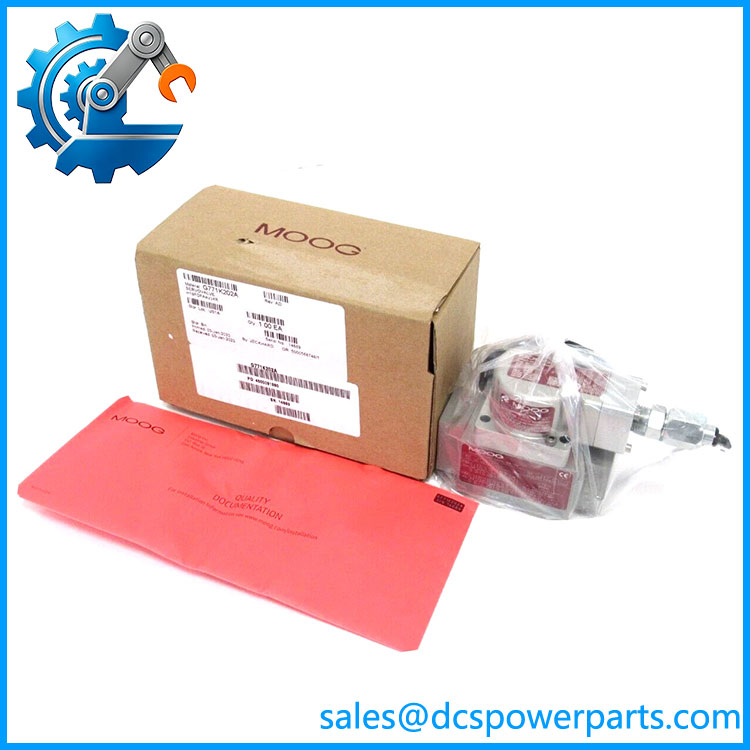
G771K202
Related Products
The following models are related sourcing or engineering references within the Moog G77x servo-valve family or the same turbine spare-parts context. They are not confirmed drop-in substitutes for S19FOFA4VA4.
- Moog G771K202A — Supplier-listed replacement candidate for the base model.
- Moog G771K200 — Related G771-series turbine servo-valve model; verify the full type code before considering it.
- Moog G771K203 — Related turbine servo-valve model appearing in supplier spare-parts listings.
- Moog G771K208 — Another G771-series model associated with turbine spare-parts applications.
- Moog G771 series — Family reference for configuration-specific electrohydraulic servo valves.
- Moog G772 series — Related servo-valve family; hydraulic and electrical ratings must be checked independently.
- Moog G773 series — Related servo-valve family for applications with different configuration and flow requirements.
Frequently Asked Questions
Q1. What is the Moog used for?
It is an electrohydraulic servo valve associated with gas-turbine hydraulic control applications. The valve regulates hydraulic flow in response to an electrical command so that an actuator can move according to the control system’s demand.
Q2. What is the rated pressure of this valve?
Supplier listings report a maximum supply pressure of 3,000 psi. Confirm this value against the applicable technical drawing and the pressure limits of the installed hydraulic circuit before operation.
Q3. Is the command signal definitely −7.2 to +8.8 mA?
That range appears in supplier listings for the configuration. The installed valve’s nameplate, wiring drawing, and turbine control documentation should take precedence if they specify different values or wiring arrangements.
Q4. Can G771K202A replace ?
G771K202A is listed as a replacement candidate for the base model, but that alone does not establish interchangeability for the exact configuration. Obtain a manufacturer or equipment-OEM cross-reference before installation.
Q5. Can the valve be hot-swapped while the turbine is running?
Do not assume so. Replacing a hydraulic servo valve can affect actuator control and may require isolation, depressurization, and a turbine-specific maintenance procedure. Follow the approved site and equipment-OEM procedure.
Q6. What should be checked before purchasing a replacement?
Confirm the complete model and type code, hydraulic pressure rating, electrical command range, coil wiring, mounting and port details, fluid requirements, lifecycle status, and any required certification or equipment-specific approval.
Q7. What inspection records should accompany a replacement valve?
Request traceable identification, condition disclosure, applicable test or calibration records, and warranty terms. For used or refurbished units, clarify whether testing covered electrical response, hydraulic performance, leakage, and the relevant configuration.
Q8. What is the main risk when sourcing an older valve?
The primary risk is receiving a valve with a similar base model but a different configuration, or relying on a replacement claim that has not been validated for the installed turbine. Match the full type code and retain written compatibility confirmation in the maintenance record.