Description
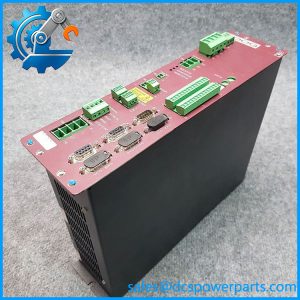
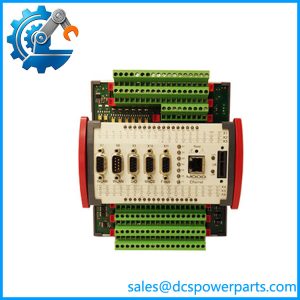
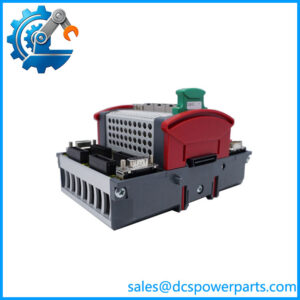
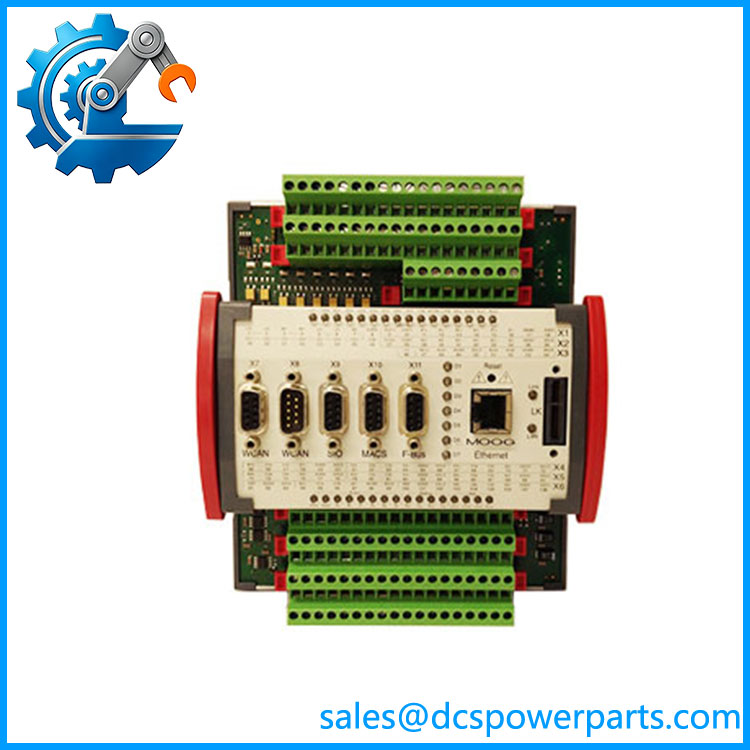
Moog D136-001-001 | Servo Controller | M3000 Digital Control Module
Key Technical Specifications
| Parameter | Specification |
|---|---|
| Product Model | D136-001-001 |
| Manufacturer | Moog GmbH |
| Product Designation | Moog Servo Controller (MSC) |
| System | M3000 Automation System |
| Module Type | Digital Control Module |
| Processor | 32-bit PowerPC RISC with floating-point unit |
| RAM | 2 MB burst RAM |
| Flash Memory | 4.5 MB burst Flash EEPROM |
| Mounting | NS 35/7.5 DIN rail, EN 50022 |
| Dimensions | 160 × 170 × 85.5 mm |
| Operating Temperature | +5°C to +55°C |
| Storage Temperature | −25°C to +70°C |
| Maximum Operating Altitude | 2,000 m |
| Storage/Transport Altitude | 3,000 m |
| Connection | Plug-in terminal strips |
| Application | M3000 servo and automation control |
The Moog technical data identifies D136-001-001 specifically as the MSC / Moog Servo Controller, with a PowerPC-based 32-bit RISC architecture, 2 MB burst RAM and 4.5 MB Flash EEPROM. Mechanical data gives a 160 × 170 × 85.5 mm enclosure and DIN-rail mounting.
Important Model-Number Distinction
Do not automatically apply specifications published for D136-001-007 or D136-001-008 to D136-001-001. Moog’s later M3000 documentation explicitly identifies D136-001-008 as the MSC I Motion Controller with 4 MB RAM, 4 MB Flash, 8 digital I/O, 8 analog inputs, 2 analog outputs, two position-transducer interfaces, two CAN controllers and an RS-232 interface; D136-001-007 adds Profibus-DP.
Product Introduction
The Moog D136-001-001 is a digital control module from the M3000 Automation System, designated as the Moog Servo Controller (MSC). It was developed for closed-loop control applications where hydraulic or electromechanical actuators require deterministic controller behavior rather than a conventional general-purpose PLC alone. The module uses a 32-bit PowerPC RISC processor with floating-point capability.
The physical design is intended for industrial control cabinets, with plug-in terminal connections and NS 35/7.5 DIN-rail mounting. For maintenance teams, the critical issue is not simply whether a replacement powers up; the controller revision, M3000 application, stored parameters, connected servo hardware and communication architecture must all be checked before returning a machine to service.
D136-001-001
Application Scenarios & Field Pitfalls — Engineer’s Perspective
Engineering Pain Point
The D136-001-001 is easy to misidentify because current supplier pages frequently describe it generically as a PLC, controller, or servo module. The stronger Moog documentation identifies the part specifically as an MSC digital control module, so replacement decisions should start with the system configuration rather than a generic I/O specification.
Typical Applications
- Hydraulic Servo Control — closed-loop control of hydraulic actuators and valves.
- Industrial Motion Systems — coordinated servo control where deterministic processing is required.
- Metal Processing Equipment — hydraulic positioning and force-control applications.
- Test and Specialized Machinery — multi-variable control systems built around Moog servo technology.
Technical Pitfalls to Avoid
- Do not substitute D136-001-007 or D136-001-008 solely because the model numbers look similar.
These are later MSC variants with documented differences in memory, I/O and communication interfaces. The Profibus-equipped D136-001-007 is particularly easy to confuse with a base controller. - Do not rely on generic online I/O tables for .
Several current pages assign the later MSC I specifications to . The Moog documentation separates these part numbers, so the installed nameplate and original system documentation should take priority. - Check the application software and machine parameters.
A physically compatible controller is not automatically a functionally equivalent replacement. Preserve the original application configuration and verify the servo loop, scaling, feedback and actuator settings before commissioning. - Inspect the terminal-strip configuration.
Moog documentation notes that plug-in terminal strips required for power and signal connections may be separate accessories rather than part of the controller delivery. This matters when purchasing a bare replacement module. - Verify the nameplate revision.
Moog’s service documentation shows the nameplate carries the part number, serial number, modification/revision information and date information. Record these before removing the installed controller.
Related Products
- Moog D136-001-007 — MSC I Motion Controller with Profibus-DP interface; not a blind replacement for .
- Moog D136-001-008 — MSC I Motion Controller with documented 4 MB RAM, 4 MB Flash, analog/digital I/O, position interfaces and CAN controllers.
- Moog D136-001-008A — later MSC I hardware variant; verify software and revision compatibility before substitution.
- Moog D138-002-002 — later controller family component frequently encountered in replacement inventories.
- Moog D136-001-007 — useful where Profibus-DP integration is part of the original machine architecture.
- Moog MSC II — later-generation controller architecture with a different hardware and software configuration.
Procurement Note
For a , specify the complete part number together with the controller modification/revision, serial information where relevant, terminal accessories, application software and machine configuration.
The main procurement risk is buying a controller advertised with specifications actually belonging to or D136-001-008. Moog’s own documentation distinguishes these models clearly. For a critical hydraulic servo system, verify the nameplate and installed application before accepting a replacement rather than relying on a supplier’s generic “D136 controller” description.