Description
Product Overview
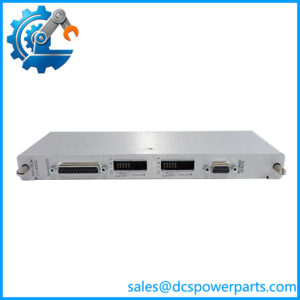
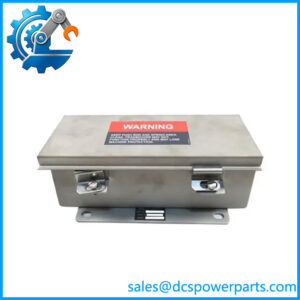
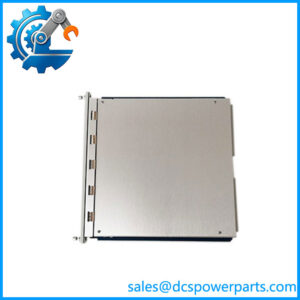
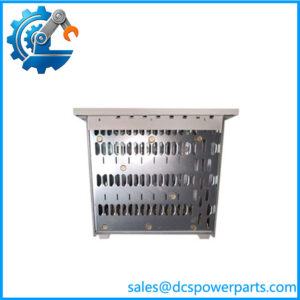
The Bently Nevada 3500/34 125696-01 is a Triple Modular Redundant (TMR) Relay Module for the Bently Nevada 3500 Machinery Protection System. Its job is at the output layer of the protection system: it receives alarm and trip logic from the 3500 monitoring architecture and operates relay outputs according to the configured alarm-drive logic. The 3500 platform is designed for continuous online machinery monitoring and machinery protection applications, including systems built around API 670 requirements.
The Bently Nevada 3500/34 provides four relay channels. Unlike a conventional four-channel relay card, its TMR architecture is intended for applications where relay-output availability and fault tolerance are important. The module works with a dedicated TMR relay I/O module and three monitor modules; the three independent monitoring paths are evaluated to produce the required voted relay output. This makes the 125696-01 particularly relevant to turbine, compressor, pump, generator, and other rotating-machinery protection systems where an erroneous shutdown can be costly, but failure to trip when required is unacceptable.
The Bently Nevada 3500/34 125696-01 should not be confused with the standard 3500/32 four-channel relay module. The 3500/34 is specifically the TMR relay version, and its installation depends on the associated TMR relay I/O architecture. The official 3500 documentation set includes a dedicated 3500/32 and 3500/34 4 Channel Relay Module and TMR Relay Module Operation and Maintenance Manual, confirming the distinction between these two relay configurations.
Technical Specifications
| Parameter | Specification |
|---|---|
| Manufacturer | Bently Nevada |
| Product Family | 3500 Machinery Protection System |
| Model | 3500/34 |
| Part Number | 125696-01 |
| Product Type | TMR Relay Module |
| Relay Channels | 4 |
| Redundancy | Triple Modular Redundancy |
| Voting Architecture | 2-out-of-3 |
| Relay Function | Alarm / Danger / Trip output |
| Logic | User-programmable alarm-drive logic |
| Logic Operators | AND / OR combinations |
| Associated TMR I/O Module | 125704-01 |
| Monitoring Inputs | Three independent monitor paths in TMR architecture |
| Rack | Bently Nevada 3500 rack |
| Module Height | Full-height |
| Dimensions | Approx. 241 × 24.4 × 99.1 mm |
| Weight | Approx. 0.5 kg |
| Configuration | 3500 Rack Configuration Software |
| Communication | Through 3500 system/rack architecture |
| Power | Supplied through 3500 rack |
| Firmware | Module/system dependent |
| Application | Machinery protection and shutdown |
| Condition | New Surplus / Tested Replacement |
The published TMR relay documentation gives the physical dimensions as approximately 241 mm × 24.4 mm × 99.1 mm and weight as approximately 0.5 kg.
Main Features and Advantages
Triple Modular Redundancy
The defining characteristic of the 3500/34 125696-01 is its TMR architecture. Three independent monitor paths participate in the protection decision, allowing the relay function to use voting rather than depending on one signal path. The published description states that the TMR Relay Module works with three monitor modules and a dedicated TMR Rack Interface/relay I/O arrangement to provide 2-out-of-3 voting.
This architecture is valuable when the protection system must tolerate a single faulty monitoring path without immediately generating an unnecessary machinery trip.
Four Independent Relay Channels
The module provides four relay channels, with each channel capable of being configured for the required alarm-drive logic.
Typical uses include:
- Machinery alarm
- Shutdown command
- Trip initiation
- Interlock
- Auxiliary annunciation
- Emergency protection logic
Programmable Alarm Logic
The relay drive logic is configured through the 3500 rack configuration system. AND/OR logic can be used to combine alarm, danger, monitor, or rack-level conditions according to the protection design.
This allows the relay outputs to reflect the plant’s actual protection philosophy rather than simply following one monitor channel.
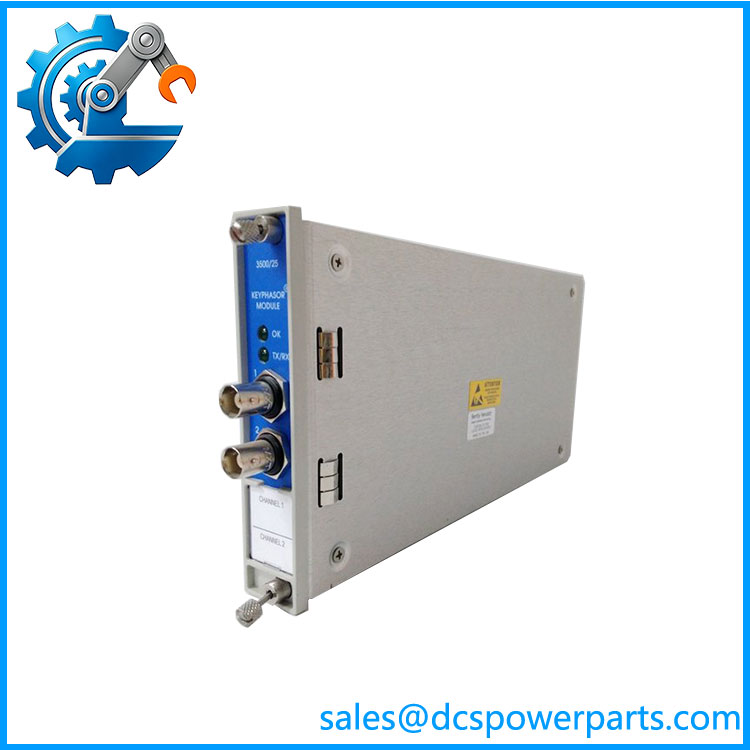
125696-01
Integration With 3500 Monitoring Modules
The 3500/34 is not intended to operate as a standalone relay controller. Its value comes from integration with the rest of the 3500 protection system. The monitor modules generate the protection conditions, while the TMR relay architecture evaluates those independent paths and drives the configured relay outputs.
Critical Machinery Protection
Typical applications include:
- Steam turbines
- Gas turbines
- Turbo-compressors
- Large pumps
- Generators
- Fans
- Other critical rotating equipment
Bently Nevada positions the 3500 system as an online machinery protection platform designed around continuous monitoring and protection requirements.
Important Replacement Considerations
The 125696-01 should be purchased and installed as a complete TMR configuration item rather than treated as an ordinary relay card.
Before replacement, verify:
- 3500/34
- 125696-01
- Associated 125704-01 TMR Relay I/O Module
- Number and type of installed monitoring modules
- Rack configuration
- Relay logic configuration
- Alarm/Danger assignments
- Trip logic
- Field wiring
- Existing TMR voting architecture
- Firmware/configuration compatibility
- Relay contact behavior after installation
A common procurement error is to compare only the physical connector and relay count. 3500/34 and 3500/32 are not simply interchangeable four-channel relay cards. The TMR architecture and associated interface hardware are the important distinction.
Related Bently Nevada Products
- 3500/32 — Standard 4-channel relay module. It performs a similar output function but does not provide the same TMR architecture as the 3500/34.
- 125704-01 — TMR Relay I/O Module associated with the 3500/34 TMR relay arrangement.
- 3500/22M — Transient Data Interface Module used for rack communication and data acquisition.
- 3500/25 — Enhanced Keyphasor Module.
- 3500/42M — Proximitor/Seismic monitor used for vibration and position-related protection.
- 3500/60 — Temperature Monitor Module.
- 3500/92 — Communication Gateway Module.
- 3500/94M — VGA display/monitoring module.
The Bently Nevada 3500 system includes dedicated modules for power, rack interface, Keyphasor, vibration, temperature, communication, display, and relay functions.
Frequently Asked Questions
What is Bently Nevada 3500/34 125696-01?
It is a four-channel TMR Relay Module for the Bently Nevada 3500 Machinery Protection System.
What does TMR mean?
TMR means Triple Modular Redundancy. Three independent signal paths are evaluated so that a single faulty path does not necessarily cause an incorrect protection decision.
How many relay channels does it have?
The 3500/34 provides four relay channels.
Is 3500/34 the same as 3500/32?
No. Both are associated with four-channel relay functionality, but 3500/34 is the TMR Relay Module, while 3500/32 is the standard 4-channel relay module. The associated architecture and interface hardware are different.
Does 3500/34 directly monitor vibration?
No. The 3500/34 is an output relay module. Vibration, position, speed, temperature, and other machinery conditions are acquired by the appropriate 3500 monitoring modules; the relay module then executes configured protection logic.
Is 125696-01 a complete TMR relay system?
Not by itself. The TMR architecture uses associated TMR relay I/O hardware and independent monitor paths. The 125704-01 is specifically identified as the TMR Relay I/O Module in the published ordering information.
Is it suitable for turbine trip applications?
Yes, where the complete 3500 protection architecture has been engineered and configured for that function. The 3500/34 is intended for high-availability relay applications involving machinery protection and shutdown logic.
Procurement judgment: Bently Nevada 3500/34 125696-01 is a specialized TMR four-channel relay module, not a generic relay output card. Its key value is the redundant protection architecture and programmable voting/drive logic. For a critical spare, verify the associated 125704-01 TMR Relay I/O Module, monitor-module arrangement, rack configuration, and existing trip logic before treating a replacement as field-ready.