Description
Product Overview
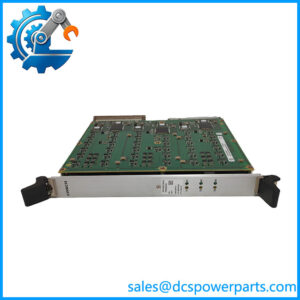
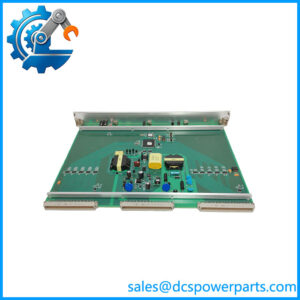
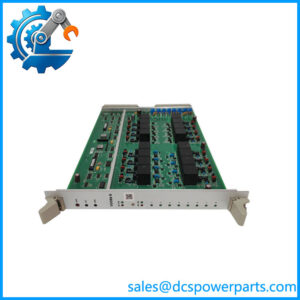
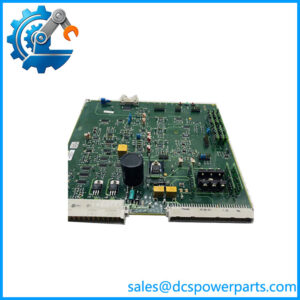
3EST125-975 DCC2382A is the drive control unit of a Bombardier MITRAC traction drive — the electronics that sit between the vehicle’s control system and the traction converter’s power stage. The identification rests on more than seller text: a trade photograph of the unit shows an enclosure marked “MITRAC Drive Control Unit DCU” with the Bombardier Transportation mark, sold alongside the board number DCC2382A. The unit is an assembly, not a single large control card, and that distinction changes how it is bought and how it is repaired.
Three identifiers attach to it, and they belong to three different registers, which is why quoting one of them alone gets a buyer into trouble. DCC2382A is the board or assembly designator — the number that appears on the label and on repair paperwork. 3EST125-975 is a type designation in the 3EST series used on this generation of traction electronics. 3BSC980008R163 is an ordering code in ABB’s 3BSC format, and it is the most informative of the three for provenance.
That order code explains the brand confusion that surrounds this part. Sellers split roughly evenly between calling it ABB and calling it Alstom, and both are describing the same object from different points on its history. The rail electronics business that produced it came out of ABB’s transportation arm, passed through Adtranz and into Bombardier Transportation, and Bombardier Transportation was acquired by Alstom in 2021. A unit can therefore carry a BBC/ABB-era type designation and an ABB-format ordering code while being labelled Bombardier and serviced today through Alstom’s rail spares organisation. None of that makes the ABB attribution wrong — it makes it historical.
The functional role follows from what a drive control unit does in a traction converter: it executes the torque and braking commands handed to it by the vehicle control system, regulates the machine currents through the converter, and monitors the power stage for faults. That description is the definition of the unit type, not a quotation of this assembly’s channel list, and it is worth being blunt about the difference: no OEM datasheet, manual or certificate for 3EST125-975 or DCC2382A is publicly retrievable, so this article does not assert terminal counts, supply voltages, processor type, interface protocols or ambient ratings for it.
What circulates instead are seller specifications that contradict each other across the entire range of the product. One page describes a 690 V three-phase unit rated 200 A; another a 380–480 V unit with 250 A output and Modbus RTU; another a 230 V AC drive with a “125–975 kW power range” and PROFINET at 98 % efficiency; another a 24 V DC interface board drawing 3.5 W; another a process control module with relay outputs switching 5 A at 250 V AC. Those cannot all describe one assembly, and at least two of them are physically implausible for a control unit: a 200 A or 250 A rating belongs to the converter’s power stage, not to the electronics that command it, and the “125–975 kW” figure is simply the part number 3EST125-975 read as a range. The one structurally credible description — that this is control electronics within a traction drive — happens to be the one the photograph supports.
For a buyer the practical consequence is narrow but firm. The purchase decision rests on four traceable fields: the assembly designator DCC2382A, the type number 3EST125-975, the order code 3BSC980008R163 where the seller can show it, and the vehicle or converter type the unit came out of. A unit that matches on the first two but came from a different converter build may be a different configuration; a unit offered on the strength of the third number alone may be a superseded or alternative assembly. Where a fleet is being supported, the vehicle type is the field that actually decides interchangeability, and it is the field sellers most often omit.
Technical Specifications
| Parameter | Value |
|---|---|
| Model | 3EST125-975 with board designator DCC2382A |
| Cross-reference order code | 3BSC980008R163 (ABB 3BSC format) |
| Manufacturer of record | Bombardier Transportation (MITRAC label on the unit); current brand owner Alstom |
| Brand lineage | ABB transportation electronics → Adtranz → Bombardier Transportation → Alstom |
| Product type | Traction drive control unit (DCU) — control electronics, not the power stage |
| Equipment platform | Bombardier MITRAC traction drive |
| Assembly level | Enclosure-level unit containing the drive control electronics |
| Sibling assembly | DCC2223A with type number 3EST125-977 |
| Application field | Metro, light rail and locomotive traction converters |
| Electrical ratings | Not published — no OEM datasheet, manual or certificate retrieved |
| Interfaces and protocols | Not published — seller claims are mutually exclusive and unsourced |
| Environmental ratings | Not published |
| Mounting and connections | As installed within the DCU enclosure; connector complement not published |
| Documentation status | Assembly-level identification only; no board-level schematic or parts list available publicly |
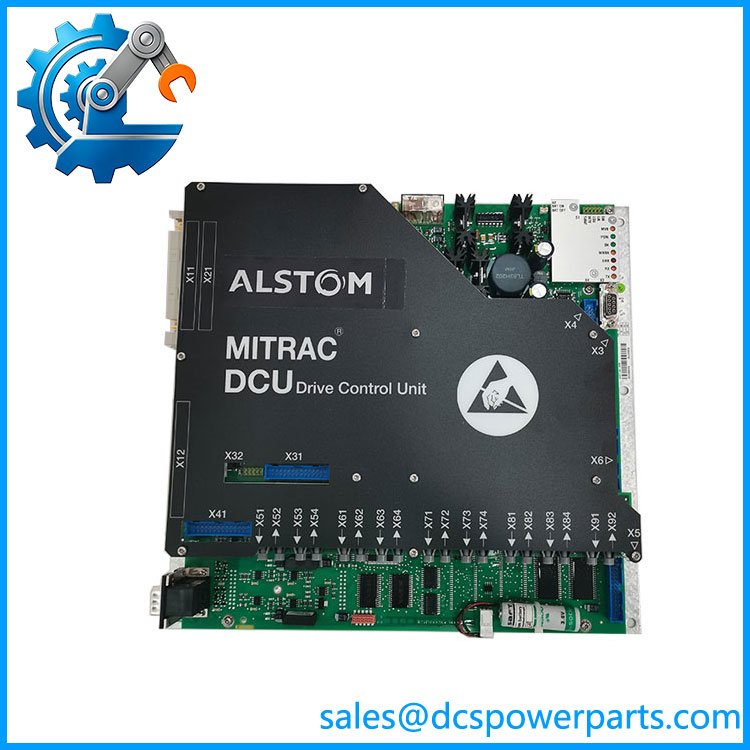
3EST125-975 DCC2382A
Key Features and Advantages
Three-register traceability: type number, board designator and ABB-format order code each identify the unit from a different angle, so a quotation can be cross-checked rather than trusted.
Assembly-level replacement: the unit is a control assembly inside the DCU, so a fault in the drive control path is addressed by exchanging the assembly rather than by attempting board-level repair on a traction converter in a depot.
Fleet-specific configuration: because the vehicle type governs interchangeability, the same designator can legitimately appear in several configurations — knowing that in advance prevents a “correct” part from being the wrong one.
Heritage transparency: the ABB-format order code means the part’s production history is traceable through a numbering register that predates the current brand, which is useful where a fleet’s documentation was written decades ago.
Service-channel continuity: the Alstom-era route still covers Bombardier-built traction equipment, so a fleet does not become unsupportable merely because the brand on the label changed.
Honest specification boundary: no published ratings means no invented ones — the buyer is told what cannot be confirmed instead of being handed numbers that will not survive contact with the vehicle.
Procurement discipline built in: four fields — designator, type number, order code and source vehicle — replace the guesswork that surrounds a part with no public datasheet.
Applications
Metro traction converters: drive control electronics in the traction inverter of urban rail vehicles, where the unit executes tractive and braking effort commands from the train control system.
Light rail and tram fleets: the same role at lower power, in vehicles whose converters are built around the MITRAC architecture.
Locomotive traction drives: mainline and shunting locomotives using the platform, where the control unit is the interface between the vehicle controller and the converter’s gate drive.
Fleet overhaul programmes: assembly replacement during periodic overhaul, where the source vehicle type must be matched before a unit is fitted.
Depot spares stock: holding a serviceable unit so that a traction fault can be resolved by exchange rather than by a vehicle standing out of service.
Test and repair benches: units pulled for diagnosis and returned to service, where the assembly designator and the order code are the fields the repair record is built on.
Obsolescence support: fleets whose builders no longer exist under their original name, sourcing through the successor brand’s rail organisation rather than through industrial-automation channels that mislabel the part.
Related Products
DCC2223A — sister assembly of the same drive control series, quoted with type number 3EST125-977; a different board in the same unit, not a substitute. 3EST125-977 — the type number carried by that sister assembly; listed here so a mixed quotation is not mistaken for this drive control unit. 3BSC980008R163 — the ABB-format order code recorded against this unit, the identifier a spares database is most likely to hold. — the board-level designator of the same unit, the number that appears on the assembly label and on repair paperwork. POS1846 TRVC062333000 CP00000310 — Alstom rail electronics from a different numbering register (TRVC equipment numbers); same corporate service channel, different platform, not interchangeable. DSI1817 TRVC062335000 CP00003934 — the same situation in another Alstom rail board; useful for recognising when a quotation has drifted into a different register rather than offering this unit.
Installation and Maintenance
Before installation: match the unit to the vehicle, not merely to the part number. Record the assembly designator , the type number 3EST125-975 and, where the seller can show it, the order code 3BSC980008R163, together with the converter or vehicle type the unit was removed from — that fourth field is what decides whether a unit is interchangeable. Confirm the control supply the vehicle provides and the connector complement against the unit in hand, since neither figure is published and neither should be assumed from a seller’s table. Treat any specification quoted for this assembly as unverified until it is checked against the vehicle’s own documentation.
Installation: work only with the converter isolated and its DC link discharged, following the vehicle builder’s isolation procedure rather than a generic one, because a traction converter retains charge in ways that panel-mounted industrial drives do not. Seat the assembly on its mountings and engage every connector fully; a partially seated connector on a traction control unit typically presents as an intermittent traction cut-out rather than a clean fault. After fitting, carry out the vehicle’s own commissioning checks — control supply, converter enable sequence, torque direction and brake blending — before the unit is released into service, and record the fitted assembly’s identifiers in the vehicle’s maintenance history.
Maintenance: keep the configuration record with the vehicle rather than with the part, because the same designator can exist in more than one configuration across a fleet. When a unit is removed, label it with the vehicle it came from; a serviceable assembly whose origin has been forgotten is worth considerably less than one with a traceable history. Store units in dry conditions and in anti-static packaging, since the assembly is control electronics and not a ruggedised field device. Where a fault recurs after exchange, suspect the vehicle-side wiring or the converter’s gate drive rather than the replacement unit — repeated failures of the same control assembly usually indicate the load it is driving. For long-term support, source through the successor brand’s rail organisation and keep the ABB-format order code on file, because that is the register in which a superseded assembly is most likely to be traceable.
Warranty and Quality
Every unit is supplied as the MITRAC drive control unit described here, identified by its assembly designator , its 3EST type number 3EST125-975 and, where documented, the ABB-format order code 3BSC980008R163, and is described from what is verifiable: a unit photographed and sold under the MITRAC Drive Control Unit DCU marking with the Bombardier Transportation label, in a product line whose heritage runs from ABB’s transportation electronics through Adtranz and Bombardier Transportation to Alstom, and whose sibling assembly is DCC2223A with type number 3EST125-977. Units are inspected for connector and pin condition, enclosure and label integrity, board mounting and standoff condition, marking legibility, and for evidence of heat damage, moisture ingress or prior repair. Three limits are stated rather than papered over: no OEM datasheet, manual or certificate for this assembly is publicly retrievable, so electrical ratings, interface protocols, processor type and environmental ranges are not asserted; the seller specifications in circulation — 690 V at 200 A, 380–480 V at 250 A with Modbus RTU, 230 V AC with a “125–975 kW range” and PROFINET, 24 V DC at 3.5 W, and relay outputs at 5 A — are mutually exclusive and physically inconsistent with a control unit, and are not adopted; and interchangeability is governed by the source vehicle or converter type, not by the part number alone. A 12-month repair, replacement or refund commitment applies. Technical support covers what this part actually raises: separating the three identifier registers so a quotation is checked rather than accepted, distinguishing a drive control assembly from the converter’s power stage when a seller’s rating figures suggest otherwise, confirming the source vehicle before a unit is dispatched, and tracing a superseded assembly through the ABB-format order code where the current brand’s records no longer carry it.