Description
Product Overview
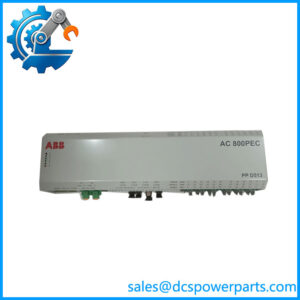
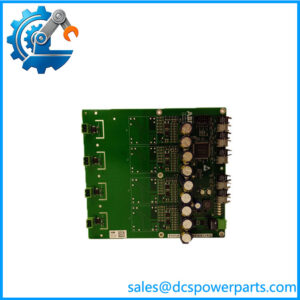
134177-001 is an ABB circuit board from the company’s older six-digit register, quoted by its bare assembly number rather than by an ordering code. That distinction is the whole of what can be established about it, and it is worth more than it first appears, because it explains why every attempt to look this part up ends in either an empty page or a confident specification that contradicts the next one.
The first check that clears up the confusion is the number’s format. ABB’s current and recent ordering codes carry structured prefixes — 3BSE and 3BHE and 3BSC — followed by a release field such as R1 or R163. 134177-001 has none of that structure: a six-digit base with a three-digit suffix, the shape ABB uses for board and assembly numbers inside a product rather than for what a customer orders. That is precisely why ABB’s public product database has an entry for it but no data behind the entry.
The second check is the prefix, and here the registry itself answers. The same base number is registered by ABB as P134177-001 and as U134177-001; both resolve to ABB product pages, and both return the same empty template with a data-sheet placeholder and a downloads section and nothing else. Two entries for one base number is not two products — it is one board recorded at two assembly states or two document levels. The paired number in this part’s trade listings shows the same behaviour: it appears as 129740-002 and as Y129740-002. Read together, the prefixes are a variant layer on a single hardware design, which is exactly the pattern that makes a bare six-digit number dangerous to substitute on the strength of the digits alone.
The third check is context. In the trade catalogues where this number appears, it sits among ABB boards of a specific kind: PFSK162 and PFSK164 at 3BSE release codes, GFD563A102, GFD233A103, PCD530A102, PPD539A102, MVR1600-4601, PFCL201CE, UFC760BE141. That population belongs to ABB’s drive and excitation control electronics — the regulator, measurement and firing-control boards of high-power converters. A listing in that company therefore points to a control board of the same generation rather than to a rack I/O module. This is contextual inference, not confirmation, and it is presented as such: the catalogue neighbourhood is evidence about where the board lives, not proof of what it does.
What cannot be established is the engineering detail. No ABB data sheet, manual section, certificate or parts list naming 134177-001 was retrieved. The published claims are the usual spread and they cannot all be true: one page calls it a relay output controller module, another a sixteen-channel digital output module, another a mixed digital I/O module, another a control-unit input/output module on a printed circuit board, another a “power base”, another a processor motherboard, another excitation controller unit, and one places it in early ABB or Accuray equipment. Two of those — the sixteen-channel digital output and the processor motherboard — describe mutually exclusive hardware, and the “power base” description belongs to a power assembly, not to a board of this format. None is adopted here.
The one structural reading in circulation that fits the evidence is the pairing with 129740-002: several listings describe 129740-002 as the complete programmed module and 134177-001 as the core board within it, which is consistent with a board-level number and a module-level number of the same generation. It is a seller’s account rather than an ABB statement, and it is recorded here as the only account that reconciles the two numbers instead of competing with them.
For procurement the conclusion is narrow and firm. Identify the board by all three fields — base number, release suffix and prefix — then require the assembly it came out of. A U-prefixed unit and a P-prefixed unit of the same base are not automatically the same article, and a -001 suffix is a release identifier, not a decoration: another suffix of the same base may be a different revision with different firmware or a different population. Where a seller offers the number alone and cannot state the parent assembly, the part is being sold as an unknown, and should be bought on the basis of an exchangeable sample rather than a substitution decision.
Technical Specifications
| Parameter | Value |
|---|---|
| Model | 134177-001 — base number 134177, release suffix 001 |
| Manufacturer | ABB (ASEA Brown Boveri) |
| Product type | Printed circuit board assembly — control electronics |
| Number register | ABB legacy six-digit board register; not a 3BSE / 3BHE / 3BSC ordering code |
| ABB registry entries | P134177-001 and U134177-001 — both resolve to ABB product pages carrying a data-sheet placeholder and no published specification |
| Prefix significance | Variant or assembly-state layer on one base design (registry evidence); the paired 129740-002 likewise appears as Y129740-002 |
| Trade pairing | Quoted with 129740-002, described in listings as the complete programmed module with 134177-001 as its core board — seller-stated |
| Platform context | Appears in trade catalogues alongside ABB drive and excitation control boards (PFSK162, PFSK164, GFD563A102, GFD233A103, PCD530A102, PPD539A102, MVR1600-4601, UFC760BE141) — inference from catalogue neighbourhood |
| Electrical ratings | Not published — no ABB data sheet retrieved |
| Interfaces and protocols | Not published |
| Environmental ratings | Not published |
| Connector and mechanical data | Not published; board-level assembly, quantity and type of connectors not documented |
| Documentation status | No data sheet, manual section, certificate or parts list naming this number is publicly retrievable |
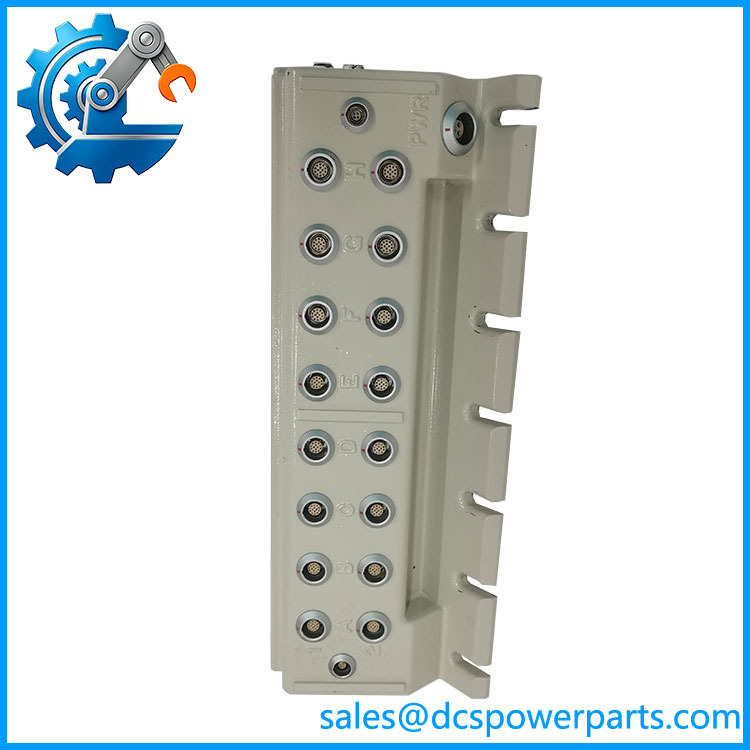
134177-001
Key Features and Advantages
Number-format literacy: the six-digit base plus three-digit suffix tells a buyer immediately that this is an internal board number, which sets the correct expectation — an exchangeable assembly, not a catalogue order line.
Prefix before digits: the registry’s own P… and U… entries show that the leading letter carries information, so a substitution decision that ignores it is incomplete by construction.
Assembly traceability: pairing the board number with the module number it belongs to is the difference between buying a board and buying an unknown, and it is the one discipline that survives the absence of documentation.
Honest specification boundary: with no ABB data sheet retrievable, no voltage, channel count or protocol is asserted — the buyer is told the boundary instead of being handed figures that will not survive first contact with the cabinet.
Catalogue-neighbourhood reasoning: recognising the board population it travels with narrows the family it belongs to without pretending that adjacency is proof.
Board-level serviceability: where the parent module is no longer procurable, board-level replacement is the route that keeps a converter or regulator in service.
Release awareness: treating -001 as a release identifier prevents the common mistake of fitting a later revision of the same base into a position documented for an earlier one.
Applications
Drive control electronics: board-level replacement inside ABB high-power converter control assemblies, where the regulator, measurement and firing electronics are the boards that fail first.
Excitation control panels: the population this number appears among is the excitation and converter control board set, so a regulator panel is the most plausible host — stated as context, not confirmation.
Board-level spares stock: holding the board rather than the module where the module is no longer available, provided the parent assembly number is recorded with it.
Repair and exchange programmes: returning a failed board while a serviceable unit keeps the converter in service, with the assembly identifiers carried through the repair record.
Legacy fleet support: installations whose documentation predates the current ABB register, where the six-digit number is what the site’s own drawings actually carry.
Verification on receipt: a board bought as an unknown is a board that must be identified before it is installed, which is where the three-field check earns its keep.
Related Products
129740-002 — the module assembly this board is paired with in trade listings; also registered with a Y prefix, which is the same variant-layer pattern. PFSK162 3BSE015088R1 — ABB control board seen in the same catalogue population; a structured 3BSE ordering code, and not interchangeable with a six-digit board. PFSK164 3BSE021180R1 — the companion processor board of that pair, same population, same caution. GFD563A102 3BHE046836R0102 — ABB excitation control board in the same trade neighbourhood; 3BHE register rather than the six-digit one. GFD233A103 3BHE022294R0103 — another board of that population, differing in release field. PCD530A102 3BHE041343R0102 — converter control board in the same catalogues; useful for recognising a quotation that has drifted into a different register. PPD539A102 3BHE039770R0102 — same situation, another board of the drive and excitation set. UFC760BE141 3BHE004573R0141 — firing-control board from the same family of catalogues, carrying a structured ordering code. MVR1600-4601 — measurement or monitoring unit seen alongside these boards; a different assembly level entirely. PFCL201CE 3BSE027062R50 — load-cell interface from the same catalogue neighbourhood; a different function, listed so the boundary of the family is visible.
Installation and Maintenance
Before installation: record the three fields that identify the board — base number 134177, release suffix 001 and the prefix actually printed on the label (P, U or another) — and record the parent assembly number the board is destined for. Compare the board in hand with the failed one: connector type, connector count, component population and any fitted firmware device should match, because a differing suffix of the same base may be a revision the cabinet was not documented against. Handle as static-sensitive electronics, in a grounded wrist strap, and inspect the edge connector and mounting holes for damage from a previous removal.
Installation: fit the board on its standoffs and engage the connectors squarely, with the cabinet isolated and the converter’s DC link discharged under the site’s own procedure — a drive or excitation cabinet retains charge in places that panel-mounted industrial equipment does not. Torque the retaining screws evenly rather than in sequence from one end, which is how boards crack at the mounting holes. Where the board carries a firmware device or a configuration memory, confirm it was transferred or that the replacement was supplied with the correct content: a correct board with the wrong content behaves exactly like a faulty board, and costs a second outage to discover.
Maintenance: keep the board’s parent assembly number on its storage bag, because a six-digit board number without a host is worth far less on the second-hand market and far less useful in a fault. Clean edge connectors with an approved contact cleaner rather than an abrasive, and never reseat a board in a live cabinet to “test” it. Where repeated failures occur in the same position, examine the load and the backplane side rather than replacing the board again — a board that fails twice is usually reporting a fault elsewhere. For long-term support, keep both numbers on file and source through ABB’s legacy spares route, since the six-digit register is where a superseded assembly is most likely still traceable.
Warranty and Quality
Every 134177-001 unit is supplied as the ABB legacy control circuit board described here — base number 134177 with release suffix 001, registered by ABB as P134177-001 and U134177-001, and paired in trade listings with the module assembly 129740-002 — and is described strictly from what is verifiable: the number’s format as an internal board register rather than a 3BSE / 3BHE / 3BSC ordering code; the existence of two ABB registry entries for the same base, both returning an empty product template with no published specification; the variant-layer behaviour visible in the prefixes, including the Y-prefixed form of the paired module number; and the catalogue neighbourhood of ABB drive and excitation control boards in which this number appears. Units are inspected for board damage, edge-connector condition and cleanliness, standoff and mounting-hole integrity, component population, label and number legibility across all three fields, and for evidence of heat damage, corrosion or prior rework. Four limits are stated rather than smoothed over: no ABB data sheet, manual section, certificate or parts list naming this number is publicly retrievable, so electrical ratings, channel counts, interfaces and environmental ranges are not asserted; the conflicting claims in circulation — relay output module, sixteen-channel digital output, mixed digital I/O, control-unit I/O module, power base, processor motherboard, excitation controller unit, early ABB or Accuray equipment — are mutually exclusive and none is adopted; the pairing with 129740-002 is a trade description, not an ABB statement; and the platform attribution from catalogue context is inference and is presented as such. A 12-month repair, replacement or refund commitment applies. Technical support covers what this part actually raises: confirming base number, release suffix and prefix before a substitute is offered, identifying the parent assembly so the board is bought as an assembly rather than an unknown, reading a quotation for a switch into a different ABB register, and advising on board-level replacement where the module itself is no longer procurable.