Description
Technical Specifications
| Parameter | Specification |
|---|---|
| Model | NFAI143-H00 |
| Manufacturer | Yokogawa |
| Module Type | Analog current input |
| Input Channels | 16 |
| Input Signal | 4–20 mA DC |
| HART Support | Yes, for the H-model variant |
| Transmitter Type | Two-wire or four-wire, selectable by channel according to the documented configuration |
| Transmitter Supply | At least 19.0 V at 20 mA; no more than 25.5 V at 0 mA |
| Transmitter Supply Current Limit | 25 mA |
| Data Refresh Cycle | 10 ms |
| Temperature Drift | ±16 µA per 10°C, as listed in the available model specification |
| Maximum Current Consumption | 230 mA at 5 V DC; 540 mA at 24 V DC |
| External Connection | Pressure-clamp terminal, MIL connector cable, or dedicated KS1 cable, depending on configuration |
| Isolation | Verify the exact isolation arrangement in the applicable general specification |
| Approximate Module Weight | 0.3 kg |
| System Compatibility | Confirm the specific FCN/FCJ controller, base, and I/O configuration |
Specifications above are drawn from available technical references for the NFAI143-H model family. Confirm them against the applicable Yokogawa general specification for the exact H00 order code before using them for design approval.
Product Overview
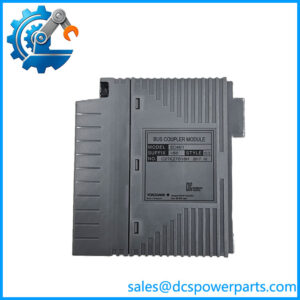
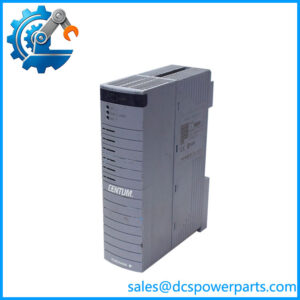
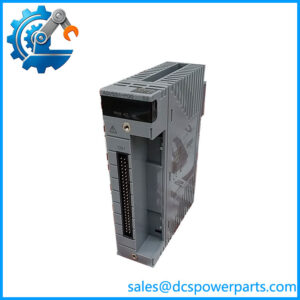
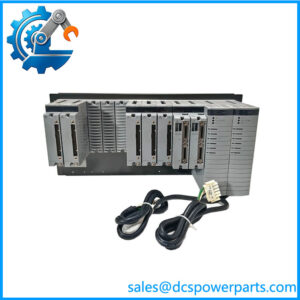
The Yokogawa NFAI143-H00 is designed to acquire analog current signals from field transmitters and make the resulting measurements available to a compatible control system. Its 16 input channels support common process variables such as pressure, flow, level, and temperature when the field instrument provides a compatible 4–20 mA output. The host controller and application configuration determine how these values are scaled, displayed, alarmed, and used in control calculations. The module itself is an I/O component, not a standalone controller.
The H designation identifies the HART-capable version of the NFAI143 family. HART communication can provide access to supported digital information from compatible smart transmitters alongside the conventional analog current signal. The actual diagnostic and configuration functions available depend on the field device, host system, software support, and communication setup. The presence of HART hardware alone does not guarantee that every transmitter parameter will be accessible through the installed application.
When sourcing this module, distinguish the base family from the complete model code. The H00 suffix should be checked against the installed hardware and connection arrangement, particularly if the replacement is intended for a live control system. Verify the controller family, terminal or cable interface, transmitter wiring, supply requirements, and applicable isolation specification before installation. Do not assume that a similarly named NFAI module has the same channel architecture or can be substituted without changes.
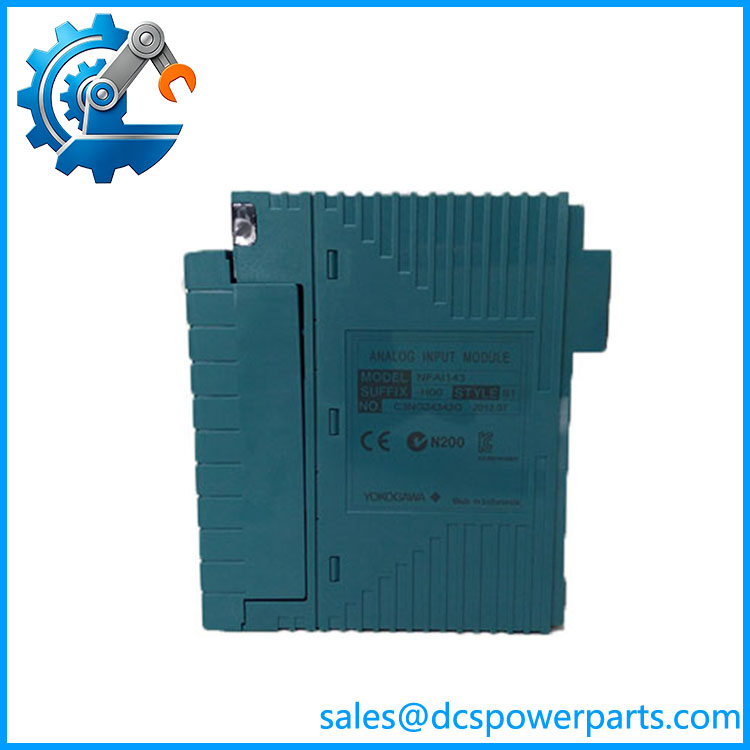
NFAI143-H00
Major Features and Advantages
1. Sixteen-channel current acquisition
The NFAI143-H00 provides 16 analog input channels for compatible 4–20 mA signals. This channel density supports multi-instrument installations where several process measurements need to be brought into one I/O module. Channel assignments, ranges, and engineering-unit scaling must still be configured correctly in the host control system.
2. HART-capable input design
The H-model family supports HART communication for compatible smart transmitters. In addition to the analog process value, HART may provide digital access to supported device information, depending on the field instrument and system implementation. Engineers should confirm HART pass-through or configuration-tool support in the actual controller and software release rather than assuming that all HART functions are available by default.
3. Support for two-wire and four-wire transmitters
Available specifications state that two-wire or four-wire transmitter operation can be selected by channel through the documented setting arrangement. This can help accommodate different instrument power and signal-wiring designs within the supported configuration. Before wiring, check the transmitter’s output circuit, supply requirements, and the module’s approved connection diagram.
4. Defined refresh and supply characteristics
The available specification lists a 10 ms data refresh cycle and transmitter supply limits of at least 19.0 V at 20 mA and no more than 25.5 V at 0 mA. These values are relevant when checking loop power and signal-update requirements. A module refresh cycle is not the same as the complete process response time, which also includes controller execution, communication, and any output or actuator delay.
5. Isolation must be verified precisely
Yokogawa identifies the NFAI143 family as an isolated analog input module, but procurement and engineering decisions should be based on the isolation arrangement specified for the exact version. Do not interpret the word “isolated” as proof that every channel is independently galvanically isolated from every other channel. Review the official specification for input-to-system and channel-to-channel isolation, including the relevant test voltage and wiring conditions.
6. Multiple connection arrangements
The documented family supports pressure-clamp terminal blocks, MIL connector cables, and a dedicated KS1 cable arrangement, depending on configuration. These interfaces are not automatically interchangeable. Confirm the required terminal assembly, cable type, and pin assignment before ordering a spare. A mismatch at the field interface can prevent installation or create wiring errors even when the module’s core function is correct.
Typical Applications
- Pressure measurement: Acquiring 4–20 mA outputs from compatible pressure transmitters for monitoring, alarms, and process control.
- Flow measurement: Receiving analog signals from flow transmitters for process indication and control calculations.
- Level monitoring: Collecting current signals from compatible level instruments in tanks, vessels, and process units.
- Temperature monitoring: Reading the current output of a temperature transmitter; the module is not a direct thermocouple or RTD input unless the specific configuration documentation says otherwise.
- Smart transmitter diagnostics: Using supported HART functions to access device information where the field transmitter and host software support the required functions.
- Multi-point process acquisition: Consolidating several analog measurements within a 16-channel I/O module.
- Control-system maintenance: Replacing a failed module in a compatible Yokogawa installation after confirming the full model code and wiring arrangement.
These are examples based on the documented input function. Actual use depends on transmitter characteristics, system architecture, software configuration, and any application-specific requirements.
Related Products
| Model | Relationship |
|---|---|
| Base analog input module family for 16-channel 4–20 mA acquisition; confirm the exact HART and isolation configuration. | |
| NFAI141-H | 16-channel 4–20 mA analog input module with HART; its isolation characteristics differ from the family. |
| NFAI135-H | Eight-channel 4–20 mA analog input module with HART and individually isolated channels, according to Yokogawa’s family documentation. |
| NFAI841-H | Eight-channel input/eight-channel output analog I/O module with HART functionality. |
| NFAI543 | 16-channel analog output module for 4–20 mA signals; performs an output function rather than input acquisition. |
| NFAV144 | 16-channel isolated voltage input module for −10 V to +10 V signals; a different input signal type. |
| NFTA4S | Associated connection hardware identified in Yokogawa documentation for compatible analog I/O module configurations; confirm the correct terminal or cable option. |
These products belong to related Yokogawa analog I/O families, but their channel counts, signal types, isolation arrangements, and host-system support differ. They should not be treated as direct replacements without checking the relevant general specifications.
Installation and Maintenance
Before installing a Yokogawa -H00, verify the full model designation, controller compatibility, and required external connection hardware. Compare the existing module with the replacement using the system bill of materials, terminal drawings, and the applicable Yokogawa general specification.
- Isolate the equipment safely. Follow the plant’s lockout/tagout procedures and approved control-system maintenance instructions.
- Confirm the transmitter type. Determine whether each connected device uses a two-wire or four-wire arrangement and configure the channel accordingly.
- Check loop power. Verify that the transmitter supply voltage and current requirements fall within the documented limits for the exact module version.
- Inspect the interface. Check terminal blocks, cables, connectors, pin assignments, and insulation for damage, contamination, or loose connections.
- Validate the signal configuration. Confirm the 4–20 mA range, engineering-unit scaling, channel assignment, and alarm limits in the host application.
- Test HART functions if required. Use a compatible transmitter and supported system tools to confirm digital communication; do not infer HART operation solely from a valid analog current reading.
- Commission and document. Verify representative input values and record the module identity, wiring changes, test results, and any configuration updates.
If an input is incorrect or unstable, check the field transmitter, loop wiring, supply voltage, terminal connections, and host configuration before deciding that the module has failed. If isolation performance is important to the application, use the manufacturer’s documented test conditions and procedures rather than applying an improvised field test.
Product Assurance and Procurement Checks
For procurement, confirm that the offered unit is specifically -H00 and that its physical connection arrangement matches the installed system. Request confirmation of the hardware revision where available, included terminal or cable accessories, condition, and any functional testing performed.
For used or refurbished stock, ask which channels and functions were tested and whether HART operation was included in the test scope when required. A visual inspection cannot prove analog accuracy, transmitter-supply performance, or successful HART communication. For new stock, establish provenance and packaging condition where these are part of the site’s quality requirements; do not infer either from a seller’s listing alone.
Before approving a replacement, check the supported controller, I/O base, connection hardware, signal configuration, and isolation requirements. If the application depends on HART diagnostics, confirm support across the field device, module, host software, and engineering tools. Record acceptance-test results according to the site’s maintenance and quality procedures.
Procurement recommendation: The Yokogawa -H00 is a 16-channel, 4–20 mA analog input module with HART capability. Confirm the exact isolation specification, connection hardware, and host-system compatibility before treating a proposed unit as a direct replacement.