Description
Key Technical Specifications
| Parameter | Specification |
|---|---|
| Manufacturer | Yokogawa Electric |
| Product Model | ANB10D-440 |
| Product Type | ESB Bus Node Unit |
| System | Yokogawa FIO / CENTUM architecture |
| Bus | ESB Bus |
| Power Supply | 24 VDC |
| Power Configuration | Dual-redundant |
| I/O Capacity | Up to 8 I/O modules |
| Supported I/O | FIO I/O modules |
| Mounting | 19-inch rack |
| Rack Fixing | 4 × M5 mounting screws |
| Overall Width | 482.6 mm |
| Chassis Height | Approx. 205 mm |
| Depth | Approx. 150.6 mm |
| Node Architecture | ESB Bus Interface Slave Modules + I/O Modules |
| Explosion Protection | Depends on complete model/option configuration |
| Related Connector Units | CU2N / CU2T variants |
| Expansion Option | NDEL option available on applicable configurations |
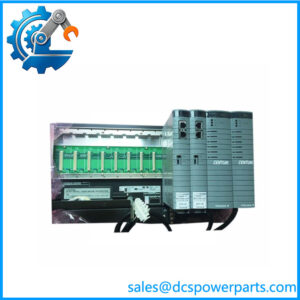
Yokogawa’s general specifications show that the ANB10D node can accommodate a maximum of eight I/O modules, with two ESB Bus Interface Slave Modules used for a dual-redundant configuration. The power-supply section likewise supports redundant power-supply modules.
The mechanical dimensions are substantial because this is a rack/node assembly rather than a small plug-in I/O card: approximately 482.6 mm wide × 205 mm high × 150.6 mm deep. The manufacturer’s drawing specifies four M5 holes for 19-inch rack mounting.
One procurement point deserves emphasis. ANB10D-440 is not necessarily a complete, populated node just because the base model number matches. Complete ordering codes may specify connector units, expansion licensing, and other configuration details. For example, the documented ANB10D-440/CU2T/NDEL configuration includes a CU2T connector unit with terminator and the NDEL node-expansion option.
Application Scenarios & Pain Points
A failed ESB node is rarely a convenient failure. It can take several FIO channels out of service simultaneously, and swapping hardware without checking the node configuration can create a second problem during an already tight maintenance window.
Typical Applications
- CENTUM/FIO Distributed I/O: ANB10D provides the node-level architecture for connecting FIO I/O modules to the ESB bus.
- Redundant DCS Nodes: The D configuration supports a dual-redundant node arrangement, with redundant ESB interface and power architecture.
- Process Plant Remote I/O: The node is appropriate where multiple analog and digital FIO modules are grouped into a common ESB-connected node.
- Legacy DCS Replacement: Particularly relevant when maintaining an existing Yokogawa installation where a complete node assembly is preferable to redesigning the I/O architecture.
Field Case:
A node showing intermittent ESB communication should not immediately be condemned. Check both power feeds, redundant SB401 modules, ESB cabling, node configuration, and the connector-unit termination first. A slightly loose connector can produce intermittent communication that looks like a failing node controller.
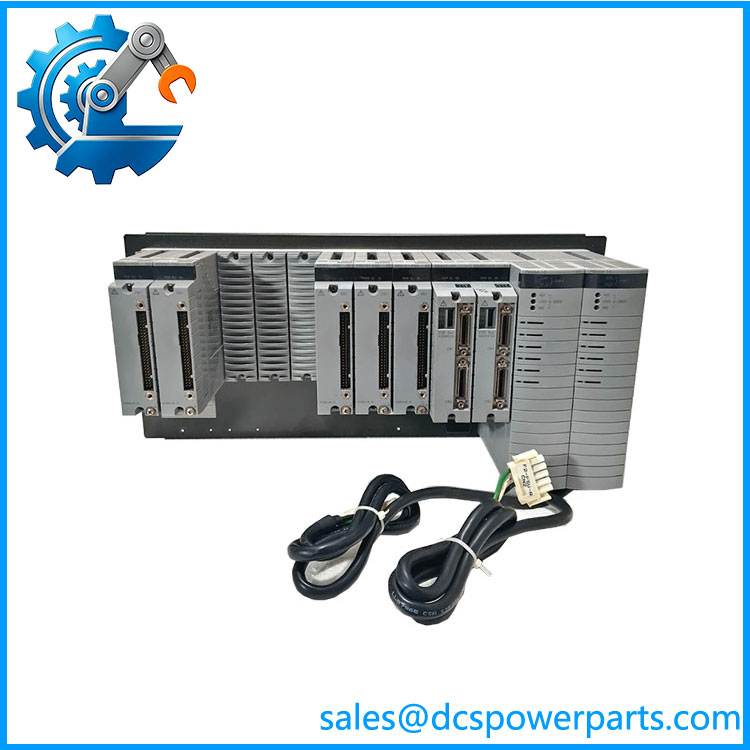
ANB10D-44
Related Products
- Yokogawa ANB10D-445 — Current replacement family for applicable -440 configurations. The exact replacement depends on the complete suffix and installed FIO/ESB architecture; do not assume mechanical equivalence alone is sufficient.
- Yokogawa ANB10S — Single-node ESB Bus Node Unit variant. The S configuration differs from ‘s redundant architecture and is appropriate where redundancy is not required.
- Yokogawa ANR10D-440 — ER Bus Node Unit rather than an ESB node. It belongs to a different bus architecture and should not be treated as a direct substitute.
- Yokogawa SB401 — ESB Bus Interface Slave Module installed in the node. Two modules can be used for the dual-redundant configuration.
- Yokogawa PW481 / PW482 / PW484 — Power-supply modules used within the FIO node architecture. The correct power module depends on the node configuration and supply arrangement.
- Yokogawa ADV-series I/O modules — FIO digital I/O modules installed within the node. The node provides the physical architecture; the individual I/O module determines the field signal type.
- Yokogawa AAI-series I/O modules — Analog FIO modules that can occupy the available I/O positions, subject to the applicable node configuration and installation restrictions.
- Yokogawa AFV10D — Duplexed Field Control Unit used at the control-system level. nodes connect distributed FIO I/O into the broader control-system architecture rather than replacing the FCU itself.
The Engineer’s Guide: Field Pitfalls to Avoid
⚠️ Do Not Order From “-440” Alone
The complete suffix can define critical hardware and system options.
How to avoid it: Compare the existing nameplate against the complete ordering code, including items such as /CU2T, /CU2N, and /NDEL. The CU2T variant, for example, includes an ESB connector unit with terminators.
⚠️ Verify Redundancy Before Replacement
is intended for a redundant node architecture. Removing one redundant interface or power module without understanding the node’s current operating state can turn a maintenance job into a process interruption.
How to avoid it: Confirm the status of both power feeds and both ESB interface paths before removing hardware.
⚠️ Check I/O Module Compatibility
The node supports multiple FIO I/O modules, but not every module/configuration can necessarily be installed in every node arrangement. Yokogawa specifically documents installation quantity and allocation restrictions.
How to avoid it: Record the existing slot-by-slot I/O population before replacement. If barriers or special modules are present, verify the required insulation partition and cabinet restrictions.
Frequently Asked Questions (FAQ)
What is Yokogawa -440?
It is a dual-redundant ESB Bus Node Unit used in Yokogawa’s FIO architecture. It provides the physical node structure and ESB interface for FIO I/O modules.
an I/O module?
No. This distinction matters.
is the node unit/chassis architecture. Individual FIO I/O modules are installed within the node, while ESB interface modules provide the connection toward the control system.
How many I/O modules can support?
Yokogawa’s specification allows up to eight I/O modules in the node. The actual permitted allocation depends on the installed module types and the applicable system configuration.
a redundant node?
Yes. The configuration supports dual-redundant operation. Yokogawa specifies two ESB Bus Interface Slave Modules for a dual-redundant configuration and supports redundant power-supply modules.
be replaced b0D-445?
Potentially, and published procurement information identifies as the newer replacement for appli configurations.
But this should be treated as a configuration-verification exercise, not a blind part-number substitution. Compare the complete suffix, connector-unit type, expansion option, installed I/O modules, ESB interface modules, and system revision before approving the replacement.
What should I request when buying a refurb?
Ask for:
- Complete nameplate photograph
- Full ordering code
- Connector-unit identification
- Installed SB401 modules
- Installed power-supply modules
- Slot-by-slot I/O inventory
- ESB communication test
- Redundant power-input test
- Backplane/connector inspection
- Rack mounting condition
- Node configuration verification
- Test report
- Warranty terms
For this hardware, “power tested” is not enough. The useful test is a configured node test with the appropriate ESB interface and representative FIO modules.
What is the biggest compatibility risk?
The complete suffix and node configuration. A buyer may recei chassis that looks correct but lacks the required connector-unit or expansion configuration.
For procurement, specify the complete installed identifier—not simply —and compare the physical node against the Yokogawa configuration documentation before approving a replacement.