Description
Key Technical Specifications
| Parameter | Value |
|---|---|
| Product Model | EC401-10 S2 |
| Manufacturer | Yokogawa |
| Product Type | ESB Bus Coupler Module |
| System Platform | Yokogawa CENTUM VP |
| Application | Field Control Unit distributed I/O communication |
| Communication Bus | ESB (Enhanced Serial Bus) |
| Function | FCU-to-FIO node communication |
| Network Type | Yokogawa proprietary I/O communication |
| Mounting | Yokogawa FCU / node base unit |
| Power Supply | System backplane supply |
| Diagnostics | Communication and module status monitoring |
| Installation Type | Control cabinet / remote I/O cabinet |
| Compatible Devices | Yokogawa FIO modules and node components |
| Typical Use | Process plant distributed I/O expansion |
Application Scenarios & Pain Points
A DCS communication fault can appear as dozens of field instrument failures at once. Engineers often spend time checking transmitters and wiring before discovering the real issue is a failed communication interface between the controller and the I/O network.
Typical applications:
- Refineries: Used in CENTUM VP architectures connecting remote I/O cabinets installed near process units, reducing long field cable runs.
- Chemical Facilities: Supports distributed control installations where multiple I/O nodes handle large numbers of valves, transmitters, and status signals.
- Power Generation Plants: Provides communication support between FCU equipment and remote signal acquisition cabinets.
- Water and Utility Systems: Used for expanding Yokogawa control systems across large physical areas.
Field note: A production facility experienced a sudden loss of several remote I/O points while field instruments remained operational. Investigation showed the communication interface module had failed, preventing the controller from accessing the connected node. Replacing the EC401-10 S2 and validating the ESB configuration restored communication.
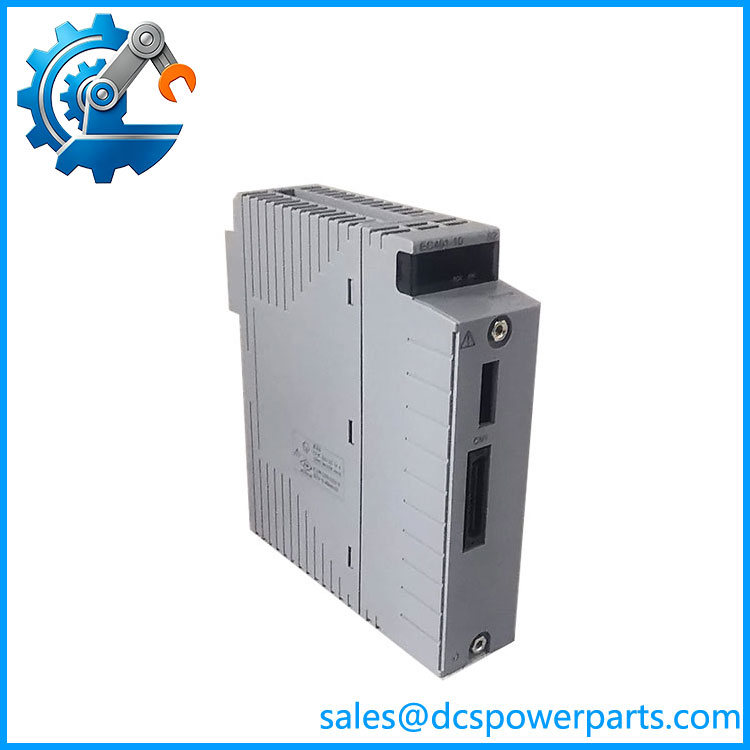
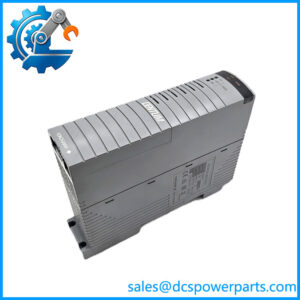
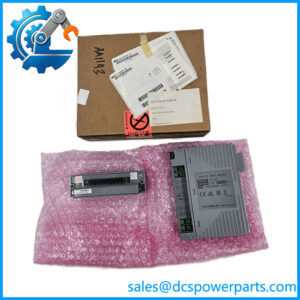
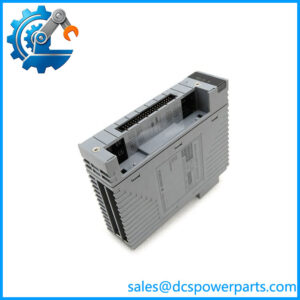
EC401-10 S2
Related Products
- Yokogawa EC401-10 S1 — Earlier EC401 revision. Used in compatible Yokogawa FCU/FIO installations where matching revision requirements apply.
- Yokogawa EC402-10 — Related ESB communication module variant. Used for different node connection arrangements within Yokogawa distributed I/O systems.
- Yokogawa EB401-10 — ESB bus interface component used in FIO architectures for expanding communication capacity.
- Yokogawa ADV551-P00 S2 — Digital output module used with Yokogawa FIO systems for discrete field control signals.
- Yokogawa ADV151-P00 — Analog input module for acquiring process transmitter signals within the same distributed I/O environment.
- Yokogawa ADV161-P00 — Analog output module used for continuous control applications such as valve positioning.
- Yokogawa AFV10S — Field Control Unit platform used with CENTUM VP systems.
- Yokogawa AFS10S — Field Control Unit base and supporting hardware for distributed I/O installations.
The Engineer’s Guide: Field Pitfalls to Avoid
⚠️ ESB Network Configuration Mismatch
A replacement coupler may power up correctly while the connected I/O node remains unavailable.
How to avoid: Confirm ESB bus addresses, node configuration, and cable routing before removing the original module.
⚠️ Mixing Different Hardware Revisions
S1 and S2 revisions may appear identical but can have different compatibility requirements.
How to avoid: Match the complete model code and revision level with the existing installed hardware.
⚠️ Poor Connector Condition
Communication problems are sometimes caused by physical connections rather than electronics.
How to avoid: Inspect connectors for dust, oxidation, bent contacts, and loose mounting before commissioning.
Frequently Asked Questions (FAQ)
Can the Yokogawa EC401-10 S2 replace an existing EC401 module?
Yes, when the existing installation uses a compatible CENTUM VP FIO architecture. Engineers should confirm revision level, node configuration, and ESB network arrangement before replacement.
What is the main function of the -10 S2?
The module provides the communication interface between Yokogawa Field Control Units and distributed FIO I/O nodes, allowing controllers to exchange process data with remote modules.
Does replacing the -10 S2 require changing the DCS application logic?
Normally, no. The control application generally remains unchanged if the communication topology and I/O configuration match the original system.
Why does the remote I/O node remain offline after installing a new module?
Common causes include:
- Incorrect ESB cable connection
- Wrong node configuration
- Hardware revision mismatch
- Faulty communication path
- Incorrect system initialization
A powered module does not guarantee successful network communication.
What should be checked before purchasing this module?
Verify:
- Full model number and suffix
- Existing CENTUM VP version
- FCU model
- ESB topology
- Connected I/O node types
- Spare module revision requirements
Is a refued S2 acceptable for critical process systems?
A tested refurbished module can be suitable when it has passed communication testing, power checks, connector inspection, and compatibility verification with the target Yokogawa system.
How should this module be stored before installation?
Keep it in anti-static packaging in a clean, dry environment. Long-term exposure to moisture or contaminants can affect connectors and electronic components.