Description
Key Technical Specifications
| Parameter | Value |
|---|---|
| Manufacturer | Yokogawa Electric Corporation |
| Model | VC401-10 |
| Product Family | CENTUM |
| Product Type | V net Coupler Module |
| Primary Function | Vnet communication/coupling |
| System Role | Control-network communication hardware |
| Related System | Yokogawa CENTUM control systems |
| Variant | VC401-10 |
| Installation | CENTUM system hardware architecture |
| Status | Legacy / discontinued hardware |
Yokogawa’s documentation lists VC401 as a V net Coupler Module alongside other communication devices such as VI451, VI461, VF702, and VI702. It separately identifies VI702 as a Vnet/IP Interface Card, which is an important distinction when selecting replacement hardware.
Some non-OEM listings report 100 Mbps, 10 ports, and dimensions around 100 × 68 × 26 mm for VC401-10. These figures are not sufficiently corroborated by Yokogawa documentation available publicly, so they should not be used as installation specifications without checking the applicable General Specification or nameplate.
Product Introduction
Yokogawa VC401-10 Product Introduction
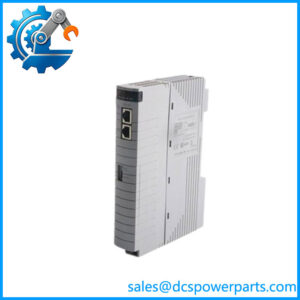
The Yokogawa VC401-10 is a Vnet Coupler Module used within the CENTUM control-system architecture. Its purpose is associated with coupling and communication on Yokogawa’s Vnet control network rather than conventional process I/O. Yokogawa’s current CENTUM documentation explicitly classifies the family as a V net Coupler Module.
For legacy DCS maintenance, this distinction matters. The -10 should not be treated as a generic Ethernet adapter or substituted with a Vnet/IP interface simply because both devices handle network communication. The actual CENTUM generation and network architecture must be checked first.
Application Scenarios & Field Pitfalls (The Engineer’s Perspective)
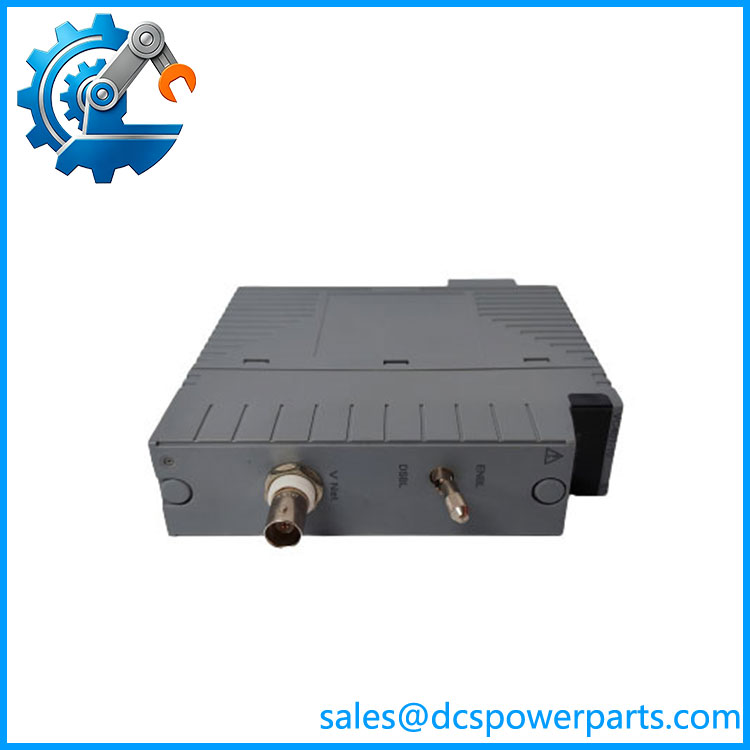
VC401-10
Engineering Pain Point
When an older CENTUM network develops a communication fault, the temptation is to replace the suspect card with whatever Yokogawa communication module is available. That is where many maintenance jobs go sideways. , VI451, VF702, and VI702 do not represent the same network function. Yokogawa’s own hardware documentation separates these device classes.
Typical Applications
- Oil & Gas — Legacy CENTUM control networks serving refinery and upstream process-control systems.
- Chemical Processing — Vnet-based DCS architectures connecting process-control system components.
- Power Generation — Older Yokogawa control installations requiring replacement communication hardware.
- Petrochemical — Brownfield DCS maintenance where existing Vnet infrastructure must remain operational pending migration.
Technical Pitfalls to Avoid
- Do not substitute VI702 by model-family similarity.
Yokogawa identifies as a V net Coupler Module, while VI702 is identified as a Vnet/IP Interface Card. They perform different network functions. - Verify the CENTUM generation before procurement.
CENTUM VP uses a defined architecture comprising human-machine interfaces, field control stations, and a control network. The applicable communication hardware depends on where the module sits in that architecture. - Do not trust gen specifications blindly.
Current web listings contain contradictory descriptions, including claims that is a PCIe Vnet/IP interface and even unrelated vision hardware. Those descriptions should be rejected unless supported by Yokogawa documentation. - Record the existing network topology before replacement.
Photograph all network connections and identify the associated communication cards. On legacy Vnet systems, the physical connection arrangement is often more informative than the product name alone.
Related Products
- VI451-10 — Yokogawa CENTUM Communication Module. It belongs to the same general communication-hardware area but is not the same device as the V net coupler. Yokogawa lists VI451 separately from in its hardware documentation.
- VI461 — Another Yokogawa Communication Module listed in the CENTUM VP hardware guide. It should be evaluated according to its specific station/network role rather than treated as a direct replacement.
- VF702 — Yokogawa Control Bus Interface Card for V net. This is a different interface category and may be encountered in older Vnet control-network configurations.
- VI702 — Yokogawa Vnet/IP Interface Card. This is particularly relevant to modernization work involving Vnet/IP. It is not a drop-in replacement for a simply because both are network-related modules.
- — A docume variant associated with the CENTUM range. The /S1 suffix should be treated as a configuration distinction, so verify the installed system requirements before substitution.
- AVR10D — Yokogawa Duplexed V net Router. This is used for network routing/redundancy functions and occupies a different role from the coupler.
- AW810D — Yokogawa Wide Area Communication Router. Applicable when communication must extend beyond the local control-network architecture. It is complementary network infrastructure rather than a direct substitute.
- GRVSW — Yokogawa Managed Switch hardware identified in the CENTUM VP communication-device documentation. Relevant to network infrastructure, particularly where modern Ethernet-based architecture is involved.