Description
Key Technical Specifications
| Parameter | Value |
|---|---|
| Manufacturer | Yokogawa Electric Corporation |
| Model | VI451-10 |
| Product Type | Communication Module |
| System Family | CENTUM |
| Primary Application | DCS communication/interface hardware |
| Input Power | 100–120 VAC reported by multiple listings |
| Protection Level | IP54 reported |
| Product Status | Discontinued / legacy |
| Shipping Weight | Approximately 1.1–2 kg depending on packaging/source |
| Related Variant | VI451-10 S2 / VI45110S2 |
The VI451-10 is consistently identified in available sources as a Yokogawa CENTUM communication module. The commonly published 100–120 VAC and IP54 values should be treated as identification data rather than a substitute for the OEM installation specification.
Product Introduction
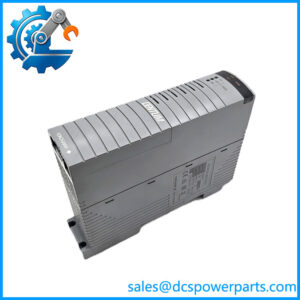
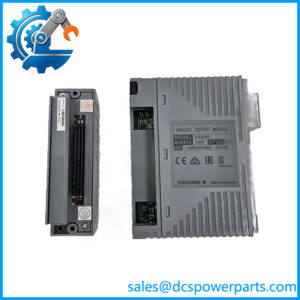
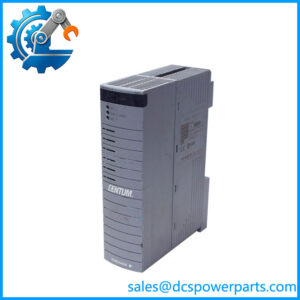
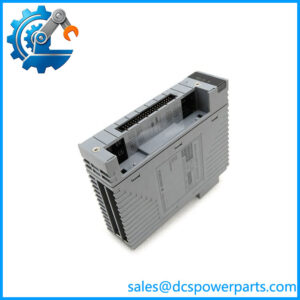
Yokogawa VI451-10 Product Introduction
The Yokogawa VI451-10 is a legacy CENTUM communication module used to provide communication/interface functionality within Yokogawa DCS installations. It is a system-level component rather than a conventional analog or digital field I/O card.
For plants maintaining older CENTUM equipment, the VI451-10 is primarily a maintenance spare. A correct replacement requires more than matching the model number: verify the CENTUM generation, installed chassis, hardware revision, and communication architecture before putting the module into service.
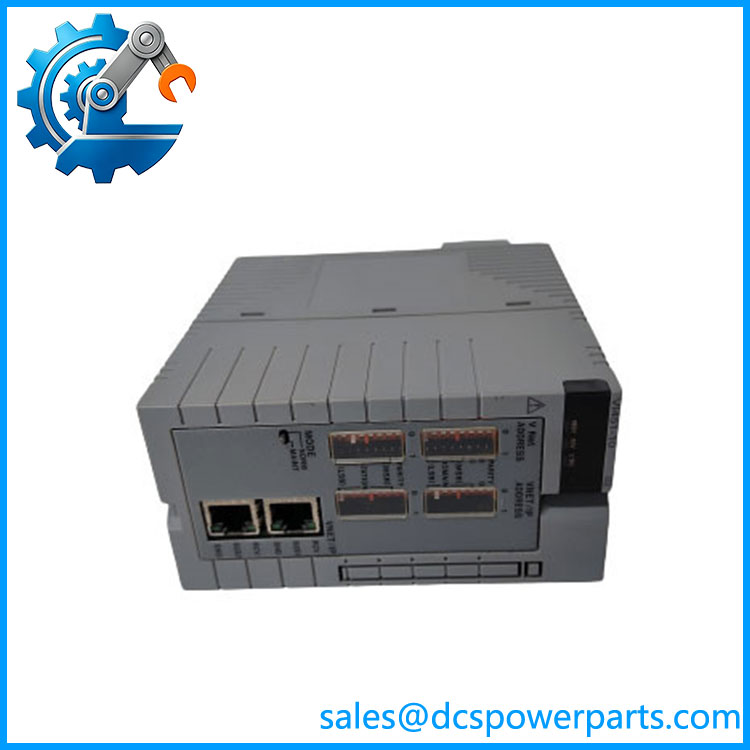
VI451-10
Application Scenarios & Field Pitfalls (The Engineer’s Perspective)
Engineering Pain Point
A communication-module failure can be deceptively expensive. The field instruments may be healthy, the controllers may still be powered, yet the operator station loses access to part of the control network. On a legacy CENTUM system, replacing the wrong communication card can turn a straightforward hardware failure into a much longer outage.
Typical Applications
- Oil & Gas — Legacy CENTUM DCS communication infrastructure supporting refinery process-control units.
- Chemical Processing — CENTUM control networks connecting controllers, operator stations, and process-control subsystems.
- Power Generation — Communication hardware in older plant control and balance-of-plant systems.
- Petrochemical — Brownfield DCS maintenance where original CENTUM hardware must remain operational until migration.
Technical Pitfalls to Avoid
- Do not confuse with similarly named modules.
Several current web listings incorrectly describe the as an encoder, signal converter, or generic multi-protocol gateway. Those descriptions conflict with the stronger evidence identifying it as a CENTUM communication module. Treat those specifications as unreliable unless they match the OEM documentation. - Check the exact CENTUM architecture.
A communication module is architecture-dependent. Confirm the host station/controller, rack position, associated interface modules, and applicable CENTUM generation before replacement. - Verify the electrical variant.
Multiple sources list 100–120 VAC input, but other published specifications conflict substantially. Do not use a third-party listing as the installation authority. Check the module nameplate and Yokogawa hardware documentation first. - Record the original hardware configuration before removal.
Photograph connector positions, module orientation, and cable routing. On older DCS cabinets, this simple step prevents unnecessary commissioning work after a communication-card replacement.
Related Products
- S2 / VI45110S2 — A documented variant within the Yokogawa CENTUM range. The S2 suffix should not be treated as automatically interchangeable with the base ; verify the system hardware revision first.
- VI702 — Yokogawa Vnet/IP interface hardware listed alongside the . It belongs to the network-interface side of Yokogawa system architecture and may appear in modernization or communication-interface projects.
- VC401 — A Vnet/IP interface associated with PC-based Yokogawa stations, unlike the VI451 family’s CENTUM system role. It is therefore an architectural alternative only where the host station configuration supports it.
- PW441-10 — Yokogawa power-supply hardware used in legacy system architectures. It is complementary rather than functionally interchangeable with the ; power-system compatibility must be checked at the rack/system level.
- CENTUM CS 3000 Hardware — Relevant legacy Yokogawa DCS platform for plants maintaining older CENTUM installations. Hardware compatibility should be confirmed by exact station and module type.
- CENTUM VP Hardware — Later CENTUM platform hardware used in modernization projects. Migration from older CENTUM installations should be engineered at the system level rather than by assuming direct module-for-module replacement.
- Yokogawa Vnet/IP Interface Hardware — Relevant when upgrading legacy communication architecture toward Vnet/IP. Network topology, controller generation, and station compatibility determine the appropriate interface hardware.