Description
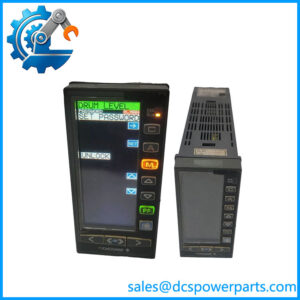
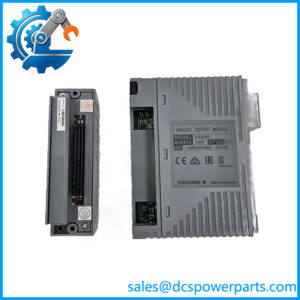
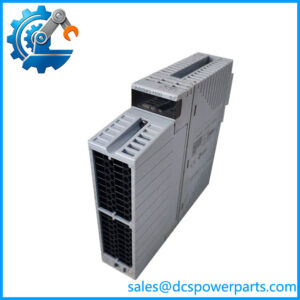
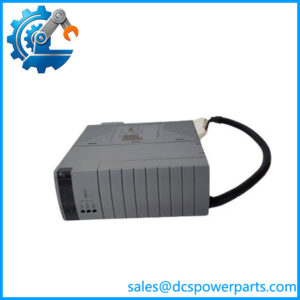
YOKOGAWA 2302-32-VLE-2
Key Technical Specifications
| Parameter | Specification |
|---|---|
| Manufacturer | Yokogawa |
| Model | 2302-32-VLE-2 |
| Product Type | Data acquisition / I/O module |
| Reported Analog Inputs | 32 voltage inputs |
| Reported Analog Outputs | 2 voltage outputs |
| Reported Input Range | ±10 V |
| Reported Output Range | ±10 V |
| Reported Resolution | 16-bit |
| Mounting | DIN rail, reported |
| Communication Interface | Not reliably verified |
| Supply Voltage | Not reliably verified |
| Operating Temperature | Not reliably verified |
| Dimensions | Not reliably verified |
The 32-channel input, 2-channel output, ±10 V, and 16-bit figures appear in secondary product references, but I would not treat them as sufficient evidence for a plant-critical replacement without checking the original equipment documentation. Other online listings incorrectly describe the same part number as a meter, recorder, protocol converter, or controller card, which indicates significant catalog contamination around this model.
Product Introduction
The YOKOGAWA 2302-32-VLE-2 is commonly identified in industrial automation inventory records as a data-acquisition or I/O-related module. Available technical listings report a high-density voltage I/O configuration, with 32 analog voltage inputs and two voltage outputs, both associated with 16-bit conversion. If those specifications match the installed hardware, the module is suited to applications where multiple analog process signals must be collected and made available to a control or monitoring system.
For maintenance procurement, the important issue is identification rather than relying on a generic description. The YOKOGAWA 2302-32-VLE-2 appears in multiple secondary catalogs with contradictory product classifications. Before installation, compare the complete part-number label, board revision, terminal arrangement, host equipment, and original configuration records. This is particularly important when replacing older Yokogawa hardware in a running plant.
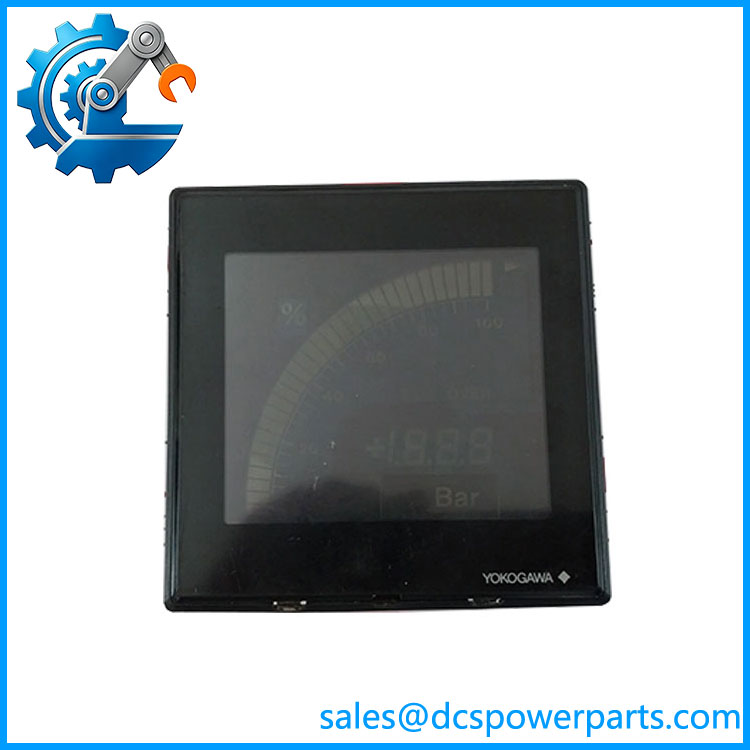
2302-32-VLE-2
Application Scenarios & Field Pitfalls — The Engineer’s Perspective
Engineering Pain Point
A common maintenance problem with legacy acquisition hardware is finding a replacement that has the same part number but does not actually match the installed electrical configuration. A module described online as a “data acquisition module” may be listed elsewhere as a controller, meter, or communication device. For 2302-32-VLE-2, that problem is especially visible in available secondary references. The safest procurement practice is to treat the exact physical identification and installed-system documentation as the controlling evidence.
Typical Applications
- Industrial data acquisition: Collection of multiple analog voltage signals for process monitoring.
- Legacy control systems: Replacement of aging acquisition hardware where the original system architecture remains in service.
- Machine monitoring: Centralized acquisition of multiple electrical or instrumentation signals.
- Plant maintenance spares: Holding a verified replacement before a scheduled shutdown or turnaround.
Technical Pitfalls
1. Do not assume every online specification is authoritative.
The model is associated with several conflicting descriptions. Some sources identify it as a data-acquisition module, while others describe completely different equipment.
2. Verify the signal type before connecting field wiring.
The ±10 V input/output specification is repeatedly reported, but the exact terminal assignment and electrical protection characteristics should be confirmed from the equipment documentation.
3. Confirm the host system.
A physically similar Yokogawa module may not be electrically or logically interchangeable with another I/O family. Check the system hardware list and engineering database rather than substituting by appearance.
4. Check revision information.
For older equipment, board revision and firmware/software compatibility can matter as much as the base model number.
5. Preserve the existing configuration.
Before removing a functioning module, document terminal wiring, channel assignments, scaling, calibration values, and software configuration. This can prevent a replacement from becoming a configuration problem.
6. Test surplus or previously installed inventory.
For used 2302-32-VLE-2 hardware, verify power-up behavior and every required channel before declaring the unit ready for installation. A visual inspection alone cannot establish analog-channel performance.
Related Products
Depending on the Yokogawa system in which the module is installed, related equipment may include:
- Yokogawa VI702 — Vnet/IP interface hardware; communication function rather than analog acquisition.
- Yokogawa AIP171 — Transceiver/control hardware; not a direct substitute for an analog acquisition module.
- Yokogawa AIP578 — Yokogawa transceiver/control equipment used in legacy automation architectures.
- Yokogawa AIP591 — Related legacy control/interface hardware.
- Yokogawa NFAI841-S00/A4S00 — Analog input/output module with a different Yokogawa hardware architecture.
- Yokogawa ALP121 — PROFIBUS-DP communication interface; communication role rather than voltage acquisition.
- Yokogawa VC401-10 — Coupler hardware used within Yokogawa control architectures.
- Yokogawa VI451-10 — Communication module for Yokogawa control systems.
- Yokogawa PW441-10 — Communication-related Yokogawa hardware.
- Yokogawa PW501 — Yokogawa power-supply hardware, serving a different system function.
When sourcing a 2302-32-VLE-2 replacement, provide the complete part number exactly as printed on the module and, where possible, the system model, hardware revision, terminal-board information, and a photograph of the nameplate. That information is considerably more useful than matching a generic “32-channel analog module” description.