Description
Woodward 9907-175 Load Sharing Module
Product Overview
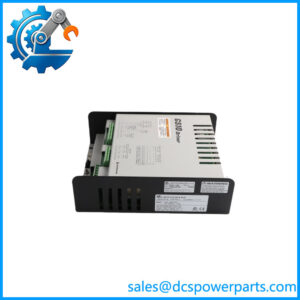
The Woodward 9907-175 is a dedicated Load Sharing Module for generator-set applications where a Caterpillar digital speed control uses a pulse-width-modulated input. Rather than functioning as a general-purpose PLC or DCS controller, the module sits between generator electrical measurements, Woodward load-sharing accessories, and the engine speed-control loop. It measures three-phase generator voltage and current, develops a load signal, and uses that signal to control generator loading through a PWM output. The architecture supports both isochronous and droop load sharing, making the 9907-175 particularly relevant to generator sets operating in parallel. Woodward documentation identifies the 9907-175 specifically for Caterpillar engines equipped with digital speed controls having PWM inputs.
From a system-integration perspective, the Woodward 9907-175 can also accept load-sharing and synchronization-related inputs from associated Woodward equipment. The documented ecosystem includes the SPM-A Synchronizer, paralleling equipment, automatic generator loading controls, import/export control, and automatic power-transfer/loading equipment. Its electrical interface is distinctly generator-control oriented: three-phase PT inputs are rated for 100–240 VAC line-to-line at 50–400 Hz, while the three-phase CT inputs are specified for 3–7 A RMS at full load. The DC supply requirement is 18–32 VDC at approximately 5 W.
One procurement detail deserves attention. 9907-175 and 9907-838 are not interchangeable on the basis of part-number similarity alone. Woodward identifies both as 24 VDC PWM Load Sharing Modules, but the 9907-175 has no PWM output surge protection, while the 9907-838 adds that protection. If this module is being replaced in an operating generator package, confirm the existing Caterpillar speed-control interface, wiring, revision, and surge-protection requirement before accepting a substitute.
Product Introduction
A generator can share real power correctly only when the load signal, governor bias, CT phasing, and speed-control interface all agree. The Woodward 9907-175 handles that specific control problem by converting generator load information into a PWM command for a compatible Caterpillar digital speed control.
For a legacy generator-control upgrade or spare replacement, the critical checks are not just “24 VDC” and the part number. CT range, PT wiring, PWM characteristics, droop configuration, and the absence of output surge protection all matter.
Key Technical Specifications
| Parameter | Value |
|---|---|
| Manufacturer | Woodward |
| Model | 9907-175 |
| Product Series | Load Sharing Module |
| Product Type | PWM Load Sharing Module |
| Primary Application | Generator-set load sharing |
| Control Modes | Isochronous and droop load sharing |
| Supply Voltage | 18–32 VDC |
| Power Consumption | Approximately 5 W |
| 3-Phase PT Input | 100–240 VAC line-to-line |
| PT Input Frequency | 50–400 Hz |
| PT Input Burden | Approximately 1.5–1.7 VA/phase at 240 VAC; 0.4–0.5 VA/phase at 120 VAC |
| 3-Phase CT Input | 3–7 A RMS at full load |
| CT Input Burden | 0.1 VA/phase at full load |
| Load Sharing Input | 0–3 VDC into 25 kΩ in isochronous mode |
| Sync Input | Compatible with Woodward SPM-A Synchronizer |
| Speed Trim | ±10% minimum speed change with external 10 kΩ potentiometer |
| PWM Output | 500 ±100 Hz square wave |
| PWM Output Surge Protection | No |
| Operating Temperature | -40°C to +70°C |
| Shock | 40 G, 11 ms sawtooth pulse |
| Installation Category | Overvoltage Category III |
| Pollution Degree | 2 |
| Dimensions | Approx. 273.6 × 214.1 × 59.2 mm |
| Weight | Approx. 1.4 kg |
| Manual | Woodward Product Manual 02036 |
The electrical values above are based primarily on Woodward Manual 02036 and associated documentation.
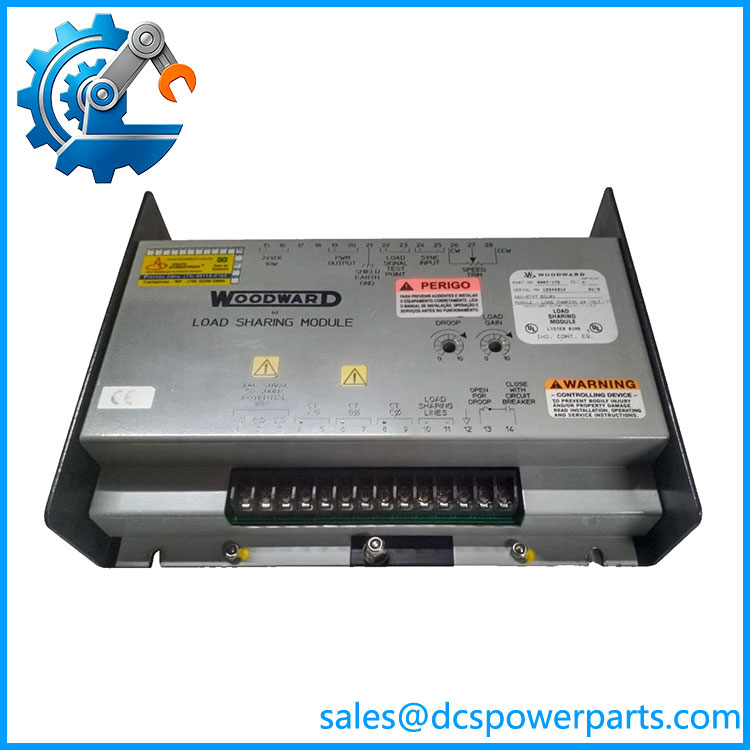
9907-175
Major Features / Practical Advantages
Generator load-sharing interface rather than generic I/O
The 9907-175 is purpose-built for generator controls. Its three-phase PT and CT measurement inputs provide the electrical information required to calculate generator loading. That signal is then used by the control circuitry to influence the connected engine speed control.
This distinction matters during procurement. A module described simply as a “load-sharing controller” may look similar to a PLC analog-output card, but the signal chain here is specialized for prime-mover and generator operation. Replacing it with generic analog hardware would require a complete engineering redesign.
Isochronous and droop operation
The module supports two common generator-paralleling control strategies. In isochronous operation, the load-sharing input participates in balancing generator load across parallel units. In droop operation, the controller introduces a speed reduction characteristic as generator loading changes. The manual documents an adjustable droop function and load-gain adjustment for parallel-generator applications.
That makes the 9907-175 useful in older multi-generator packages where a Caterpillar digital speed control must interact with Woodward synchronizing and load-sharing equipment.
PWM interface for Caterpillar digital controls
The most important compatibility point is the output. The 9907-175 generates a PWM signal for a compatible Caterpillar digital speed control. Woodward documentation specifies a nominal PWM frequency of 500 Hz with ±100 Hz tolerance, with the duty cycle representing the required load or speed bias.
Do not treat the PWM output as a universal control signal. The receiving speed-control model must be checked against the original generator package documentation.
24 VDC control power
The module operates from an 18–32 VDC supply and consumes approximately 5 W. It also incorporates protection against undervoltage, excessive positive voltage, and reverse voltage according to the documented specification.
The practical point is that this is a low-power control electronics device, not a field power supply. The generator-control cabinet still needs a properly engineered DC supply and correctly protected wiring.
Synchronizer integration
A Woodward SPM-A Synchronizer can provide the synchronization-related input to the load-sharing system. The manual also describes use with other generator-control accessories, including automatic loading and power-transfer equipment.
For a legacy control cabinet, this compatibility can be more important than the module’s individual electrical specifications. The surrounding control architecture should be documented before changing the module.
Important limitation: no PWM surge protection
This is the specification I would put directly on the purchasing checklist.
Woodward lists 9907-175 as the PWM version without surge protection and 9907-838 as the corresponding version with PWM output surge protection.
If the original equipment was designed around 9907-175, do not automatically upgrade or substitute to 9907-838 without checking the Caterpillar speed-control interface and the actual cabinet wiring. Conversely, do not substitute 9907-175 for 9907-838 simply because both are marked as 24 VDC PWM load-sharing modules.
Related Products
- 9907-838 — Closely related PWM Load Sharing Module for Caterpillar digital speed controls; the key documented difference is PWM output surge protection.
- 9907-252 — 24 VDC Load Sharing Module using a +0.5 to +4.5 VDC analog output rather than the PWM/Caterpillar interface.
- 9907-173 — AC-powered Load Sharing Module with a ±3 VDC analog output configuration.
- 9907-174 — AC-powered PWM Load Sharing Module intended for GenDec applications rather than the 9907-175 Caterpillar PWM configuration.
- SPM-A Synchronizer — Woodward synchronizing equipment that can provide the documented synchronization input to the load-sharing module.
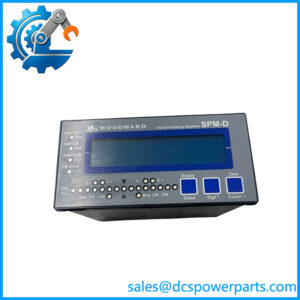
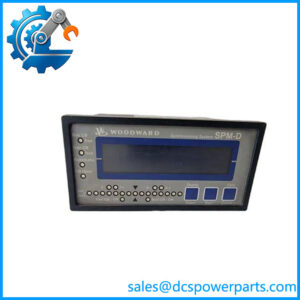
- SPM-D Synchronizer — Another Woodward synchronizer used in generator control architectures alongside Load Sharing Modules.
- AGLC — Automatic Generator Loading Control used as associated generator-control equipment in applicable systems.
FAQ
What is the Woodward 9907-175 used for?
It is a Load Sharing Module for generator sets. Its documented application is to provide isochronous and droop load sharing for engines equipped with compatible Caterpillar digital speed controls using PWM input.
Is the 9907-175 a PLC or DCS I/O module?
No. It is a specialized generator-control module. Its inputs and PWM output are designed around generator electrical measurements and engine speed-control/load-sharing functions rather than general PLC/DCS signal conditioning.
Can I replace a 9907-175 with a 9907-838?
Not automatically. Both use 24 VDC and provide PWM output, but Woodward specifies no PWM output surge protection for the 9907-175 and surge protection for the 9907-838. Verify the original control architecture before substituting one for the other.
Can I hot-swap the 9907-175?
Do not assume hot-swapping is permitted. The module is part of an engine/generator control circuit, and its removal can affect load-sharing and speed-control behavior. Follow the plant shutdown, isolation, and Woodward service procedure rather than treating it like a removable PLC I/O card.
Does the 9907-175 support firmware v3.1?
There is no firmware version v3.1 that can be reliably assigned to the 9907-175 from the public documentation reviewed. This is a legacy dedicated control module rather than a modern firmware-managed PLC platform. For replacement procurement, the nameplate, revision, manual compatibility, and generator-control application are more useful identification points.
What CT and PT signals does the 9907-175 require?
The documented three-phase PT input is 100–240 VAC line-to-line at 50–400 Hz, while the CT inputs are specified at 3–7 A RMS at full load. Correct CT phasing is essential during commissioning because the module uses these measurements to determine generator loading.
Does the 9907-175 work with an SPM-A Synchronizer?
Yes. Woodward documentation identifies the Sync Input as compatible with the optional SPM-A Synchronizer. The synchronizer can bias the load-sharing module’s control output as part of generator synchronization and parallel operation.
Is a New Surplus 9907-175 the same as a tested used unit?
Not necessarily. For this legacy module, condition should be treated as a separate procurement parameter. A New Surplus unit may have little or no operating history, while a used unit may have documented functional testing but unknown remaining component life. For critical generator service, request the exact nameplate/revision and a functional test covering the power supply, PT/CT input path, load-sharing response, and PWM output.
Procurement Note
For a Woodward 9907-175 replacement, part-number matching is only the first step. Confirm that the existing generator package uses a Caterpillar digital speed control with the required PWM interface, then verify the three-phase PT and CT wiring, control-panel revision, droop configuration, synchronizer arrangement, and PWM output requirements.
Pay particular attention to 9907-175 versus 9907-838. The two models share the same general PWM load-sharing application and 24 VDC supply class, but the documented PWM surge-protection difference can matter in an installed control system.
For a legacy spare, the most useful purchasing package should include the complete part number, nameplate revision, serial number when available, physical condition, and evidence of functional testing. Do not accept a generic “Woodward Load Sharing Module” description as sufficient identification.
Recommended procurement verification: confirm part number → confirm revision → confirm Caterpillar speed-control model → confirm PT/CT wiring → confirm PWM interface → confirm surge-protection requirement → verify test evidence.