Description
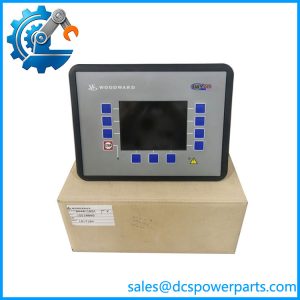
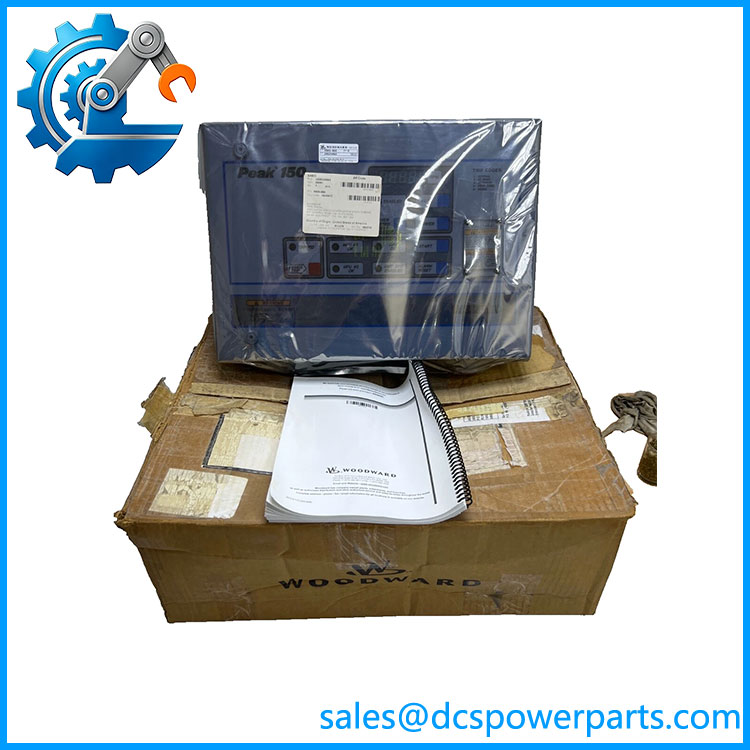
WOODWARD 9905-866 Peak 150 Digital Steam Turbine Control
Product Introduction
The Woodward 9905-866 is a Peak 150 digital control designed specifically for small industrial steam turbines using a single valve or single valve rack. Unlike a conventional PLC, the Peak 150 combines turbine governing logic, speed measurement, actuator control, operator adjustment and turbine protection-related functions within a purpose-built control platform. The 9905-866 is the 24 VDC, Modbus-equipped, NEMA 4X configuration of the Peak 150 family. Woodward documentation identifies 9905-866 as the NEMA 4X counterpart to the 24 VDC Modbus model 9905-860.
The control accepts turbine speed information from magnetic pickup inputs and provides field interfaces for analog, discrete and relay signals. The Peak 150 architecture includes two magnetic pickup speed inputs, one analog remote-speed input, analog outputs, discrete inputs and four relay outputs. Two relays are dedicated to trip and alarm functions, while the other two can be configured for user-defined functions. Modbus communication provides a practical interface to a supervisory PLC, DCS or plant monitoring system without transferring the core turbine governing function into the plant control system.
For engineers evaluating Woodward 9905-866, the most important point is exact configuration matching. The 24 VDC supply requirement, Modbus option and NEMA 4X enclosure are part-number-specific characteristics, not generic Peak 150 features. The unit operates from 18–32 VDC and has a documented maximum power consumption of 38 W. The Peak 150 family has been superseded by newer Woodward control platforms, so replacement work should be based on the existing turbine actuator, speed pickups, programmed constants, trip logic and Modbus configuration rather than assuming a newer controller is a direct software replacement.
Technical Specifications
| Specification | Details |
|---|---|
| Product Model | 9905-866 |
| Manufacturer | Woodward |
| Product Series | Peak 150 |
| Product Type | Digital steam turbine control |
| Application | Single-valve / single-valve-rack steam turbines |
| Rated Supply | 24 VDC |
| Permitted Supply Range | 18–32 VDC |
| Maximum Power Consumption | 38 W |
| Communication | Modbus |
| Serial Communication | RS-232 / RS-422 / RS-485 |
| Speed Inputs | 2 magnetic pickup inputs |
| Remote Speed Input | 1 analog input |
| Analog Outputs | 2 |
| Discrete Inputs | 8 |
| Relay Outputs | 4 hermetically sealed relays |
| Enclosure | NEMA 4X |
| Mounting | Wall or 19-inch rack mounting |
| Service Interface | Hand-held programmer service port |
| Product Manual | Woodward Manual 85565 |
| Lifecycle | Superseded legacy Peak 150 family |
The manual identifies the 9905-866 specifically as the 24 VDC with Modbus, NEMA 4X configuration.
9905-866
Main Features and Engineering Considerations
Purpose-Built Turbine Control
The Peak 150 is intended to perform turbine governing tasks rather than general-purpose PLC sequencing. Its control architecture includes speed regulation, operator control, turbine startup/shutdown functions and dedicated trip/alarm handling. This distinction matters when integrating the controller into a plant DCS: the DCS can supervise operating parameters and exchange selected commands through Modbus, while the Peak 150 remains responsible for its configured turbine control functions.
Dual Magnetic Pickup Inputs
The controller provides two magnetic pickup speed inputs. Speed-sensing wiring deserves particular attention during commissioning because pickup amplitude, shielding, cable routing and signal integrity directly affect speed measurement. Woodward documentation recommends separately shielded wiring for each MPU and actuator circuit.
Dedicated Relay Architecture
Four hermetically sealed relays are provided. Relay #1 is the trip relay and Relay #2 is the alarm relay; Relays #3 and #4 are configurable. This arrangement is important when replacing an existing controller because changing relay philosophy or energize/de-energize logic can alter the turbine shutdown circuit.
Modbus Integration
The 9905-866 includes Modbus communication, allowing selected turbine information and control parameters to be exchanged with a higher-level automation system. Before replacement, record the existing Modbus address, serial settings, register mapping and master-side polling configuration. A physically compatible replacement can still create commissioning problems if the communication parameters or register interpretation differ.
NEMA 4X Enclosure
The NEMA 4X enclosure is a significant part-number characteristic. Do not substitute a NEMA 4 Peak 150 variant simply because its electrical control functions appear similar. The 9905-860 and 9905-866, for example, share the 24 VDC/Modbus configuration but have different enclosure classifications.
Legacy Equipment Consideration
The Peak 150 family is now a legacy platform and has been superseded, with Peak200 identified as a newer family-level upgrade path. That does not mean an existing 9905-866 should automatically be replaced. For a running turbine, preserving the existing application configuration may be lower risk than introducing a new control architecture.
Application Scenarios
- Single-valve industrial steam turbines
- Single-valve-rack turbine packages
- Steam turbine-driven pumps
- Steam turbine-driven compressors
- Steam turbine-driven fans and auxiliary machinery
- Small industrial power-generation turbine systems
- Turbine packages requiring Modbus communication with a PLC or DCS
- Replacement of an existing Peak 150 24 VDC Modbus NEMA 4X controller
Engineer’s Guide: Field Pitfalls
1. Do not confuse 9905-866 with 9905-867.
Both are NEMA 4X Peak 150 controllers with Modbus, but 9905-866 is the 24 VDC version while 9905-867 is the AC/DC version.
2. Check the actuator interface before energizing a replacement.
The Peak 150 actuator output can be configured for different current ranges. Confirm the existing actuator requirements and programmed configuration rather than assuming the output is interchangeable with a standard PLC analog output.
3. Preserve the turbine constants.
A replacement controller is not necessarily plug-and-run. Record speed setpoints, gain/reset settings, critical-speed avoidance parameters, trip settings and actuator-related configuration before removing the existing unit.
4. Verify MPU wiring.
Magnetic pickup circuits are sensitive to wiring quality and interference. Maintain appropriate shielding and routing practices.
5. Audit Modbus before commissioning.
Document slave address, baud rate, parity, stop bits, register addresses and scaling. The DCS may be communicating correctly at the physical layer while still reading incorrect engineering values because of register mapping.
6. Check trip logic separately from normal control.
The trip and alarm relays are not simply equivalent to ordinary PLC outputs. Confirm whether the existing turbine shutdown design uses energized-to-run or de-energized-to-trip logic before changing wiring.
7. Do not assume Peak200 is a drop-in software replacement.
Peak200 is the newer platform, but replacement selection needs to account for the turbine, actuator, field signals and application configuration. A family-level successor does not eliminate project-specific engineering work.
Frequently Asked Questions
What is the Woodward 9905-866?
The 9905-866 is a Woodward Peak 150 digital control for steam turbines. It is specifically the 24 VDC, Modbus-equipped, NEMA 4X version.
Is the 9905-866 a PLC?
No. It is a dedicated steam turbine control rather than a general-purpose PLC. It contains turbine-specific control, speed sensing, relay and actuator interfaces.
What voltage does the 9905-866 use?
It is the 24 VDC version and accepts 18–32 VDC according to the Peak 150 manual.
Does the 9905-866 support Modbus?
Yes. Modbus is part of the 9905-866 configuration. The Peak 150 documentation identifies Modbus communications as an available interface, with 9905-866 specifically being the 24 VDC Modbus NEMA 4X model.
What is the difference between 9905-860 and 9905-866?
Both are 24 VDC Peak 150 controls with Modbus. The key difference is enclosure classification: 9905-860 is NEMA 4, while 9905-866 is NEMA 4X.
What is the difference between 9905-866 and 9905-867?
9905-866 is the 24 VDC Modbus NEMA 4X version. 9905-867 is the AC/DC Modbus NEMA 4X version.
Is Woodward 9905-866 still a current-generation controller?
The Peak 150 family is a legacy/superseded platform. Peak200 is identified as a newer family-level upgrade path, but the appropriate replacement must be selected against the existing turbine application rather than by part-number similarity alone.
Procurement Note
For a Woodward 9905-866 replacement, verify the complete part number, 24 VDC supply architecture, NEMA 4X requirement, Modbus configuration, actuator output arrangement, magnetic pickup wiring, relay logic and programmed turbine constants. If the unit is being sourced for an operating turbine, functional testing should include speed pickup validation, actuator response, trip/alarm operation, remote speed command, analog outputs and Modbus communication before returning the turbine to service.
The most useful comparison is not simply “9905-866 versus a newer controller.” The correct engineering question is whether the proposed replacement preserves the existing turbine control function, shutdown philosophy, actuator compatibility, field wiring and plant communication interface.