Description
Product Introduction
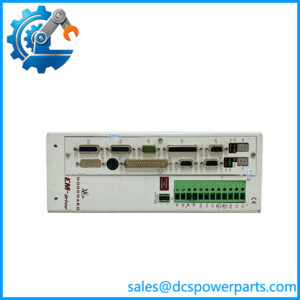
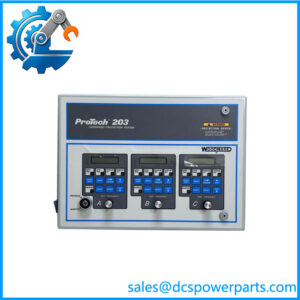
The Woodward 8237-1006 is associated with Woodward’s ProTech-GII turbine overspeed protection platform. Unlike a conventional turbine governor, its primary purpose is independent protection: it monitors turbine speed and initiates a trip when an overspeed or other configured shutdown condition reaches the applicable threshold. The 8237-1006 is therefore more appropriately classified as a turbine protection controller than as a general-purpose PLC or process-control CPU.
The ProTech-GII architecture uses Triple Modular Redundancy (TMR) with 2-out-of-3 voting. This architecture is intended for critical rotating machinery where a single electronics fault should not unnecessarily produce a turbine trip, while a genuine overspeed condition must still be detected and acted upon. The 8237-1006 is consequently relevant to steam, gas, and hydro turbine protection systems in power-generation and industrial facilities.
There is conflicting information in secondary listings. Several sellers describe the exact 8237-1006 as a generic process-control or digital-speed-control module, while other sources specifically identify it as a ProTech-GII overspeed protection device. The latter classification is more consistent with the model’s documented ProTech-GII association.
Technical Specifications
| Parameter | Specification |
|---|---|
| Manufacturer | Woodward |
| Model | 8237-1006 |
| Series | ProTech-GII |
| Product Type | Overspeed Protection Controller |
| Primary Function | Turbine overspeed protection |
| Architecture | TMR |
| Voting Logic | 2-out-of-3 |
| Typical Turbine Types | Steam, Gas, Hydro |
| Reported Speed Range | 0.5–32,000 rpm |
| Reported Response Time | <12 ms |
| Reported Accuracy | ±0.5% full scale |
| Communication | Modbus RS-485 reported |
| Typical Operating Temperature | -20°C to +60°C reported |
| Application | Critical rotating equipment protection |
The TMR architecture, speed range, response time, and communication information above are reported by secondary ProTech-GII references; they should be checked against the exact Woodward hardware revision before being used as a formal procurement specification.
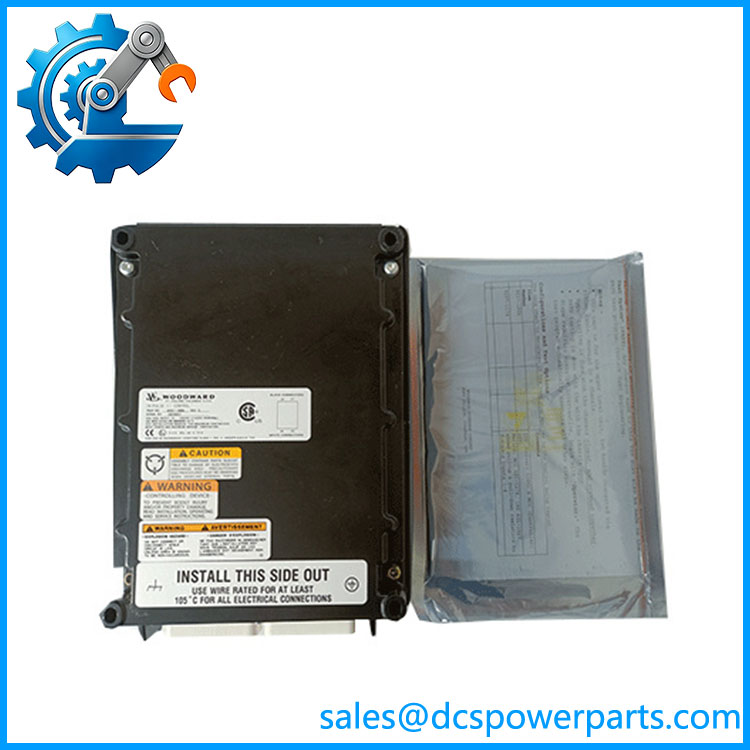
8237-1006
Main Features and Engineering Considerations
TMR protection architecture is the most important characteristic of the ProTech-GII platform. Three independent processing channels allow voting logic to distinguish between a genuine trip condition and certain single-channel failures. This is fundamentally different from using a normal PLC CPU to implement an overspeed trip function.
Independent overspeed protection is particularly important on turbine installations. The protection system should remain capable of detecting excessive rotational speed even when the primary turbine-control system has a fault. The 8237-1006 is therefore normally evaluated as part of the turbine’s protection chain rather than as an ordinary automation controller.
The reported response time of approximately 12 ms illustrates why this type of hardware is used for rotating-machinery protection rather than relying solely on slower supervisory control logic.
For replacement work, however, the part number alone is not enough. Speed-input configuration, trip setpoints, voting configuration, relay wiring, power arrangement, and the associated ProTech-GII hardware must all match the existing installation.
Related Woodward Equipment
- 8237-1006 — ProTech-GII overspeed protection controller.
- 8237-1600 — Another ProTech-GII configuration listed alongside the 8237-1006.
- 8237-1246 — Related ProTech-GII configuration.
- ProTech-GII — Woodward turbine overspeed protection platform.
Engineer’s Guide: Field Pitfalls
⚠️ Do not treat 8237-1006 as a normal PLC CPU.
Its key role is turbine overspeed protection, and its safety architecture is central to the application.
⚠️ Do not assume all 8237-series units are interchangeable.
Woodward has multiple ProTech-GII configurations, and hardware, mounting, I/O, and system arrangements can differ.
⚠️ Do not change overspeed settings casually.
Trip thresholds are safety-critical parameters. They should correspond to the turbine manufacturer’s approved protection philosophy and commissioning documentation.
⚠️ A bench power-up is not an adequate acceptance test.
For a used or refurbished unit, testing should include the processor channels, voting logic, speed inputs, trip outputs, diagnostics, and communication functions.
⚠️ Verify the complete part number.
Use WOODWARD 8237-1006 rather than purchasing a generic “ProTech-GII module.” The exact hardware configuration matters in a turbine protection system.
Frequently Asked Questions
What is Woodward 8237-1006?
It is associated with the Woodward ProTech-GII turbine overspeed protection system, intended for critical rotating machinery.
Is it a turbine governor?
Not in the conventional sense. Its principal role is independent overspeed protection, rather than primary turbine speed/load governing.
What does TMR mean?
Triple Modular Redundancy. Three processing channels operate in parallel with voting logic, providing fault tolerance for critical protection functions.
What turbines can it protect?
The ProTech-GII platform is used with steam, gas, and hydro turbines.
What should be verified before purchasing?
- 8237-1006 exact part number
- ProTech-GII hardware revision
- Turbine type and rated speed
- Speed-sensor arrangement
- Trip setpoints
- TMR/voting configuration
- Trip relay configuration
- Power-supply arrangement
- Existing wiring and terminal configuration
- Functional test report