Description
Triconex RXM4200 | Remote Extender Module | Tricon Remote I/O Communication
Key Technical Specifications
| Parameter | Specification |
|---|---|
| Manufacturer | Triconex / Schneider Electric |
| Model | RXM4200 |
| Series | Tricon 4200 |
| Product Type | Remote Extender Module |
| Primary Function | Remote chassis / I/O extension |
| System | Tricon safety system |
| Application | Safety instrumented system remote I/O |
| Architecture | Tricon remote/expansion communication |
| Configuration | System-dependent |
| Replacement Requirement | Match complete hardware revision and remote-chassis configuration |
Specification note: Public references consistently classify as a 4200 Remote Extender Module, but available secondary listings disagree on the exact physical interface, optical characteristics, power requirements, and environmental specifications. Those values should be confirmed from the installed Tricon documentation or nameplate rather than treated as universal specifications.
Product Introduction
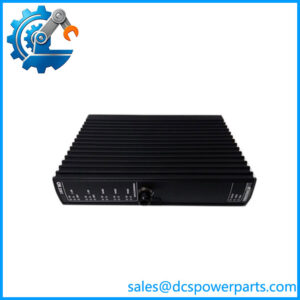
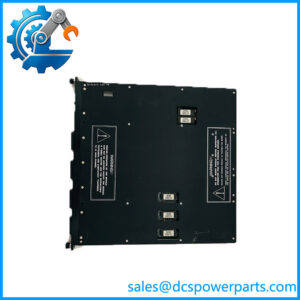
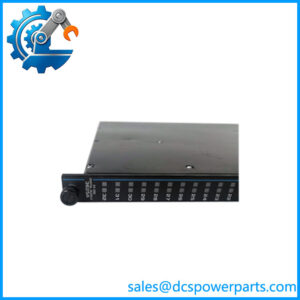
The is a Remote Extender Module used within the Tricon safety-system architecture to support communication between the main Tricon system and remote or expanded I/O installations. It is therefore a system-infrastructure component rather than a conventional digital input, digital output, or analog I/O module. The appears in Triconex equipment listings specifically as the 4200 Remote Extender Module.
The purpose of a remote extender is important in larger safety-system installations where field I/O cannot all be located in the main chassis. Extending the I/O architecture allows the control system to accommodate physically distributed equipment while maintaining the defined Tricon communication structure. For maintenance teams, the should consequently be considered part of the remote I/O communication path, not simply another spare I/O card.
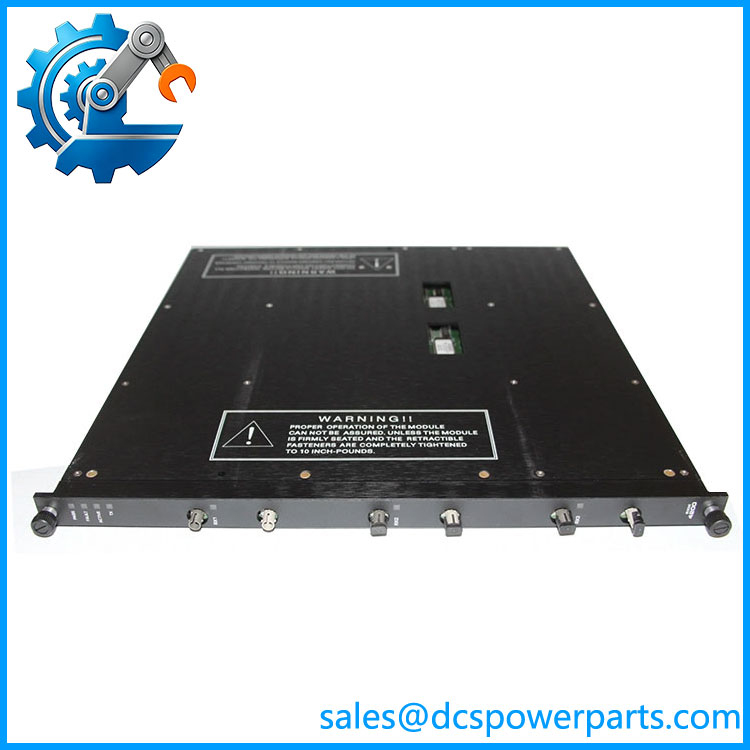
RXM4200
Application Scenarios & Field Pitfalls — The Engineer’s Perspective
Engineering Pain Point
When a remote I/O section stops communicating, the fault is often initially blamed on an input or output module. In practice, the extender, interconnecting cable, remote chassis, termination, or communication path can be responsible. Replacing an I/O module will not correct a failed remote-extension link.
Typical Applications
1. Tricon Remote I/O Expansion
The supports the remote-extension architecture used when I/O needs to be distributed away from the primary Tricon chassis.
2. Distributed Safety-System Cabinets
Remote chassis can be positioned closer to field termination points, reducing the amount of long field wiring routed back to the main control cabinet.
3. Process Plant SIS Installations
The extender is relevant to safety instrumented systems where distributed shutdown, monitoring, and process protection signals are collected through Tricon remote I/O arrangements.
4. Legacy Tricon Maintenance
units remain relevant when maintaining installed Tricon systems where the remote-extension architecture is already commissioned and replacing the complete safety system would require substantial engineering and validation work.
Technical Pitfalls
1. Do not classify as a generic I/O module.
Some online listings call the unit an input/output interface card. The more consistent identification is 4200 Remote Extender Module.
2. Verify the remote chassis architecture.
Before ordering, confirm which Tricon chassis and remote-extension arrangement the existing belongs to. A module from another Tricon generation may look similar while using a different communication architecture.
3. Check the complete communication path.
For a remote I/O communication failure, inspect the , associated cable assemblies, connectors, remote chassis, power, and corresponding extender hardware before replacing individual I/O modules.
4. Cable identification matters.
Tricon systems use dedicated interconnection hardware for remote expansion. A cable with a similar connector is not automatically electrically or functionally equivalent.
5. Do not rely on generic fiber-optic specifications.
Several secondary sources describe as a fiber-optic remote extender and then publish specific distances or optical parameters without establishing the exact hardware configuration. Those values should be verified against the installed system documentation.
6. Preserve the existing system configuration.
In a safety-system environment, hardware replacement should be accompanied by verification of chassis identity, module position, system diagnostics, and approved configuration. A communication component should not be treated like an ordinary plug-and-play network switch.
7. Check neighboring modules after a communication fault.
An extender failure can be caused by another component on the same communication path. Inspect the remote chassis power and associated interface hardware before installing the replacement unit.
Related Products
- Triconex RXM4201 — Related 4200-series remote module designation; not automatically interchangeable with .
- Triconex 4210 — Remote Extender Module from the Tricon 4200 family.
- Triconex 4211 — Related Remote Extender Module with a different hardware designation.
- Triconex IMFF4703X — Fiber-Fiber I/O Bus Interface Module used in Tricon CX remote I/O architecture; different system generation.
- Triconex 8310 — Tricon high-density chassis hardware.
- Triconex 8110 — Tricon main chassis hardware.
- Triconex 8305 — Tricon chassis/power architecture component.
Procurement Note
For , procurement should begin with the existing nameplate and chassis configuration rather than a generic web description.
Record:
- Complete part/model designation
- Hardware revision
- Main Tricon chassis model
- Remote chassis model
- Associated extender/interface module
- Cable assembly part number
- Connector/interface arrangement
- Diagnostic status before removal
- Existing system configuration
A particularly important distinction is between and newer/other 4200-series extender variants. The model number alone should not be expanded into an assumed optical interface, transmission distance, supply voltage, or environmental rating.
Engineering classification: Triconex is a 4200-series Remote Extender Module used to support remote I/O/chassis communication within a Tricon safety instrumented system.