Description
Key Technical Specifications
| Parameter | Specification |
|---|---|
| Manufacturer | Triconex |
| Model | 4352B |
| Product Type | Tricon Communication Module (TCM) |
| System Compatibility | Tricon v10.3 and later |
| Network Ports | 2 × fiber-optic Ethernet |
| Fiber Connector | MT-RJ |
| Fiber Type | 62.5/125 μm |
| Fiber Ethernet Speed | 100 Mbps |
| Serial Ports | 4 × RS-232/RS-485 |
| Serial Connector | DB-9 |
| Serial Speed | Up to 115.2 Kbps per port |
| Aggregate Serial Rate | 460.8 Kbps |
| Port Isolation | 500 VDC |
| Network Protocols | TCP/IP, Modbus TCP, TSAA, TriStation, SNTP, Peer-to-Peer and others |
| Modbus Support | Master/Slave functions |
| Logic Power | <10 W |
| Status Indicators | PASS, FAULT, ACTIVE, FIRM, LINK, TX, RX |
| Installation | Tricon chassis / TCM logical slot |
The published Tricon planning documentation gives 4352B two fiber-optic Ethernet ports using 62.5/125 μm fiber, four RS-232/RS-485 serial ports, 500 VDC port isolation, and 100 Mbps fiber communication. Serial ports support up to 115.2 Kbps each, with a 460.8 Kbps aggregate rate.
The TCM supports a broad protocol set. On 4352B, NET 1 and NET 2 support functions including TCP/IP, Modbus TCP/IP master/slave, TSAA, TriStation, SNTP, and Jet Direct; NET 1 also supports Peer-to-Peer and Peer-to-Peer time synchronization.
Application Scenarios & Pain Points
When a Tricon controller continues executing its safety application but external communications collapse, the TCM becomes an obvious diagnostic checkpoint. Do not confuse that symptom with a controller-logic failure.
- SIS-to-DCS communication: 4352B provides network connectivity for exchanging Tricon data with supervisory and control systems.
- Fiber Ethernet networks: The two fiber ports make the module appropriate where electrical isolation or longer-distance fiber infrastructure is already part of the plant network.
- Modbus integration: The serial interfaces support Modbus master/slave applications, while network connectivity supports Modbus TCP.
- Engineering and maintenance access: TriStation communication can use the TCM, making the module important during configuration and troubleshooting.
Field note: Check the optical path before condemning the module. A contaminated MT-RJ connector, damaged fiber, incorrect patching, or loss of the remote link can produce the same “network dead” symptom as a failed TCM.
Brief Field Case
On an older Tricon installation, a DCS may report simultaneous communication loss from multiple controller points. If the Tricon application continues normally, the common TCM/network path deserves attention first. Checking the NET link indicators, fiber patching, switch status, and TCM diagnostics can separate a physical fiber problem from an actual module fault.
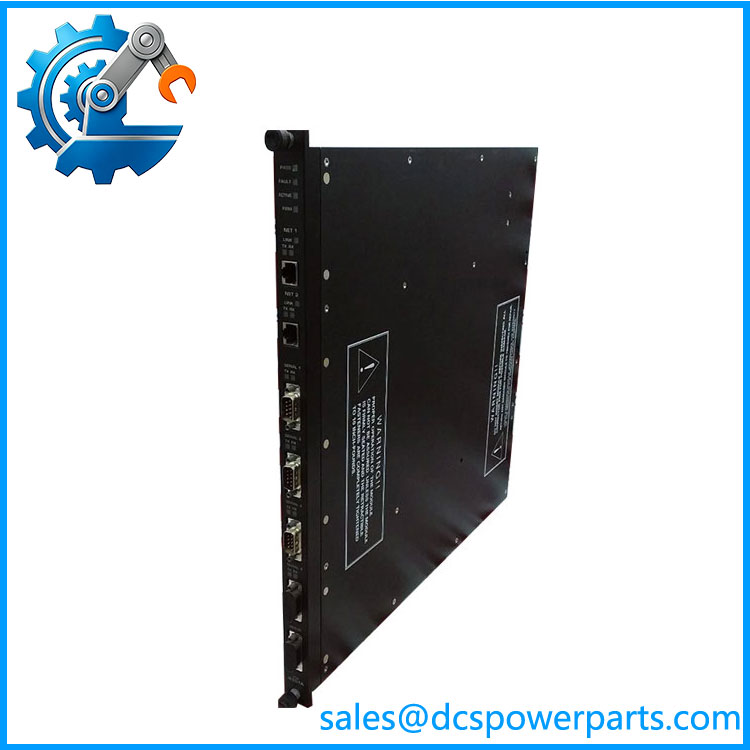
4352B
Related Products
- Triconex 4352B — Subject TCM with dual 100 Mbps fiber Ethernet ports and four serial ports. Intended for Tricon v10.3+ installations.
- Triconex 4351B — Closely related TCM with two copper RJ-45 Ethernet ports instead of the 4352B fiber interfaces. Use when the existing network infrastructure is copper.
- Triconex 4352A — Earlier-generation fiber TCM. It belongs to the same general communication architecture but should not be selected solely because the connectors match.
- Triconex 4351A — Earlier copper TCM counterpart to the 4352A. It is useful for legacy systems with the appropriate compatibility requirements.
- Triconex 4353 — Later TCM variant with copper Ethernet and an embedded OPC Server architecture. Its communication functionality differs from 4352B.
- Triconex 4354 — Fiber counterpart in the later TCM family, incorporating embedded OPC Server functionality. It is not automatically interchangeable with 4352B.
- Triconex 4352 — Original fiber TCM generation. Tricon documentation identifies it for older Tricon system versions and specifically warns against mixing incompatible TCM generations.
- Triconex 4351 — Original copper TCM generation, useful primarily when maintaining the corresponding earlier Tricon architecture.
- Triconex Tricon chassis — The host safety-controller platform in which the TCM is installed. Slot compatibility must be checked against the installed Tricon system version.
- TriStation 1131 — Engineering environment used with Tricon systems. The TCM provides communication paths used for controller engineering and configuration functions.
The Engineer’s Guide: Field Pitfalls to Avoid
WARNING 1 — Do not substitute 4351B for 4352B simply because both are “435xB” TCMs.
The critical difference is the network interface: 4351B uses two 10/100BaseT RJ-45 copper ports, while 4352B uses two 100 Mbps fiber ports with MT-RJ connectors.
How to avoid it: Match the original TCM model to the physical network infrastructure before ordering.
WARNING 2 — Check the Tricon system version before installing the module.
Tricon documentation specifies 4351B and 4352B for Tricon v10.3 and later systems. Older 4351/4352 modules belong to earlier compatibility groups, and the documentation explicitly restricts mixing different TCM generations in the same logical slot.
How to avoid it: Confirm the controller’s Tricon system version and TCM configuration before replacement.
WARNING 3 — Do not overlook the fiber connectors.
The 4352B uses MT-RJ fiber connections. Dirty end faces, incorrect fiber type, damaged patch leads, or poor connector seating can create link failures that look like a bad TCM.
How to avoid it: Inspect the optical path first. Check LINK/TX/RX indicators, patch cables, remote equipment, and fiber cleanliness before replacing the module.
Frequently Asked Questions (FAQ)
What is Triconex 4352B?
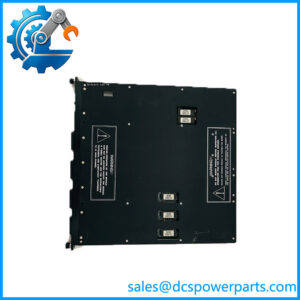
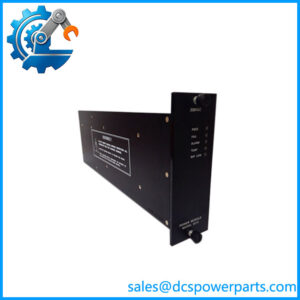
Triconex 4352B is a Tricon Communication Module (TCM) used to provide external communication interfaces for Tricon safety controllers. It combines two fiber-optic Ethernet ports with four RS-232/RS-485 serial ports.
It is a communication module, not a safety I/O module.
What is the difference between 4352B and 4351B?
The principal hardware difference is the Ethernet medium:
- 4352B: Two 100 Mbps fiber-optic Ethernet ports, MT-RJ.
- 4351B: Two 10/100BaseT copper Ethernet ports, RJ-45.
Both are later-generation TCMs intended for Tricon v10.3 and later systems.
Can 4352B be installed in an older Tricon system?
Not automatically. The documented compatibility group places 4352B with Tricon system version 10.3 or later. Earlier 4352 hardware belongs to an older compatibility group.
Before replacement:
- Identify the Tricon system version.
- Record the existing TCM model.
- Check the logical slot assignment.
- Verify the network configuration.
- Confirm the replacement’s firmware/configuration requirements.
How many communication ports does 4352B have?
It provides:
- 2 fiber Ethernet ports
- 4 RS-232/RS-485 serial ports
- A separate debug interface
The fiber Ethernet ports operate at 100 Mbps, while the serial interfaces support up to 115.2 Kbps per port.
Does 4352B support Modbus?
Yes. The TCM architecture supports Modbus RTU/ASCII through the serial interfaces and Modbus TCP through the network interfaces, subject to the specific port and configuration rules.
The exact master/slave assignment should be checked against the existing TriStation configuration.
Can the TCM be replaced while the Tricon controller remains online?
Tricon documentation states that the TCM does not have a hot-spare feature, but a faulty TCM can be replaced while the controller is online.
That does not mean the replacement is risk-free. External communications will be affected, and the maintenance procedure should account for DCS/SCADA communication loss and any dependent functions.
What should I verify when purchasing a refurbished 4352B?
For a production SIS spare, request confirmation of:
- Exact 4352B model marking
- Hardware revision
- Firmware revision
- Fiber-port operation
- MT-RJ connector condition
- All four serial ports
- PASS/FAULT/ACTIVE/FIRM indicators
- Network LINK/TX/RX operation
- Functional communication test
- Actual photographs of the unit
- Test report
- Warranty and stated condition
A power-on test alone is insufficient. For this module, the fiber interfaces and serial ports are the actual working functions that should be tested.
Is 4352B still useful for legacy Tricon systems?
Yes, where the installed Tricon architecture and system version support it. The module remains particularly relevant for older installations using fiber Ethernet communications and serial Modbus interfaces. For a long-running plant, keeping a verified spare is sensible because communication-module failures can affect DCS visibility even when the underlying safety application continues operating.