Description
Key Technical Specifications
| Parameter | Value |
|---|---|
| Manufacturer | TRICONEX |
| Model | 2071H |
| Part Number | 7400313-100 |
| Product Type | Digital Input Module |
| Number of Channels | 32 |
| Input Type | DC discrete input |
| Input Voltage | 20–60 VDC |
| Typical Nominal Voltage | 24/48 VDC |
| Input Current | Approximately 6–9 mA per point at 30 VDC |
| Channel Grouping | Four groups of 8 channels |
| Signal Configuration | Sourcing or sinking, according to group configuration |
| Isolation | 1500 Vrms, according to available technical listing |
| Typical Response Time | ≤15 ms |
| Typical Power Dissipation | 9 W |
| Architecture | Triple Modular Redundancy (TMR) |
| Operating Temperature | 0°C to +60°C |
| Storage Temperature | -40°C to +85°C |
| Relative Humidity | 5–95%, non-condensing |
| Typical Applications | SIS, ESD, shutdown and process interlock monitoring |
The available technical documentation identifies 2071H / 7400313-100 as a 32-channel digital input module with a 20–60 VDC input range and four groups of eight inputs. The same source describes TMR processing and diagnostic capabilities.
Engineering caution: Some catalog listings classify this part simply as a “data acquisition module” or “industrial control module.” Those descriptions are too broad for engineering substitution. The channel count, voltage range, input architecture, and exact termination arrangement should be matched against the installed module.
Product Introduction
TRICONEX 2071H 7400313-100
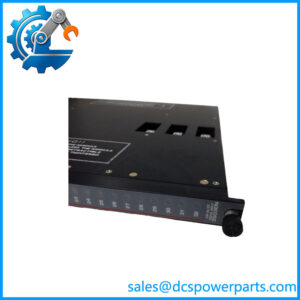
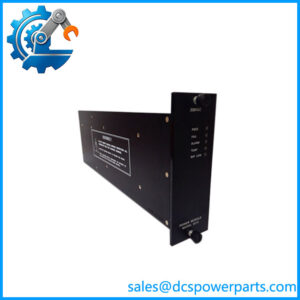
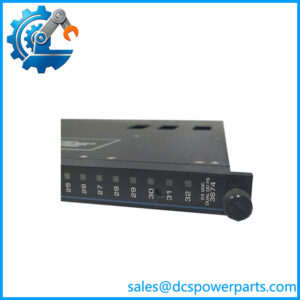
The TRICONEX 2071H 7400313-100 is a 32-channel digital input module used to bring discrete field signals into a Tricon safety instrumented system. Typical signals include shutdown switches, process interlocks, valve status contacts, pressure switches, and other discrete conditions that must be evaluated by the safety controller.
Its TMR architecture and grouped input configuration make it suitable for safety applications where input availability and fault detection matter. The module accepts 20–60 VDC field signals, with the available technical specification identifying four independently configurable eight-channel groups.
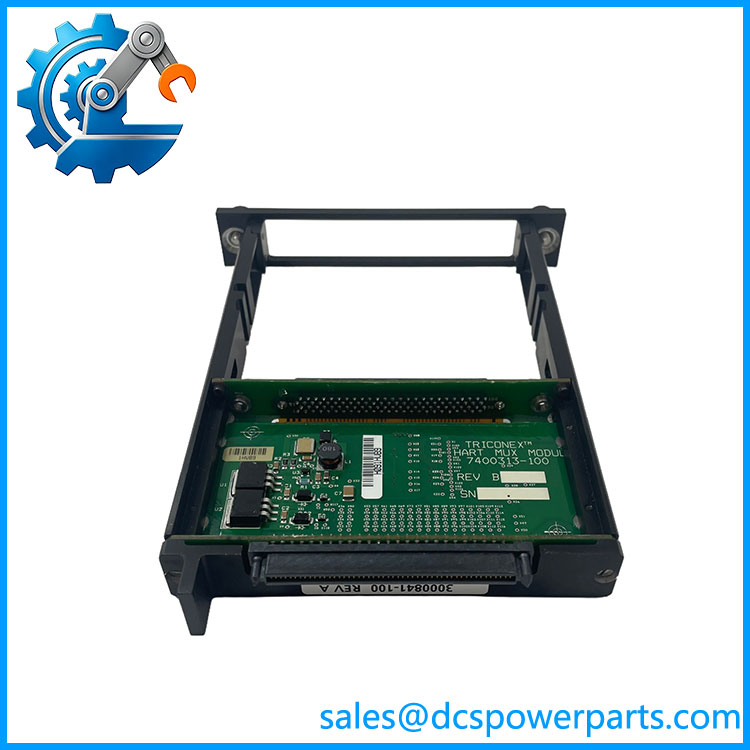
2071H
Application Scenarios & Field Pitfalls
Engineering Pain Point
A failed digital input card in an ESD or SIS cabinet can create a surprisingly large maintenance problem. The field device may be perfectly healthy while the safety controller sees a missing or invalid state. With a 32-channel card such as the 2071H, the temptation is to swap hardware quickly and deal with configuration afterward. That is exactly when mistakes happen. Input voltage, source/sink arrangement, termination hardware, and channel mapping all need to be checked first.
Typical Applications
- Oil & Gas — Emergency shutdown systems monitoring pressure switches, valve-position feedback, shutdown permissives, and other discrete field conditions.
- Petrochemical — Safety interlocks for compressors, reactors, distillation equipment, fired equipment, and storage systems.
- Power Generation — Turbine and boiler protection systems requiring discrete trip, permissive, and equipment-status inputs.
- Process Manufacturing — SIS applications monitoring limit switches, process switches, equipment interlocks, and emergency shutdown devices.
Technical Pitfalls to Avoid
- Do not assume every 24 VDC signal is equivalent.
The specified input range is approximately 20–60 VDC. Check the actual field voltage under operating conditions, not just the nominal value written on the loop drawing. - Check the source/sink configuration by channel group.
The available technical description identifies four groups of eight channels. The sourcing/sinking arrangement is configured at the group level, so rewiring a single point without checking the complete eight-channel group can create an unexpected input state. - Do not confuse the module with the termination hardware.
The 2071H is the electronic input module. The field termination assembly and associated cabling are separate hardware. Before ordering, compare the failed card’s part number and the installed termination arrangement. - Check channel mapping before replacement.
A 32-channel replacement may be electrically correct while still being wrong from the application standpoint if the field wiring and controller configuration do not correspond to the original channel allocation. - Respect the TMR architecture.
TMR does not mean that every external field circuit is automatically triplicated. The redundancy is implemented within the safety-system architecture. The actual field wiring, termination scheme, and application logic must be reviewed before claiming a channel is fully redundant. - Do not bypass safety diagnostics during commissioning.
A card that powers up is not necessarily a card that is ready for service. Check module health, input status, diagnostics, field power, and controller configuration before returning an ESD or SIS loop to operation. - Verify the exact revision before installation.
For legacy Tricon systems, hardware revisions and system-generation compatibility matter. Compare the nameplate, revision marking, controller generation, termination assembly, and existing engineering documentation before replacing the module.
Related Products
- TRICONEX 3664 — Associated termination hardware identified in available documentation for the 2071H. It provides the field-side termination interface rather than performing the digital input processing itself.
- TRICONEX 3501E — Digital input module in the Tricon I/O family. It is a different input design and should be selected according to field voltage, channel requirements, and system configuration rather than substituted solely because both are digital-input modules.
- TRICONEX 3503E — Digital output module used for discrete output functions. It is complementary to 2071H when the SIS requires both field-state acquisition and safety-system output control.
- TRICONEX 3625 — Digital output module for Tricon systems. It performs an output function rather than the discrete input acquisition handled by 2071H.
- TRICONEX 3721 — Analog input module used where the safety system needs continuous process measurements rather than discrete contact states. It is appropriate for measurements such as pressure, temperature, or process variables when the installed architecture supports it.
- TRICONEX AI3351 — Analog input module. It complements 2071H in mixed SIS architectures where discrete switch/status signals and analog process measurements must both be acquired.
- TRICONEX 3008 — Main processor module associated with Tricon control architecture. It performs controller processing rather than field-input acquisition, so it is not a replacement for 2071H.
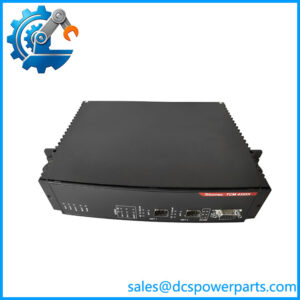
- TRICONEX 4351A — Tricon Communication Module. Used for communication functions between the Tricon controller and external systems. It is complementary to the I/O subsystem but does not provide the 2071H’s discrete input channels.
- TRICONEX 8311 — Tricon chassis/interface hardware used as part of the broader Tricon system architecture. The exact chassis and power arrangement must be matched to the installed controller generation.
- TRICONEX 8110 — Tricon chassis/backplane-related hardware used with compatible Tricon installations. It is infrastructure rather than an I/O substitute.
Procurement note: The TRICONEX 2071H 7400313-100 should be purchased as a specific 32-channel digital input module, not simply as a generic Tricon “logic controller” or “data acquisition module.” Available sources agree on the model/part-number association but use inconsistent product descriptions. Before installation, verify the nameplate, module revision, input voltage, channel-group configuration, termination hardware, controller generation, and approved system documentation.