Description
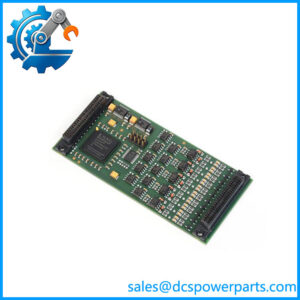
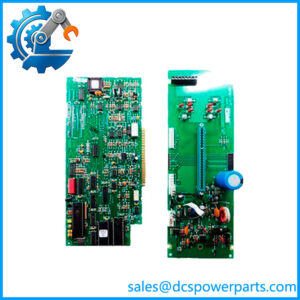
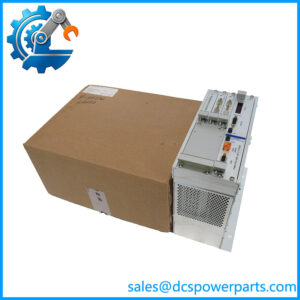
POWEC PMP10.48 SIC
Key Technical Specifications
| Parameter | Specification |
|---|---|
| Product Model | PMP10.48 SIC |
| Manufacturer | POWEC |
| Product Type | Rectifier / DC power supply module |
| Output Class | 48 V DC |
| Technology Designation | SIC / Silicon Carbide |
| System Role | AC-to-DC power conversion |
| Installation | Compatible modular power-system/rack architecture |
| Parallel Operation | Reported for the .48 SIC family; verify system documentation |
| Protection | Power-system protection functions reported, exact thresholds require confirmation |
| Communication / Monitoring | System-dependent; verify the associated POWEC control/monitoring equipment |
| Exact Input Rating | Verify from module label and system documentation |
| Exact Output Current | Verify from module label and system documentation |
| Operating Temperature | Verify by revision |
Product Introduction
The POWEC .48 SIC is a 48 V-class DC power conversion module intended for industrial power supply architectures. Available technical listings identify it as a rectifier/power supply module rather than a PLC, DCS I/O card, or conventional control processor. Its role is to provide regulated DC power to equipment connected to the associated power system, making the module relevant to industrial control cabinets, communications infrastructure, and other applications where stable DC power is part of the system’s operating chain.
The POWEC .48 SIC designation is also associated with silicon-carbide power-conversion technology. SiC switching components can reduce switching losses and support higher switching frequencies compared with conventional silicon power devices, although the actual efficiency and thermal performance of a specific .48 SIC installation should be verified from the unit’s documentation rather than inferred from the SIC designation alone.
For procurement, the POWEC .48 SIC should be treated as a system-specific power module. The complete part-number suffix is important because listings also show variants such as .48SIC-005 and .48SIC-011. These suffixes should not be assumed interchangeable without checking the associated power-system chassis, controller, firmware, connectors, and electrical ratings.
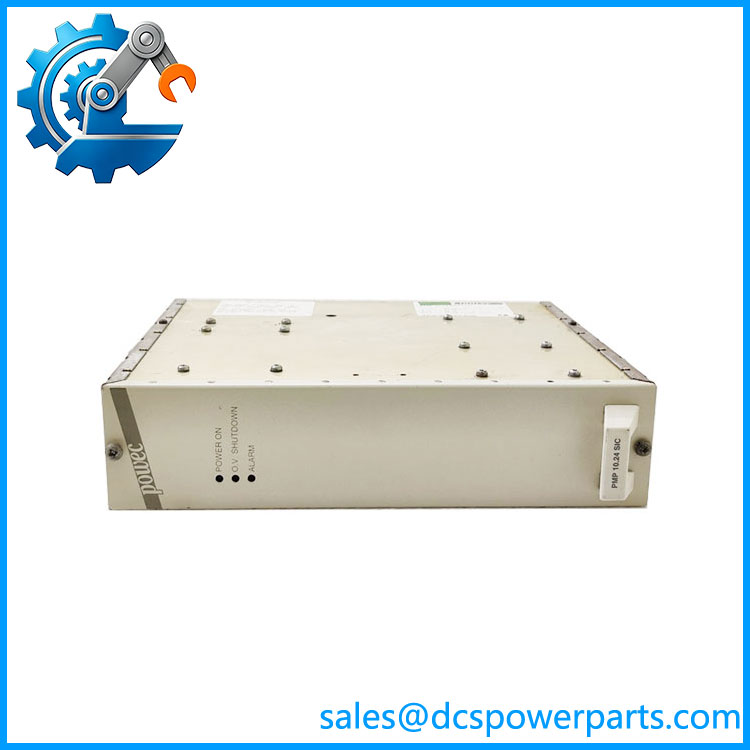
PMP10.48 SIC
Application Scenarios & Field Pitfalls — The Engineer’s Perspective
Engineering Pain Point
A failed rectifier module can appear to be a downstream PLC, DCS, or communication fault because loss of DC supply propagates through an entire control cabinet. Before replacing a POWEC .48 SIC, measure the system DC bus and verify whether the fault follows the module, the power rack, the upstream AC source, or the load. Replacing the module without identifying the original failure mechanism can result in repeated module faults.
Typical Applications
- Industrial DC power systems — Supplies regulated DC power to compatible loads.
- Control and automation infrastructure — Supports DC-powered controllers, communications equipment, and auxiliary systems.
- Telecommunications power systems — 48 V DC is a common supply architecture in communications equipment.
- Redundant power installations — Multiple compatible rectifier modules may be operated together where the system architecture supports parallel operation.
- Legacy power-system maintenance — Useful as a replacement spare when the original POWEC equipment remains in service.
Technical Pitfalls
- Do not assume the input voltage. Secondary listings provide conflicting or explicitly inferred AC-input ranges. The actual input specification should be taken from the module label, rack documentation, or OEM manual.
- Do not infer the current rating solely from “10.48.” One secondary source interprets the designation as a 10 A / 48 V module, but it explicitly labels this as an inference. Treat the actual output-current rating as a procurement verification point.
- Check the complete suffix. .48SIC variants with additional suffixes such as -005 and -011 appear in parts databases. A visually identical module should not be substituted solely on the basis of the base .48 SIC designation.
- Verify the power-system controller and rack. If the module participates in centralized monitoring, current sharing, alarms, or redundancy management, compatibility with the associated control hardware must be confirmed before installation.
- Inspect cooling components on used equipment. If the installed design uses forced-air cooling, fan condition and airflow restrictions should be checked during incoming inspection. Do not assume a refurbished module has equivalent thermal performance without functional testing.
- Test under load when possible. A module that produces nominal DC voltage at no load may still have problems with current regulation, thermal behavior, protection thresholds, or load sharing. For critical plant spares, a documented load test is more useful than a simple power-on test.
Related Products
- POWEC PCU10.24-48D — Associated POWEC power-conversion equipment; verify the exact input/output architecture before substitution.
- POWEC PCU10.48-24D — Different DC conversion direction/application; not automatically interchangeable with .48 SIC.
- POWEC PCU20.24-48D — Different power-module designation and rating.
- POWEC DMP10.24 SIC — Related SIC-designated DC power module with a different output-voltage class.
- POWEC PCU10.12-48D — Different DC conversion arrangement.
- .48SIC-005 — Related .48 SIC variant; complete suffix must be matched.
- .48SIC-011 — Another listed variant; verify electrical and mechanical compatibility before substitution.
Procurement Note
For a replacement purchase, specify POWEC .48 SIC together with every suffix printed on the equipment label. Request photographs of the rating label, front panel, connectors, mounting interface, and any revision markings. For a used or surplus unit, the minimum useful acceptance test should include startup behavior, DC output regulation, alarm/protection operation, and load performance where the appropriate test fixture is available.
The most important unresolved specifications are exact input voltage, exact output-current rating, connector/pin assignment, rack compatibility, and monitoring interface. Those should be confirmed from the actual nameplate or OEM documentation before engineering a direct replacement.