Description
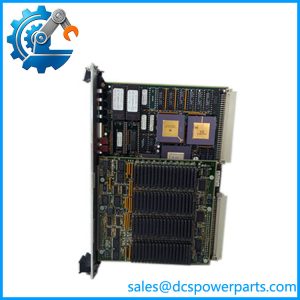
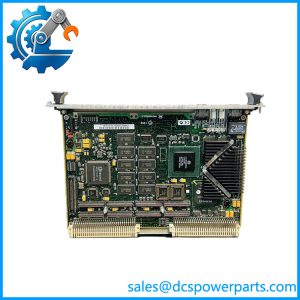
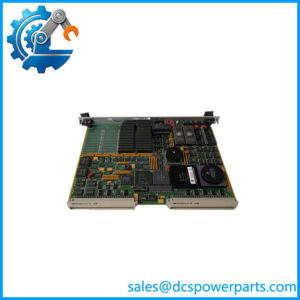
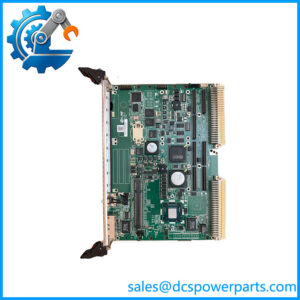
Motorola MVME162-032 VMEbus Embedded Controller
Key Technical Specifications
| Parameter | Specification |
|---|---|
| Product Model | MVME162-032 |
| Manufacturer | Motorola Computer Group |
| Product Family | MVME162 |
| Product Type | VMEbus embedded controller |
| CPU | MC68LC040 |
| CPU Clock | 25 MHz |
| DRAM | 8 MB, parity protected |
| SRAM | 512 KB, battery backed |
| Ethernet | On-board LAN Ethernet interface |
| IndustryPack Interfaces | 4 |
| SCSI | Not fitted on -032 |
| VMEbus | Supported |
| VMEbus Data Width | D8 / D16 / D32 |
| VMEbus Addressing | A16 / A24 / A32 |
| Serial Interfaces | 2 |
| Flash Memory | 1 MB |
| Watchdog | Programmable watchdog timer |
| Form Factor | Double-high VME module |
| Typical Operating Temperature | 0 to 55°C with forced-air cooling |
The MVME162 platform uses the MC68040/MC68LC040 architecture and includes local memory, VMEbus interfacing, IndustryPack expansion, serial interfaces, and optional Ethernet/SCSI functions depending on model. The original hardware manual specifies operation from 0 to 55°C with forced-air cooling, so cabinet airflow is part of the installation requirement rather than an optional consideration.
For the specific MVME162-032, Motorola’s model table identifies the combination as MC68LC040 + 8 MB DRAM + Ethernet, while MVME162-033 adds SCSI. This distinction is important when matching an existing application image or storage architecture.
Product Introduction
The Motorola MVME162-032 is a legacy VMEbus embedded controller designed for industrial computing, instrumentation, control, and other applications requiring a 32-bit processor on a VME backplane. Its 25 MHz MC68LC040 processor, 8 MB of parity DRAM, battery-backed SRAM, Ethernet interface, four IndustryPack sites, and VMEbus interface make it considerably more than a simple VME communication card.
The -032 configuration is particularly important to identify correctly because the MVME162 family was offered in numerous memory, processor, Ethernet, and SCSI combinations. The -032 has Ethernet but no SCSI; the -033 is the corresponding 8 MB LC040 version with both Ethernet and SCSI. A replacement that changes this configuration can affect boot media, application software, or external I/O architecture.
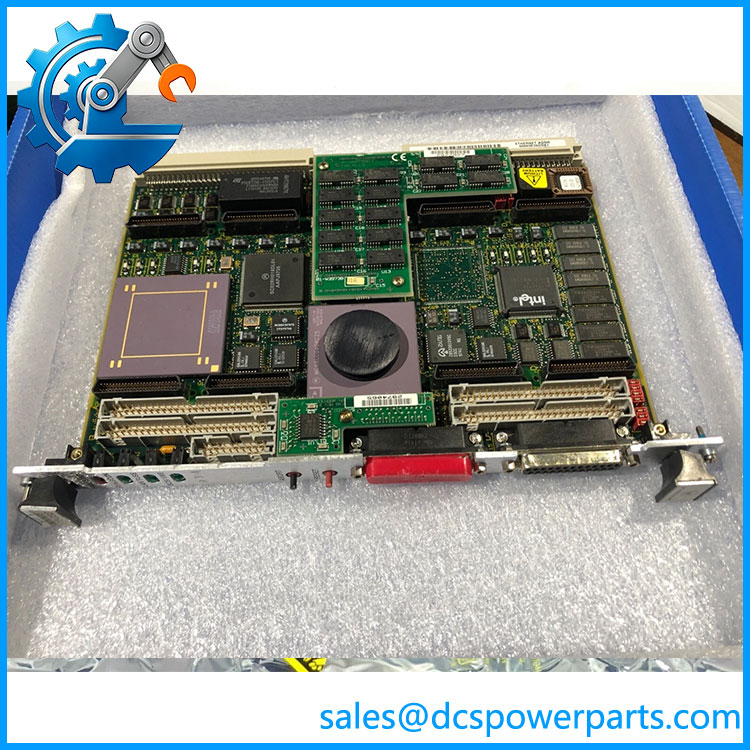
MVME162-032
Application Scenarios & Field Pitfalls — The Engineer’s Perspective
Engineering Pain Point
The main difficulty with an MVME162-032 replacement is preserving the legacy software and VME system architecture. The processor board may look interchangeable with another variant, but memory size, Ethernet/SCSI options, IndustryPack modules, boot method, firmware, and operating system all affect whether the replacement actually works in the installed machine.
Typical Applications
- Legacy VME control systems requiring an embedded 32-bit CPU.
- Industrial instrumentation using IndustryPack I/O modules.
- VME-based data acquisition systems with Ethernet connectivity.
- Machine and process-control equipment built around Motorola 68K software and VMEbus hardware.
Technical Pitfalls to Avoid
- Do not confuse -032 with -033. -033 adds SCSI; -032 is the Ethernet-only configuration within this 8 MB LC040 group.
- Verify the CPU type. The -032 uses the MC68LC040, which does not include the floating-point unit found in the MC68040. Software relying on floating-point instructions therefore deserves particular attention.
- Check the IndustryPack population. The controller provides four IndustryPack interfaces, but the actual application hardware and installed IP modules determine the usable I/O architecture.
- Preserve the VMEbus configuration. A replacement must be checked for system-controller settings, address maps, interrupt assignments, and VME resource allocation.
- Inspect the battery-backed SRAM and clock. The includes battery-backed memory and time-of-day circuitry. A long-stored board may require battery and retained-data checks before commissioning.
- Check transition-module wiring. I/O can be routed through P2 to MVME712-series transition hardware. The installed transition-module arrangement should be documented before removing the controller.
- Do not assume Ethernet means modern Ethernet behavior. This is a legacy 68K VME controller. Network configuration, boot services, and application software should be validated against the original system.
- Provide adequate airflow. Motorola specifies forced-air cooling for the stated operating temperature range.
Related Products
- Motorola -030 — 8 MB MC68LC040 configuration without the Ethernet option; useful for identifying the option difference within the same memory/CPU group.
- Motorola -031 — 8 MB configuration with SCSI; differs from -032 by storage-interface configuration.
- Motorola -033 — 8 MB configuration with both Ethernet and SCSI; this is particularly important when checking whether an installed system actually requires SCSI.
- Motorola -040 — 8 MB version using the MC68040 rather than the ; the CPU difference can matter to software compatibility.
- Motorola -042 — 8 MB MC68040 configuration with Ethernet; different processor architecture from the -032.
- Motorola -043 — 8 MB MC68040 configuration with SCSI and Ethernet.
- Motorola MVME712M — Transition-module family used with systems to route rear-panel I/O from the P2 connector to external interfaces.
Procurement Note
For MVME162-032, the critical identification points are CPU, 8 MB parity DRAM, Ethernet option, four IndustryPack interfaces, and absence of the SCSI option. Preserve the exact model suffix when sourcing a replacement.
Before approving a substitute, verify the board revision, boot firmware, operating system, IndustryPack modules, VME address/interrupt configuration, Ethernet requirements, transition module, battery condition, and application software. If the original system uses SCSI storage, stop and verify the model number carefully—the installed controller may actually be an -033 or another SCSI-equipped variant an .