Description
Key Technical Specifications
| Parameter | Value |
|---|---|
| Manufacturer | Motorola Computer Group / Emerson |
| Model | MVME7100-0171 |
| Product Type | VMEbus Single Board Computer |
| Processor | Freescale MPC8641D Dual-Core PowerPC e600 |
| CPU Frequency | 1.3 GHz |
| Memory | 2 GB DDR2 ECC SDRAM |
| NAND Flash | 8 GB |
| NOR Flash | 128 MB |
| VME Interface | VME64 / 2eVME / 2eSST |
| VME Transfer Rate | Up to 320 MB/s with 2eSST |
| Ethernet Interfaces | 4 × Gigabit Ethernet |
| USB Interface | USB 2.0 Controller |
| Serial Interfaces | Multiple RS-232 serial channels |
| Expansion Support | 2 × PMC-X sites |
| PCI Express Expansion | 8-lane PCI Express interface for XMC expansion |
| Operating System Support | VxWorks, Linux, LynxOS |
| Board Format | 6U VME, 4HP |
| Dimensions | Approx. 233 × 160 × 20 mm |
| Weight | Approx. 0.68 kg |
| Cooling | Forced air cooling through chassis |
| Front Panel | SCANBE handles |
| Application | Industrial control, embedded computing, test systems, defense, transportation |
Product Introduction
Motorola MVME7100-0171 Overview
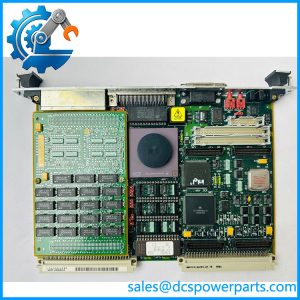
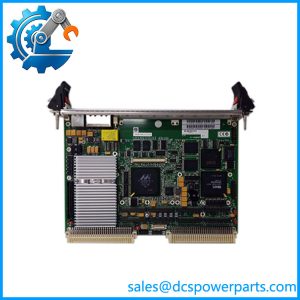
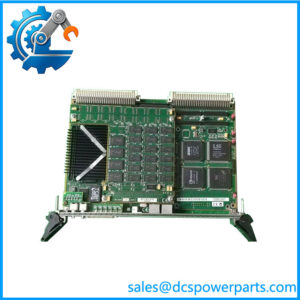
The Motorola MVME7100-0171 is a high-performance VMEbus single-board computer designed for embedded computing applications that require significant processing capability while maintaining compatibility with existing VME infrastructure. It belongs to the MVME7100 family and uses the Freescale MPC8641D system-on-chip processor with dual PowerPC e600 cores operating at 1.3 GHz.
The Motorola MVME7100-0171 integrates 2 GB of DDR2 ECC memory and 8 GB NAND Flash storage, providing sufficient resources for real-time applications, operating system execution, data processing, and system management functions. The ECC memory design improves data integrity for applications where unexpected memory errors can affect system operation.
The Motorola MVME7100-0171 supports advanced VMEbus communication through the Tundra Tsi148 bridge, including VME64 and 2eSST high-speed transfer modes. With four Gigabit Ethernet ports, PMC-X expansion capability, and PCI Express support for XMC expansion, the board can be integrated into complex industrial computing architectures requiring high-speed communication and additional processing modules.
The MVME7100-0171 is commonly found in long-life industrial systems where VME technology remains in service, including automated test equipment, transportation systems, simulation platforms, power applications, and industrial control installations. When replacing this board, engineers should verify VME chassis compatibility, rear transition module type, operating system image, boot parameters, and application software environment.
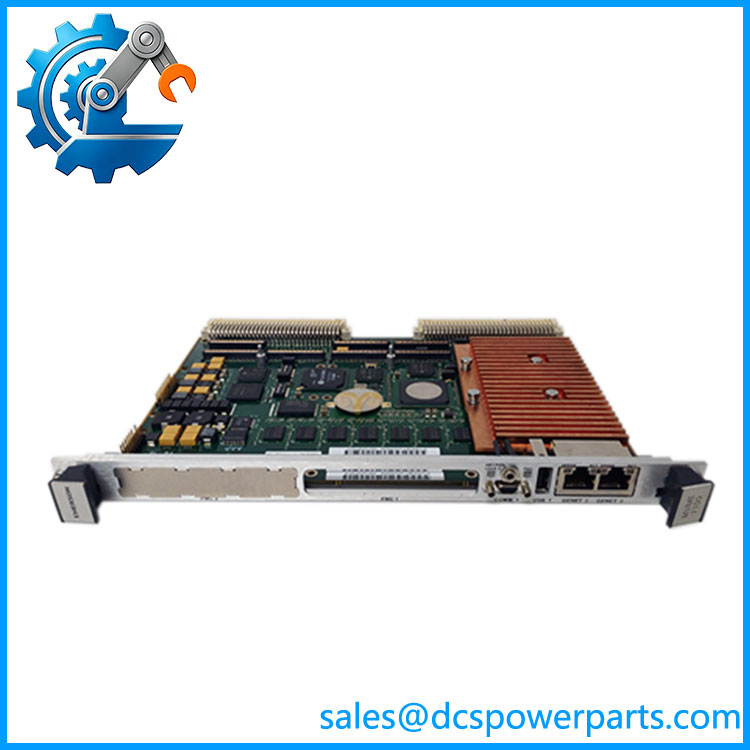
MVME7100-0171
Application Scenarios & Field Pitfalls (The Engineer’s Perspective)
Engineering Pain Point
A legacy VME control system experiences processor faults, communication failures, slow application response, or inability to boot after years of operation. The CPU board becomes a suspect, but failures can also originate from the VME backplane, transition module, power supply, or software environment.
Recommended troubleshooting sequence:
- Check VME chassis power rails
- Verify board seating and connector condition
- Review boot ROM settings
- Confirm operating system image
- Check rear transition module compatibility
- Verify Ethernet and serial communication settings
The is the computing core, but the complete VME system architecture determines successful operation.
Typical Applications
Industrial Automation Systems
Used for:
- Real-time machine controllers
- Industrial data processing
- Legacy automation platforms
- High-speed control applications
Automated Test Equipment (ATE)
Applied for:
- Semiconductor test systems
- Electronic measurement platforms
- Data acquisition systems
Transportation Systems
Used in:
- Rail control equipment
- Embedded monitoring systems
- Vehicle control platforms
Defense and Simulation Systems
Applied for:
- Real-time simulation
- Signal processing
- Embedded mission computers
Technical Pitfalls to Avoid
1. Verify VME Chassis Compatibility
Before replacement, confirm:
- 6U VME backplane type
- VME slot configuration
- VMEbus addressing settings
- Rear transition module compatibility
A physically compatible board may still fail if the chassis configuration differs.
2. Confirm Software Environment
Check:
- VxWorks/Linux version
- Boot parameters
- BSP compatibility
- Application binaries
The CPU hardware does not contain the complete application environment.
3. Check Rear Transition Modules
The MVME7100 commonly works with compatible rear I/O modules. Verify:
- Serial connections
- Ethernet routing
- PMC/XMC expansion wiring
- Cabinet documentation
4. Preserve Configuration Data
Before replacement, record:
- Network settings
- Boot configuration
- Firmware version
- Operating system image
- Application files
Restoring the hardware without matching software configuration may prevent system startup.
Related Products
- Motorola MVME7100-0173
Similar MVME7100 configuration using IEEE handle option instead of SCANBE handle configuration. - Motorola -0161
Lower-performance variant with 1.0 GHz-class processor and reduced memory configuration. - Motorola MVME7216E-101
Rear transition module used with systems for rear I/O access. - Emerson MVME6100 Series
Earlier-generation VME processor boards used in long-life embedded systems. - Emerson MVME5500 Series
Previous PowerPC-based VME computing platform.