Description
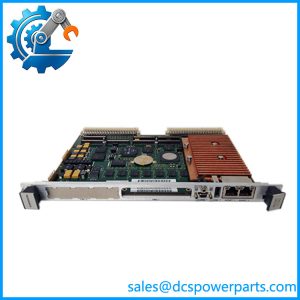
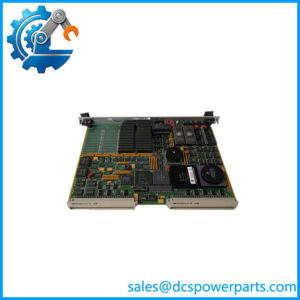
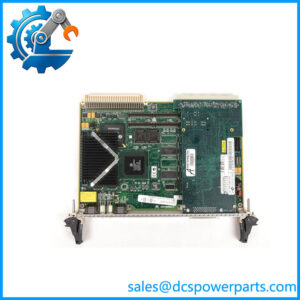
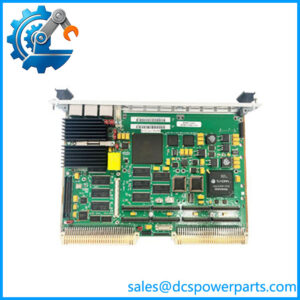
Motorola MVME2432 VMEbus Processor Module
Key Technical Specifications
| Parameter | Specification |
|---|---|
| Manufacturer | Motorola |
| Model | MVME2432 |
| Product Family | MVME2400 |
| Module Type | VMEbus Processor Module |
| CPU | MPC750 PowerPC |
| CPU Frequency | 350 MHz |
| SDRAM | 64 MB ECC |
| Backside L2 Cache | 1 MB |
| Flash Memory | 9 MB |
| VME Interface | P1 / P2 |
| PMC Slots | 2 onboard positions |
| VME Form Factor | 6U |
| Backplane Supply | +5 V, +12 V, -12 V |
| MVME2432-1 | Scanbe front-panel handles |
| MVME2432-3 | IEEE 1101-compatible handles |
The Motorola documentation identifies the MVME2432-1 and MVME2432-3 as 350 MHz MPC750 / 64 MB ECC SDRAM configurations. The principal difference between the two variants is the front-panel handle arrangement.
The MVME2400 architecture is an embedded VME controller and PMC carrier. It interfaces with the VMEbus through P1 and P2 and derives lower-voltage onboard supplies from the VME backplane input.
Product Introduction
The is a 6U VMEbus processor module from the MVME2400 family, built around the MPC750 PowerPC processor at 350 MHz. With 64 MB of ECC SDRAM, 1 MB backside L2 cache, 9 MB Flash, VMEbus connectivity, and two PMC positions, it serves as the computing core for legacy VME-based control, instrumentation, data acquisition, and embedded automation systems.
For replacement work, the processor specification is only part of the compatibility question. The existing VME backplane, PMC hardware, boot firmware, operating system, application image, and front-panel configuration all need to be considered before accepting a spare board.
Application Scenarios & Field Pitfalls — The Engineer’s Perspective
Engineering Pain Point
A VME processor failure can bring down an otherwise healthy legacy control rack. The I/O boards may still be fully functional, but without the processor, VMEbus transactions, application execution, and supervisory functions stop. With an replacement, getting the board to boot is not necessarily the same as restoring the original application.
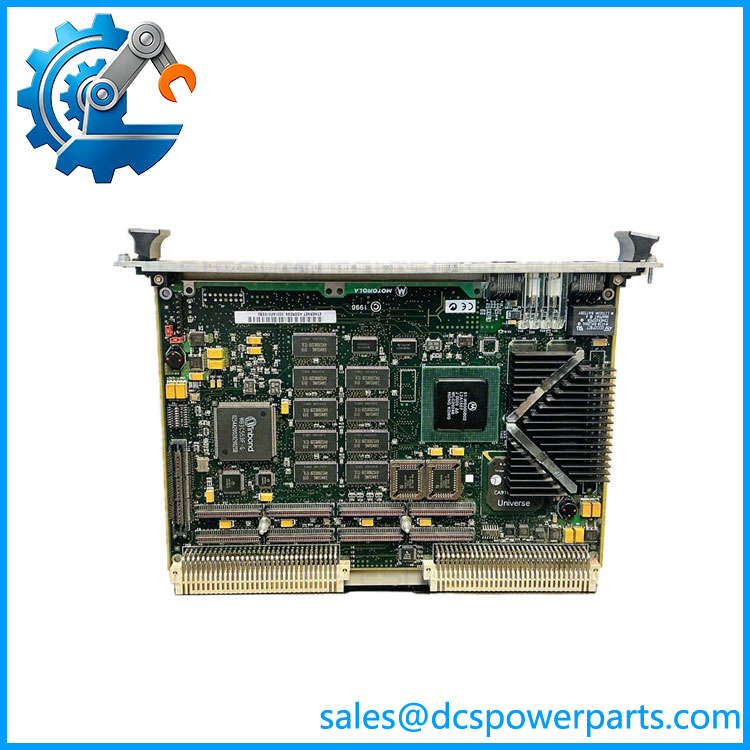
MVME2432
Typical Applications
- VME-based industrial control systems
- Legacy factory automation equipment
- Data-acquisition and instrumentation systems
- Real-time embedded control
- Scientific and communications equipment
Technical Pitfalls
1. Specify the complete suffix.
The uses Scanbe-style front-panel hardware, while the uses IEEE 1101-compatible handles. A mechanically incorrect variant can create installation problems even when the processor and memory are identical.
2. Verify the memory requirement.
Both documented variants contain 64 MB ECC SDRAM. Do not confuse them with MVME2431, MVME2433, or MVME2434, which use 32 MB, 128 MB, and 256 MB configurations respectively.
3. Check the PMC cards.
The MVME2400 is designed as a PMC carrier as well as a processor board. Existing PMC hardware may contain essential communications, storage, or application-specific interfaces. Replacing the CPU board without checking the PMC configuration can leave the system incomplete.
4. Verify the boot environment.
Legacy MVME2400 systems can depend on board firmware, boot parameters, operating-system images, and application software. A replacement board that reaches the firmware prompt may still require restoration of the original boot configuration.
5. Check VME backplane power.
The MVME2400 receives +5 V, +12 V, and -12 V from the VME backplane. If the original board failed after repeated resets or unstable startup, measure the backplane supplies before installing another processor board.
6. Do not confuse with newer VME processors.
The verified architecture is based on the MPC750 at 350 MHz with 64 MB ECC SDRAM. Listings describing it with modern DDR memory or newer multi-core processors are describing a different hardware generation.
Related Products
- Motorola MVME2431 — 350 MHz MPC750 with 32 MB ECC SDRAM.
- Motorola MVME2433 — 350 MHz MPC750 with 128 MB ECC SDRAM.
- Motorola MVME2434 — 350 MHz with 256 MB ECC SDRAM.
- Motorola MVME2401 — 233 MHz family configuration.
- Motorola MVME2402 — 233 MHz configuration with 64 MB SDRAM.
- Motorola MVME760 — Related PMC/rear-I/O expansion hardware.
- Motorola MVME712 series — VME transition and rear-I/O hardware used with compatible Motorola VME systems.
Procurement Note
For a Motorola replacement, request the complete designation whenever available: or . Confirm the front-panel style, 64 MB ECC memory, PMC configuration, firmware, operating system, and application image.
If the board is being used in a running VME control system, check the VME backplane power and PMC hardware before condemning the processor module. The is the computing core, but system restoration depends on the complete VME hardware and software environment.