Description
Product Overview
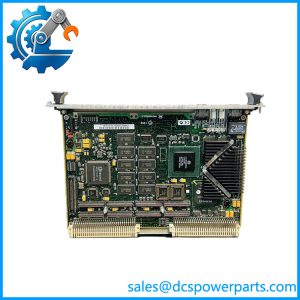
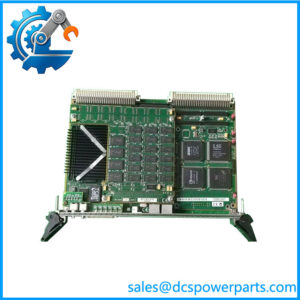
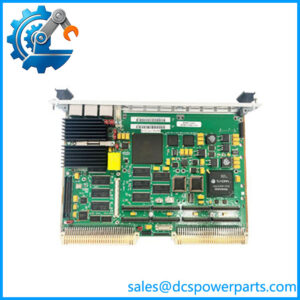
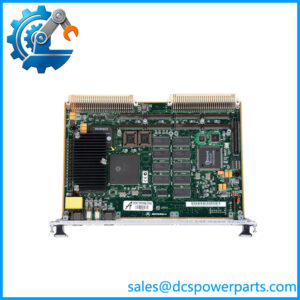
The Motorola MVME2604-4351 is a PowerPC-based VME single board computer designed for embedded control, industrial computing, and real-time processing applications. As part of the MVME2600 PowerPlus VME family, the board combines a PowerPC 604e processor, ECC memory architecture, PCI expansion capability, and VMEbus communication into a single VME slot solution. The Motorola MVME2604-4351 was developed for systems requiring dependable processor performance while maintaining compatibility with established VME infrastructure.
Built around the MPC604e processor architecture, the MVME2604-4351 provides the computing foundation for embedded applications such as industrial automation controllers, defense systems, transportation equipment, test platforms, and legacy real-time systems. The board integrates a PCI-to-VME bridge, Ethernet interface, SCSI controller, serial communication channels, Flash memory, and optional PMC expansion support. This combination allows system designers to connect additional I/O or communication modules while retaining the compact VME form factor.
For facilities maintaining long-service VME systems, the Motorola MVME2604-4351 remains a practical replacement option when the original computing architecture must be preserved. Engineers should verify processor revision, RAM200 memory configuration, transition module compatibility, operating system support, and application software requirements before installation. To be completely transparent, VME systems are highly configuration-dependent; replacing the CPU board without confirming firmware, boot settings, and connected I/O hardware can result in extended commissioning time.
Product Introduction (Non-Templated)
Legacy VME platforms often remain in service because the surrounding equipment represents years of validated engineering work. The Motorola MVME2604-4351 provides a direct processor replacement path for systems that still depend on PowerPC-based embedded computing.
Featuring a PowerPC 604e processor, ECC DRAM support, VME64 communication, Ethernet, SCSI, and PMC expansion capability, this board is commonly used for industrial controller restoration, defense electronics maintenance, and embedded system lifecycle support.
Key Technical Specifications
| Parameter | Value |
|---|---|
| Product Model | MVME2604-4351 |
| Manufacturer | Motorola Computer Group |
| Product Type | VME Single Board Computer |
| Series | MVME2600 PowerPlus VME |
| Processor | PowerPC MPC604e |
| Processor Frequency | 200 MHz class |
| L2 Cache | 256 KB optional external cache |
| Memory Type | ECC DRAM |
| Memory Capacity | 32 MB standard configuration (expandable with RAM200 modules) |
| Bus Architecture | VME64 / PCI Local Bus |
| VME Interface | A32/D32/D64 capable |
| PCI Bridge | Raven PCI Host Bridge |
| VME Bridge | Tundra Universe ASIC |
| Ethernet Interface | 10BaseT / 100BaseTX |
| SCSI Interface | Fast SCSI-2 |
| Serial Ports | Multiple asynchronous/synchronous ports via transition module |
| PMC Support | One IEEE P1386.1 PMC slot |
| Flash Memory | Onboard Flash memory |
| Non-Volatile Memory | Battery-backed NVRAM with RTC |
| Watchdog Timer | Supported |
| Operating Temperature | 0°C to +55°C |
| Storage Temperature | -40°C to +85°C |
| Form Factor | Double-height VME module |
| Condition | New Surplus, Factory Sealed |
Related Products
- Motorola MVME2603-4351 — Similar MVME2600 family SBC using the PowerPC 603 processor. Suitable for applications requiring the same VME architecture with lower processor performance.
- Motorola MVME2604-4361 — Related MVME2604 configuration with different memory or I/O options. Used where the application requires a specific factory configuration.
- Motorola MVME2604-4331 — Alternate MVME2604 processor board variant used in embedded VME systems with similar PowerPC architecture.
- Motorola MVME2700-4351 — Later-generation VME single board computer using PowerPC 750 architecture. Selected when higher processor capability is required while maintaining VME compatibility.
- Motorola MVME5100 — PowerPC VME processor board from a newer generation. Used for system modernization projects where software migration is possible.
- Motorola MVME761 — Transition module providing rear-panel I/O connections including Ethernet, serial, and other interfaces for compatible MVME2600 systems.
- Motorola MVME712M — Alternative transition module for MVME2600 installations requiring different rear I/O configurations.
- Motorola RAM200 Series Memory Module — ECC DRAM expansion module used to increase MVME2600 memory capacity.
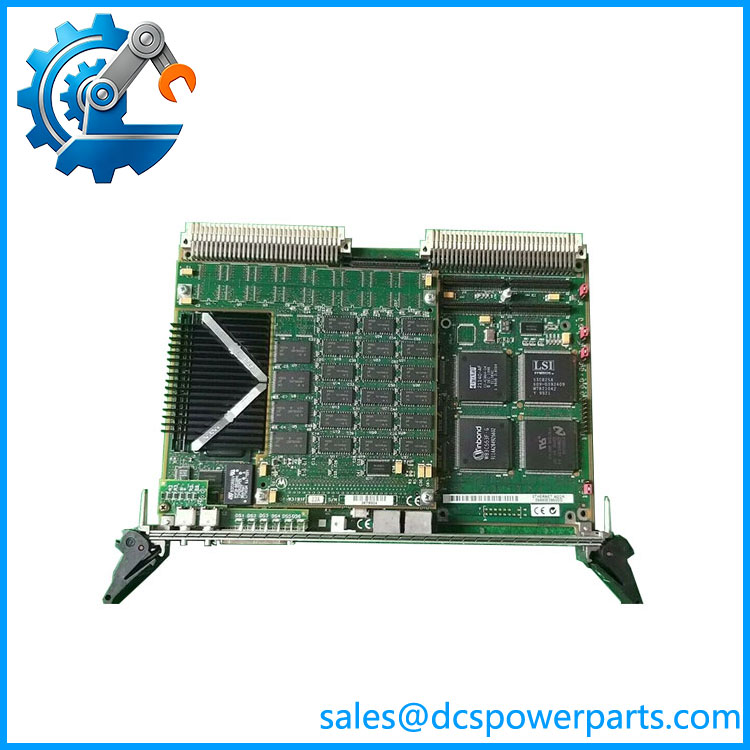
MVME2604
Frequently Asked Questions (FAQ)
1. Is the Motorola compatible with my existing VME system?
Compatibility depends on the complete VME platform configuration.
Verify:
- VME chassis backplane type
- Transition module model
- Installed RAM200 memory module
- Operating system image
- Application software environment
The board must match both hardware and software requirements.
2. Can I hot-swap this?
No standard hot-swap procedure should be ass the .
Typical replacement requires:
- Shut down the VME system safely
- Remove power from the chassis
- Replace the processor board
- Verify jumper and firmware settings
- Restart and perform system diagnostics
VME system designs vary, so site procedures should always be followed.
the support firmware v3.1?
The board uses Motorola firmware such as PPC1-Bug rather than PLC-style firmware versions.
Compatibility depends on:
- PPC1-Bug revision
- Operating system loader
- Application software requirements
- Installed memory configuration
Firmware should be confirmed against the existing working board before replacement.
4. Will I lose my application software when r the ?
The CPU board itself does not normally contain the complete application environment.
Check:
- Boot device location
- Flash contents
- Attached storage devices
- Operating system image
- Application files
A replacement board may require restoration of firmware settings or boot parameters.
5. How can I verify a New Surprola is authentic?
Recommended checks:
- Confirm Motorola model marking
- rify identification label
- Inspect VME connectors and PMC slot
- Check board condition and components
- Review available testing records
For legacy VME equipment, hardware revision matching is important.
the support a legacy control system upgrade?
Yes, when the existing system architecture remains based on VME hardware.
Typical applications include:
- Industrial controller replacement
- Test equipment maintenance
- Defense and transportation systems
- Embedded computer restoration
A full hardware and software compatibility review should be completed before migration work.
7. What should engineers check before commissioning this SBC?
Key checks include:
- Confirm VME backplane compatibility
- Verify memory configuration
- Check transition module connections
- Confirm firmware settings
- Test Ethernet and serial communication
- Validate application startup sequence
These checks help avoid unexpected behavior during system recovery.