Description
Metso Automation A413135
Product Overview
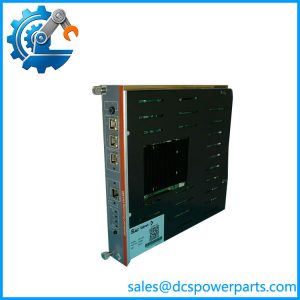
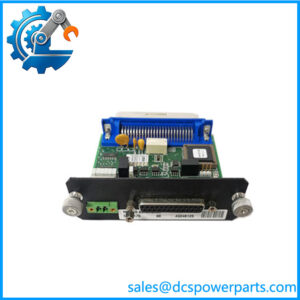
The Metso Automation A413135 is the AOU-4 analog output module associated with legacy Valmet Automation PLC and process-control systems. Product records consistently identify the part number as an analog output module with the AOU-4 designation. Historical repair documentation also lists A413135 specifically as an “AOU-4 MODULE,” confirming its place within the Valmet I/O hardware family.
Functionally, the A413135 sits on the output side of the control architecture. The controller generates an analog command, while the AOU-4 provides the corresponding field-level analog interface used by the process application. Typical control-system duties for this class of module include sending continuous control signals to devices such as valve positioners, actuators, drives, or other analog-controlled equipment. The exact field signal range and electrical implementation, however, should be verified against the installed system documentation rather than assumed from the AOU-4 name alone.
That distinction becomes important with legacy Valmet hardware. A413135 is not a generic modern remote-I/O module that can simply be replaced according to the number of channels and nominal signal type. The host rack, backplane, field termination, engineering configuration, and board revision all matter. Documented A413135 units include Rev. 12, Rev. 13, and M1 examples, with other revisions also appearing in historical inventory records.
For maintenance teams supporting older process plants, the Metso Automation is therefore best approached as a system-specific legacy spare. Matching the complete board identification is more important than finding a superficially similar analog-output card.
Product Introduction
An analog output failure in an old Valmet PLC can stop a control loop even when the CPU and field instrument are perfectly healthy. Metso Automation is the legacy AOU-4 board used to provide analog output functionality within that control architecture.
For a legacy replacement, the practical checks are straightforward but important: confirm the designation, board revision, host rack, field termination, and the signal type configured by the original application. Do not substitute a modern analog-output module solely because its published signal range appears similar.
Key Technical Specifications
| Parameter | Value |
|---|---|
| Product Model | |
| Manufacturer / Brand | Metso Automation / Valmet Automation |
| Product Family | |
| Product Type | Analog Output Module |
| Primary Function | Analog process-control output |
| System Association | Valmet Automation PLC / process-control systems |
| Board Form | Legacy plug-in PLC/I/O board |
| Known Revision Examples | Rev. 12, Rev. 13, M1 |
| Lifecycle | Discontinued / legacy |
| Status Indication | LED status indicator documented in product descriptions |
| Output Signal Range | Not reliably verified from primary documentation |
| Output Channel Count | designation indicates the family; exact electrical channel implementation should be verified |
| Output Resolution | Not reliably verified |
| Galvanic Isolation | Not reliably verified |
| Supply Voltage | Not reliably verified |
| Operating Temperature | Not reliably verified |
| Communication Protocol | Not a standalone network communication module |
| Firmware | Not reliably inferable from the part number |
The strongest available identification describes as an analog output module with LED status indication, also known as Metso Automation Valmet AOU 4.
Major Features / Practical Advantages
analog output architecture
belongs to the family rather than the binary-output family. This distinction is important when maintaining a legacy Valmet I/O inventory. A413150, for example, is associated with the BOU-8 binary-output family, while serves analog output functions.
The role makes the module relevant to continuous process-control signals rather than simple ON/OFF commands. A failed analog-output channel can affect valve position, speed reference, setpoint transmission, or another continuously controlled process variable depending on the original application.
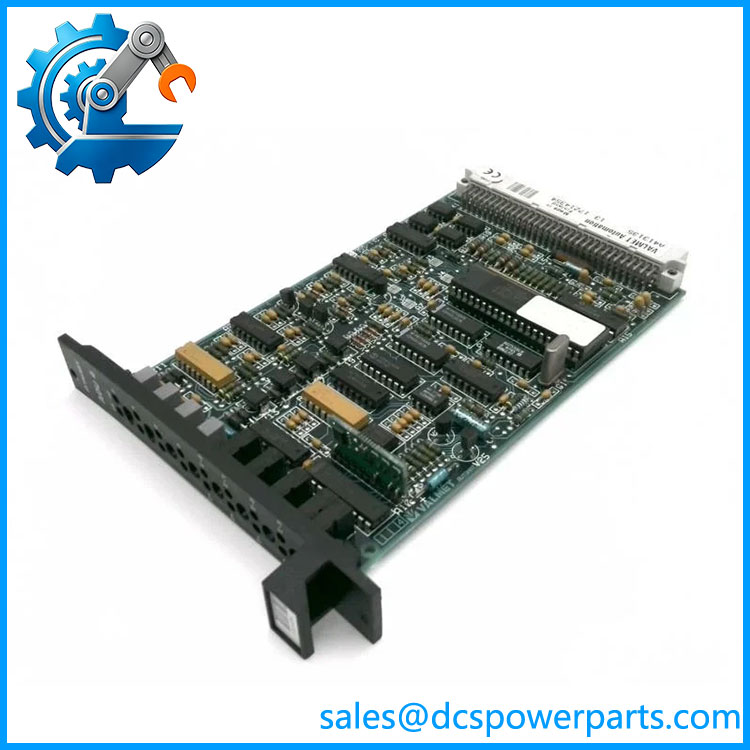
A413135
Legacy Valmet compatibility
is primarily valuable because it matches an installed legacy control architecture. Historical repair records place alongside other Valmet modules such as AIU, BIU, BOU, CPU, and SCU assemblies.
For a plant that still depends on this generation of hardware, retaining the original module family can avoid unnecessary changes to the rack, application database, field wiring, and control logic.
Revision-sensitive procurement
Several revisions of have been documented. Rev. 12 and Rev. 13 examples are listed as modules, while a separate current inventory record documents an M1 revision.
Do not treat the revision marking as cosmetic. With legacy electronics, hardware revisions can reflect component substitutions, circuit changes, or manufacturing updates. If the installed board is marked with a specific revision, that information belongs in the purchase specification.
LED status indication
Available product descriptions explicitly identify the as an analog output module with LED status indicator.
That gives maintenance personnel a basic local indication when troubleshooting, although the exact meaning of each indicator should be taken from the relevant Valmet documentation rather than guessed from LED color or position.
Practical legacy replacement
is a useful spare when the objective is restoration of an existing Valmet system rather than redesigning the entire I/O architecture. A tested replacement can reduce the scope of a shutdown intervention, particularly when the failed module is the only defective component in an otherwise operational controller and rack.
Do not confuse it with a generic analog card
Several modern PLC platforms use 4–20 mA, 0–10 V, or ±10 V analog outputs, but that does not establish that uses every one of those ranges. One online listing publishes detailed electrical figures for , but those specifications could not be corroborated with sufficiently authoritative documentation, so they should not be treated as confirmed engineering data.
That is an important procurement distinction. A matching part number is useful; an unverified specification is not.
Related Products
- A413125 — AIU-8 analog input module; handles analog field measurements entering the Valmet control system rather than analog commands leaving it.
- A413140 — BIU-8 binary input module; used for discrete input signals and not an analog-output replacement.
- A413143 — BIU-84 legacy binary I/O module; functionally different from analog output hardware and requires system-specific verification.
- A413150 — BOU-8 binary output module; provides discrete output functionality rather than continuous analog output.
- A413160 — FIU-1 binary output module; another legacy Valmet discrete-output product.
- A413045 — Valmet CPU module; controller-level hardware rather than an I/O output module.
- A413110 — TIU-6 PCB/slot-mounting interface board; related to the broader legacy Valmet automation architecture but not an analog-output substitute.
- A413325 — IPU power unit module; provides system power functionality rather than process signal output.
FAQ
What is the Metso Automation ?
is a Valmet/Metso Automation analog output module used in legacy PLC and process-control systems. The identification is supported by multiple independent equipment records and historical repair documentation.
Is a binary output module?
No. belongs to the analog output family. The Valmet A413150 is associated with the BOU-8 binary-output family and should not be treated as an equivalent part.
How many analog outputs does have?
The designation strongly identifies the four-output family, and commercial records describe the product as . However, I would still verify the original Valmet documentation and board marking before publishing a channel-level electrical specification for a particular revision.
What output signal does provide?
The module is confirmed as an analog output device, but a sufficiently authoritative source was not located to establish the exact output range for every revision. Do not automatically assume 4–20 mA, 0–10 V, or ±10 V simply because those are common industrial signals.
Can I hot-swap the ?
Do not assume unrestricted hot-swapping. This is a legacy plug-in control-system board, and the permitted replacement procedure depends on the Valmet rack and plant operating procedure. Put the affected analog control loop into its required safe condition before removing the module.
Does support firmware v3.1?
There is no reliable evidence that a generic firmware-v3.1 specification applies to this module. The relevant compatibility factors are the host Valmet system, rack/backplane, board revision, field termination, and application configuration.
What revisions of are available?
Public equipment records document at least Rev. 12, Rev. 13, and M1, while historical inventory also shows additional revision numbers.
When ordering a replacement, photograph the existing board and record its revision rather than purchasing solely against the base number.
Can a modern 4–20 mA analog-output module replace ?
Not as a simple drop-in replacement. Even if the field signal appears compatible, the modern module may use a different rack bus, power architecture, terminal arrangement, configuration method, diagnostic structure, and engineering database. A migration can be engineered, but it is not the same as replacing with another .
Is New Surplus equivalent to factory-new production hardware?
No. is identified as discontinued, so “new surplus” normally means unused legacy inventory rather than newly manufactured current-generation hardware.
For procurement, request photographs of the actual module, revision marking, storage condition, packaging, and available functional-test evidence.
Procurement Note
For Metso Automation , the basic identification is clear: analog output module for the legacy Valmet Automation environment. The part is discontinued, and multiple revisions have been documented.
The engineering risk lies in the details that are no longer easy to verify from public documentation. Before purchasing, confirm the part number, designation, board revision, host controller/rack, field termination, and actual signal configuration. If the existing engineering drawings identify a particular output range or wiring arrangement, use those records as the acceptance criteria.
Do not let a supplier substitute a generic analog-output card based only on the phrase “” or a claimed 4–20 mA specification. For legacy Valmet hardware, electrical compatibility and system compatibility are separate questions.
For a shutdown-critical spare, the preferred procurement package should include photographs of the actual board, readable revision markings, connector condition, and evidence of output-channel testing. That gives the maintenance team something materially more useful than a catalog description alone.