Description
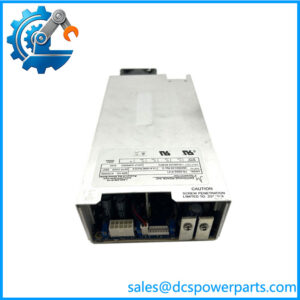
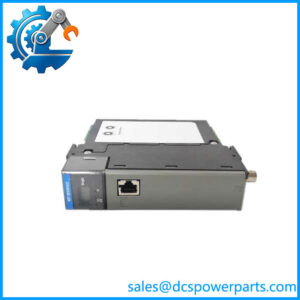
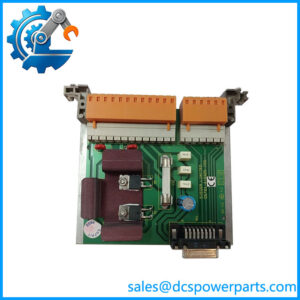
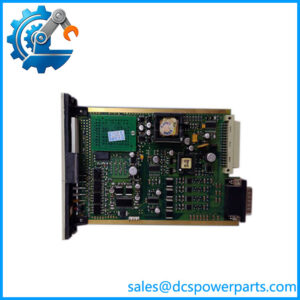
Honeywell TK-FPDXX2 | Series-A Power Supply | Experion PKS Chassis
Key Technical Specifications
| Parameter | Specification |
|---|---|
| Manufacturer | Honeywell |
| Model | TK-FPDXX2 |
| Product Type | Standard DC Power Supply Module |
| System | Honeywell Experion PKS Series-A |
| Input Voltage | 19.2–32 VDC |
| Input Power | 100 W |
| Maximum Inrush Current | 30 A |
| Maximum Combined Output | 70 W at 60°C |
| 1.2 VDC Output | Up to 1.5 A |
| 3.3 VDC Output | Up to 4.0 A |
| 5.1 VDC Output | Up to 10.0 A |
| 24 VDC Output | Up to 2.8 A |
| Fuse | Non-replaceable, soldered internal fuse |
| Mounting Position | Dedicated left-side chassis position |
| Standard I/O Slot Usage | Does not consume a standard user I/O slot |
| Wiring | #14 AWG / approximately 1.4 mm² |
| Approx. Weight | 1.1–1.14 kg |
The distinction between 100 W input power and 70 W maximum backplane output is important. The 70 W figure is the relevant value when calculating the available chassis power budget; it should not be confused with the module’s input-power rating.
The supply distributes several internal DC rails rather than simply acting as a standalone 24 VDC field supply. The documented maximum rail currents are 1.5 A at 1.2 V, 4 A at 3.3 V, 10 A at 5.1 V, and 2.8 A at 24 V, subject to the overall 70 W output limit.
Product Introduction
The Honeywell TK-FPDXX2 is a standard power supply for the Honeywell Experion PKS Series-A chassis. It accepts a DC input and generates the regulated internal rails required by the chassis backplane, allowing the installed control and I/O hardware to receive the appropriate operating voltages. The supply mounts in the dedicated left-side power position rather than occupying a normal module slot.
From a maintenance perspective, the TK-FPDXX2 should be treated as part of the chassis power architecture, not as a general-purpose 24 VDC power supply. A replacement must be evaluated against the complete Series-A chassis, installed module load, input supply quality, and available backplane power budget.
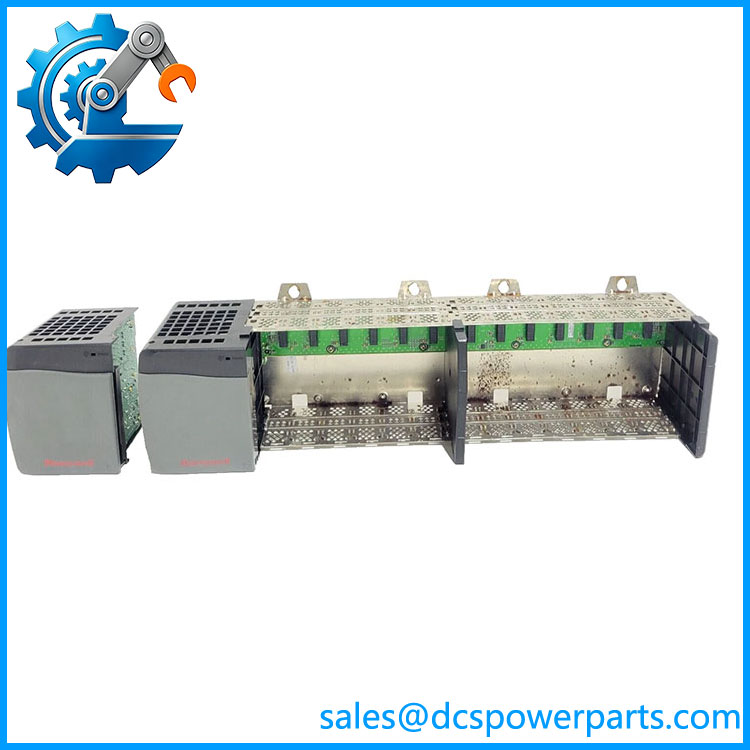
TK-FPDXX2
Application Scenarios & Field Pitfalls — Engineer’s Perspective
Engineering Pain Point
When several Experion modules begin resetting, disappearing from the chassis, or generating multiple unrelated faults at the same time, the power supply deserves attention before individual I/O cards are condemned. Low input voltage, excessive chassis loading, poor power connections, or an aging TK-FPDXX2 can create symptoms that initially look like multiple module failures.
Typical Applications
- Honeywell Experion PKS Series-A chassis
- Series-A controller and I/O cabinet power distribution
- Legacy Honeywell DCS control cabinets
- Chassis backplane power for mixed control and I/O modules
Technical Pitfalls to Avoid
- Do not treat TK-FPDXX2 as a fieldbus diagnostic module.
Some online listings incorrectly describe this part as a FOUNDATION Fieldbus diagnostic device. Other sources correctly identify it as a Honeywell power supply. The power-supply identification is supported by multiple independent product records and should be used for procurement. - Do not confuse the 100 W input rating with 70 W usable backplane output.
The chassis load calculation should use the specified output limitations. Individual rail current limits also do not mean that all four rails can simultaneously operate at their maximum currents without considering the total output-power restriction. - Check the input DC supply before replacing the module.
The documented operating input range is 19.2–32 VDC. A supply-side voltage problem, excessive cable drop, or transient condition can produce the same symptoms as a failed TK-. - Inspect the chassis load and installation position.
TK- is intended for the dedicated left-side position of the Series-A chassis and does not consume a normal user module slot. It should not be treated as a plug-in replacement for an unrelated Honeywell power module.
Related Products
- Honeywell TC- — Related standard power-supply designation associated with the Series-A power architecture; verify exact coating/configuration before substitution.
- Honeywell Series-A Chassis — Host chassis receiving the TK- power supply and distributing its regulated rails.
- Honeywell Experion PKS Series-A I/O Modules — Chassis modules whose total power demand must remain within the TK- output budget.
- Honeywell TC-MDP081 — Series-A/Experion pulse input hardware; a functional I/O module rather than a power supply.
- Honeywell TC-ODD321 — Series-A digital output hardware; dependent on the chassis power architecture.
- Honeywell Series-A IOTA assemblies — Field termination hardware associated with compatible Series-A I/O arrangements.
- Honeywell Experion PKS C200/C300 Architecture — Broader Honeywell control-system family in which related Series-A hardware is used.
Procurement Check
Before approving a Honeywell TK- replacement, verify:
- Exact model:
- Series-A chassis compatibility
- Input supply: 19.2–32 VDC
- Existing chassis power load
- 70 W maximum combined output requirement
- Individual 1.2 V / 3.3 V / 5.1 V / 24 V rail loading
- Left-side dedicated mounting position
- Internal fuse condition
- Wiring size and terminal condition
- Hardware revision
- Coating/configuration marking
- Existing chassis and module revision
- Nameplate and system documentation
Recommended procurement description:
Honeywell TK- Series-A Standard DC Power Supply Module, Experion PKS Chassis Power Supply, 19.2–32 VDC Input, Multi-Rail 1.2/3.3/5.1/24 VDC Backplane Output, 70 W Maximum Combined Output.
The critical point for replacement is power-budget compatibility. The TK- is a chassis power module, not an I/O processor, and the 70 W maximum combined output is the figure that matters when evaluating whether the existing Series-A chassis load can be supported.