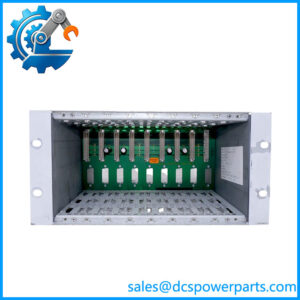
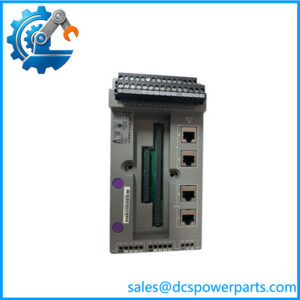
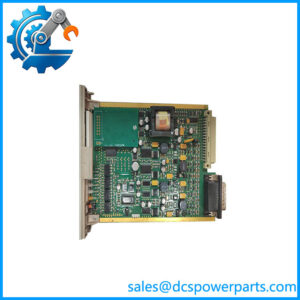
Description
Key Technical Specifications
| Parameter | Specification |
|---|---|
| Manufacturer | Honeywell |
| Model | TC-CCN014 |
| Product Type | ControlNet Interface Module (CNI) |
| System Platform | Experion PKS C200 Controller |
| Series | Series E |
| Network | ControlNet |
| Media Configuration | Single-media ControlNet |
| Communication Speed | 5 Mbps ControlNet network |
| Controller Interface | C200 Controller chassis backplane |
| Remote I/O Communication | Supported |
| Redundant Controller Support | Supported when configured with compatible redundant architecture |
| Module Replacement | Replaces TC-CCN011 / TC-CCN012 / TC-CCN013 |
| Mounting | Honeywell controller chassis |
| Power Supply | Chassis supplied |
| Configuration Tool | Honeywell Control Builder / Experion engineering tools |
| Operating Environment | Industrial process automation environment |
| Lifecycle | Legacy |
Honeywell documentation states that TC-CCN014 and TC-CCR014/TK-CCR014 are required for newer redundant controller chassis configurations, while earlier CNI models may not support all later enhancements.
Important distinction:
- TC-CCN014 = Single-media ControlNet Interface
- TC-CCR014 = Dual-media redundant ControlNet Interface
They are related products but are not interchangeable without checking the ControlNet network architecture.
Product Introduction
Honeywell TC-CCN014
The Honeywell TC-CCN014 ControlNet Interface Module is a communication interface module designed for Honeywell Experion PKS C200 controller systems. It provides the communication path between controller databases, supervisory systems, and ControlNet-connected I/O devices.
In practical plant environments, the TC-CCN014 acts as the network bridge that allows the C200 controller to exchange process data with remote I/O and supervisory components. A failure of this module can appear as a controller fault, I/O communication failure, or loss of process visibility.
For legacy Experion PKS installations, maintaining the correct CNI model is important because ControlNet topology, redundancy strategy, and controller firmware compatibility all affect system behavior.
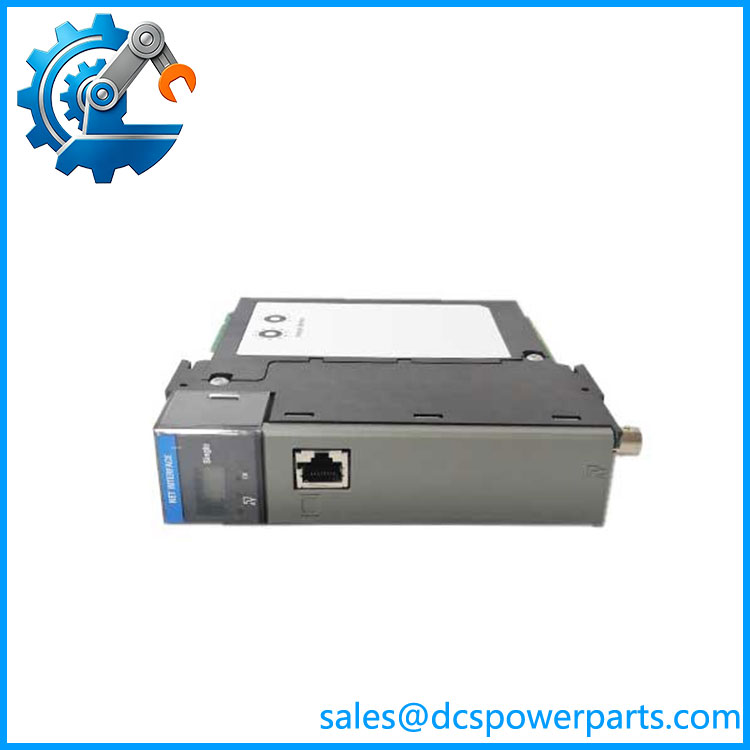
TC-CCN014
Application Scenarios & Field Pitfalls
Engineering Pain Point
A failed ControlNet interface can create widespread communication alarms:
- Remote I/O modules disappear
- Controller diagnostics report network faults
- Operator stations lose process data
- Multiple field points appear faulty simultaneously
Replacing field I/O modules in this situation is often unnecessary. The common communication layer should be checked first.
Typical Applications
- Honeywell Experion PKS C200 Controllers — Primary application for ControlNet communication.
- Process Automation Plants — Oil & gas, chemical, refining, and power facilities using Honeywell DCS platforms.
- Remote I/O Networks — Communication between controller chassis and distributed I/O racks.
- Redundant Control Architectures — Used with compatible redundant controller configurations.
Technical Pitfalls to Avoid
- Do not confuse TC- with TC-CCR014.
TC- is single-media ControlNet; TC-CCR014 provides redundant media capability. - Verify controller firmware compatibility.
A newer CNI module may require compatible controller firmware and Experion PKS versions. - Check ControlNet network health before replacement.
Use ControlNet diagnostics to verify node status, media errors, and communication quality. - Do not replace only one module in a redundant pair incorrectly.
Honeywell recommends matching module types within redundant chassis arrangements. Mixing older and newer CNI generations can prevent proper synchronization. - Record ControlNet node configuration.
Preserve network addresses and controller configuration before removing the module. - Inspect ControlNet cabling.
Poor connectors, damaged coaxial cable, incorrect termination, or excessive attenuation can mimic a failed CNI. - Check module seating.
Backplane contact issues can cause intermittent communication failures. - Do not assume every ControlNet module is compatible.
TC-CCN011, TC-CCN012, TC-CCN013, and TC- belong to the same family but have different generation capabilities. - Verify replacement module revision.
Legacy DCS systems can be sensitive to hardware revision differences. - Perform communication validation after installation.
Confirm controller status, remote I/O visibility, ControlNet diagnostics, and Experion system communication before returning the system to service.
Related Products
- Honeywell TC-CCR014 — Dual-media redundant ControlNet Interface module. Used when redundant ControlNet cabling is required.
- Honeywell TK- — Coated version of the redundant ControlNet Interface module for harsher industrial environments.
- Honeywell TC-CCN013 — Previous-generation single-media ControlNet Interface module replaced by TC-.
- Honeywell TC-CCN012 — Earlier ControlNet Interface module used in legacy Experion systems.
- Honeywell TC-CCN011 — Original generation ControlNet Interface module in the same family.
- Honeywell TC-CEN021 — Ethernet communication module used in Experion PKS architectures. It serves a different communication layer than the ControlNet interface.
- Honeywell TC-FCCN01 — ControlNet adapter module used for specific ControlNet interface applications.
- Honeywell C200 Controller Platform — The main controller platform where TC- is installed.
- Honeywell Experion PKS CNI Modules — The broader communication interface family supporting ControlNet-based DCS architectures.