Description
Honeywell 2108B2101N Searchpoint Optima Plus Hydrocarbon Gas Detector
Product Overview
The Honeywell 2108B2101N is associated with the Honeywell Searchpoint Optima Plus family of fixed point infrared hydrocarbon gas detectors. The Optima Plus uses infrared absorption measurement rather than a catalytic bead sensing element, making it suitable for continuous combustible-gas monitoring in hazardous industrial environments. Honeywell specifies a standard 0–100% LEL measuring range for the platform, with multiple hydrocarbon and vapor calibration options available for different target gases. The detector uses a 4–20 mA signal, with the standard platform supporting autosensing sink or source operation.
There is an important procurement distinction with this particular number. Honeywell-related documentation identifies 2108B2101N as a raw-material/internal assembly number rather than an independently orderable Optima Plus configuration. The 2026 product-validity notice states that the serial number on the installed unit is required to identify the correct orderable part number and calibration curve. That means 2108B2101N should not automatically be treated as a complete replacement specification. The actual gas calibration, certification package, mechanical configuration, and accessories should be established from the detector label and serial number before purchasing a replacement.
From an engineering standpoint, the underlying Searchpoint Optima Plus platform is built for applications such as offshore facilities, FPSO vessels, refineries, LNG/LPG facilities, compressor stations, terminals, and gas-turbine plants. Honeywell specifies 316 stainless-steel construction, 18–32 VDC supply, IP66/IP67 environmental protection, and a methane response of less than four seconds at T90. The infrared design also incorporates optical diagnostics, contaminated-optics warning, dynamic heating control, event logging, and remote functional gas-test capability.
Product Introduction
Gas detection replacement work often goes wrong because an internal assembly number is mistaken for a complete detector ordering code. 2108B2101N is a good example: it belongs to the Searchpoint Optima Plus ecosystem, but its exact replacement configuration must be established from the installed unit.
For a legacy gas detector replacement, preserve the original calibration curve and hazardous-area configuration. A physically identical detector with a different gas calibration is not necessarily an equivalent safety-system component.
Key Technical Specifications
| Parameter | Specification |
|---|---|
| Part Number | 2108B2101N |
| Manufacturer | Honeywell Analytics |
| Product Family | Searchpoint Optima Plus |
| Detector Type | Point infrared flammable hydrocarbon gas detector |
| Detection Principle | Infrared absorption |
| Standard Measuring Range | 0–100% LEL |
| Gas Calibration | Hydrocarbon; exact calibration curve must be verified |
| Signal Output | 4–20 mA |
| Output Configuration | Autosensing sink or source |
| Power Supply | 18–32 VDC, 24 VDC nominal |
| Maximum Power | <4.5 W |
| Construction | 316 stainless steel |
| Typical Weight | 1.6 kg |
| T50 Response | <3 seconds, methane |
| T90 Response | <4 seconds, methane |
| Accuracy, Hydrocarbon | Baseline <±1% FSD; at 50% FSD <±2% FSD |
| Repeatability | <±2% FSD at 50% FSD |
| Linearity | <5% FSD |
| Operating / Certified Temperature | -40 to +65°C |
| Environmental Protection | IP66/IP67 |
| Standard Inhibit Signal | 1–3 mA; default 2 mA |
| Standard Warning Signal | 0–6 mA; default 3 mA |
| Standard Fault Signal | 0 mA |
| Overrange | 20–21.5 mA; default 21 mA |
| Optional Digital Communication | HART 7 or Modbus RS-485 through applicable system/interface configurations |
| Hazardous-Area Certification | Platform supports UL/CSA, ATEX, IECEx and other certification configurations; exact 2108B2101N certification must be confirmed from the unit documentation |
The platform-level specifications above are supported by Honeywell’s published Searchpoint Optima Plus specifications. They should not be interpreted as a character-by-character decoding of the internal number 2108B2101N.
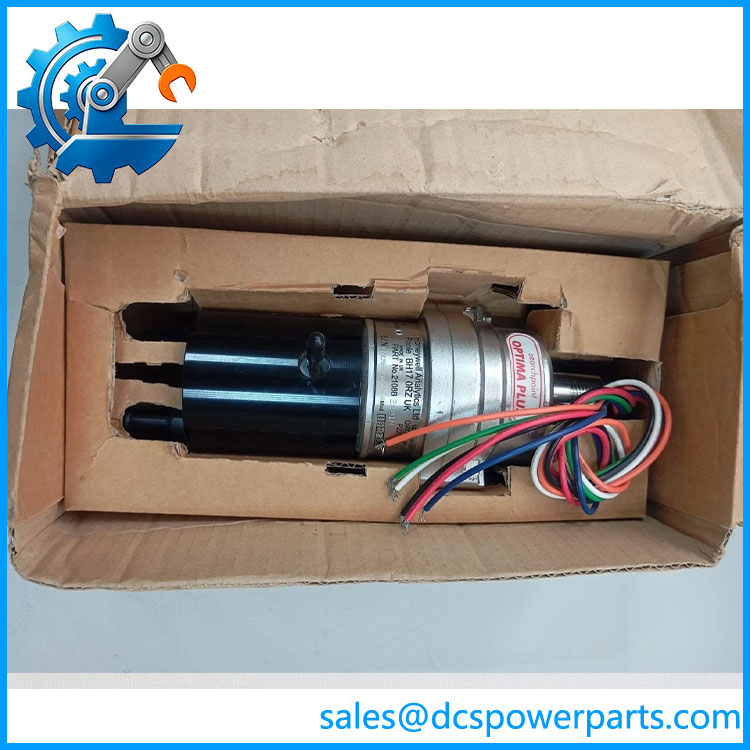
2108B2101N
Major Features / Practical Advantages
Point infrared hydrocarbon detection
Searchpoint Optima Plus uses a point infrared measurement principle for combustible hydrocarbon gases. Honeywell lists a wide selection of hydrocarbon and vapor calibrations rather than treating every detector as a generic methane instrument. This matters during replacement: the detector’s calibration curve is part of its functional identity.
Fast response for fixed gas monitoring
The published methane response is T50 below 3 seconds and T90 below 4 seconds. That response is useful where the detector feeds a plant fire-and-gas system, alarm annunciator, or other protective logic. The 4–20 mA output can be interpreted by the receiving F&G or control system according to the configured alarm and fault thresholds.
316 stainless-steel construction
The detector uses 316 stainless steel and is specified for IP66/IP67 protection. This construction is particularly relevant in outdoor hydrocarbon facilities where moisture, washdown, salt exposure, and corrosive atmospheres are normal maintenance considerations. Honeywell specifically identifies offshore oil and gas, FPSO vessels, tankers, refineries, compressor stations, and power-generation applications for the Searchpoint Optima Plus family.
Diagnostic functions
The Optima Plus architecture incorporates contaminated-optics warning, internal diagnostics, event logging, and remote functional gas testing. Dynamic heating control is also used to help maintain condensation-free optics. These functions reduce the chance that a dirty or optically compromised detector simply continues reporting an apparently healthy measurement.
4–20 mA integration
The standard platform provides a 4–20 mA autosensing sink-or-source output. Published signal states include separate ranges for inhibit, warning, fault, and overrange conditions. This allows the detector to integrate into conventional F&G analog input architectures without requiring a digital network for basic gas-concentration transmission.
No catalytic-bead poisoning mechanism
Infrared detection does not depend on the catalytic combustion mechanism used by traditional catalytic sensors. Honeywell identifies immunity to catalytic poisons as one of the advantages of the Optima Plus infrared approach. This is useful in process environments where conventional catalytic sensors can suffer from poisoning or performance degradation.
Related Products
- 2108N4100N — Current-style Optima Plus hydrocarbon detector configuration with 4–20 mA output and UL/INMETRO certification; configuration and accessories differ from the 2108B2101N reference.
- 2108N4110N — Hydrocarbon Optima Plus configuration incorporating a remote gassing-cell arrangement; intended for applications requiring that installation arrangement.
- 2108N5100N — Hydrocarbon detector configured for sampling systems with a flow housing.
- 2108B2101H — Legacy Optima Plus hydrocarbon configuration with HART capability; not equivalent to the non-HART 2108B2101N reference.
- 2108B2103N — Legacy Optima Plus ethylene configuration; different gas calibration and therefore not a generic substitute for a hydrocarbon detector.
- 2108B2201N — Legacy hydrocarbon Optima Plus configuration associated with FM/CSA certification.
- 2108B2051N — Legacy hydrocarbon Optima Plus configuration for marine applications.
- 2108B0272 — Optima Plus calibration cap used during applicable calibration procedures.
- 2108D0258 — Optima Plus gassing cover for calibration applications.
- 2108B0282 — Optima Plus flow housing for sampling applications.
The related part numbers illustrate why the complete configuration matters. Gas type, certification, HART capability, mechanical accessories, and sampling arrangement can all change between otherwise similar Optima Plus references.
FAQ
What exactly is Honeywell 2108B2101N?
It is an internal/raw-material assembly reference associated with the Searchpoint Optima Plus hydrocarbon detector. A 2026 Honeywell Optima Plus part-number validity notice states that 2108B2101N is not, by itself, an orderable part number and that the installed serial number is needed to identify the correct orderable configuration and calibration curve.
Is 2108B2101N a complete gas detector?
Do not assume so for procurement purposes. The number appears on Optima Plus labeling, but the actual orderable configuration must be determined from the serial number and the installed detector’s documentation. This is particularly important for gas calibration and hazardous-area certification.
What gas does the 2108B2101N detect?
The reference is associated with the hydrocarbon version of Searchpoint Optima Plus. The platform supports multiple hydrocarbon and vapor calibration curves, so the exact target gas should be confirmed before calibration or replacement.
Is the output 4–20 mA?
Yes, the Searchpoint Optima Plus platform provides a 4–20 mA autosensing sink-or-source output. Optional HART functionality exists on applicable configurations, but do not assume that 2108B2101N itself includes HART.
Can I replace 2108B2101N with a current 2108N-series detector?
Potentially, but not by part-number similarity alone. Confirm the original serial number, gas calibration, hazardous-area certification, electrical interface, mechanical connection, accessories, and receiving F&G system configuration. Honeywell’s current product documentation covers the Optima Plus family, while the older 2108B2101N reference requires configuration-specific verification.
Can I hot-swap this detector?
No hot-swap assumption should be made. This is gas-safety field instrumentation installed in potentially hazardous areas. Follow the site’s permit, gas-testing, isolation, hazardous-area, and F&G maintenance procedures before disconnecting the detector.
Does it support firmware v3.1?
There is no reliable evidence establishing firmware v3.1 specifically for the 2108B2101N reference. Do not put a firmware version into a procurement specification unless it can be confirmed from the installed detector, interrogator, or manufacturer documentation.
What should I verify when purchasing a replacement?
Record the serial number, complete detector label, gas calibration, certification markings, output configuration, mechanical thread/spigot arrangement, installed accessories, and F&G system input configuration. The serial number is especially important here because the 2108B2101N reference alone does not establish the final orderable configuration.
Procurement Note
For Honeywell 2108B2101N, the main procurement risk is not whether the Optima Plus detector family is correctly identified. It is whether the internal assembly reference is being mistaken for the actual orderable detector configuration.
A credible replacement check should start with the installed detector’s serial number and nameplate, not with a generic internet description. Honeywell’s 2026 validity notice specifically states that the serial number is required to determine the orderable part number and calibration curve.
For New Surplus inventory, inspect the optical windows, housing, cable entry, connectors, identification label, and certification markings. Shelf condition alone does not establish calibration validity. Before commissioning, verify the correct gas calibration and perform the manufacturer’s prescribed functional gas test and signal verification.
Also avoid treating the 4–20 mA loop as proof that the detector is correctly configured. A loop can be electrically healthy while the detector has the wrong gas calibration, certification configuration, or accessory package.
Bottom line: 2108B2101N identifies a Honeywell Searchpoint Optima Plus hydrocarbon detector assembly, but it should not be used alone as the final replacement-order specification. For a safety-system replacement, match the serial-number-derived orderable configuration, calibration curve, certification, mechanical arrangement, and F&G interface before installation.