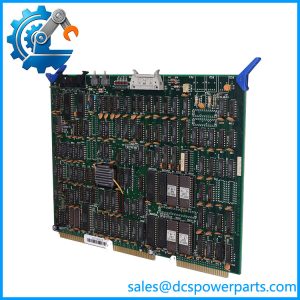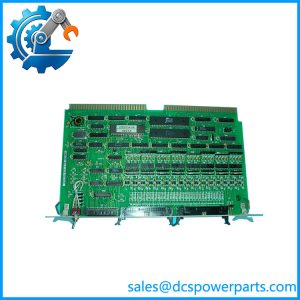
Description
Key Technical Specifications
| Parameter | Specification |
|---|---|
| Product Model | LPT020A |
| Manufacturer | Hitachi |
| Product Type | Linear Position Sensor / Position Feedback Unit |
| Primary Function | Position measurement / feedback |
| Application | Industrial automation and machine control |
| Product Generation | Legacy Hitachi automation hardware |
| Interface | System-specific; verify from nameplate/manual |
| Output Signal | Verify against installed system |
| Supply Voltage | Verify against installed system |
| Mounting | Application-specific |
| Operating Range | Verify from original documentation |
| Condition | New surplus / Used / Tested Refurbished |
The available product identification specifically describes Hitachi LPT020A as a linear position sensor.
There is not enough reliable public technical documentation to assign exact voltage, travel range, accuracy, or output-interface values without risking a false specification. For procurement, the physical nameplate and the original Hitachi system documentation should take precedence.
Application Scenarios & Pain Points
A position-feedback fault can cause much stranger symptoms than a simple sensor failure: unexpected stops, incorrect end-position detection, unstable positioning, or a controller that refuses to complete a sequence.
- Machine position feedback: Used where the control system needs continuous or defined position information from a mechanical assembly.
- Industrial motion equipment: The LPT020A can be relevant to legacy Hitachi equipment requiring position sensing as part of its control loop.
- Replacement of obsolete hardware: Useful when the installed Hitachi system cannot easily be converted to a modern sensor interface without changing controller configuration and wiring.
- Troubleshooting intermittent position faults: Inspect the sensor, cable, connector, and receiving electronics together. A damaged cable can produce the same symptoms as a failed position device.
Field note: Do not calibrate around a questionable sensor signal. If the feedback is noisy or drifting, first verify the physical sensor and wiring with the machine stationary, then check the signal at the controller input.
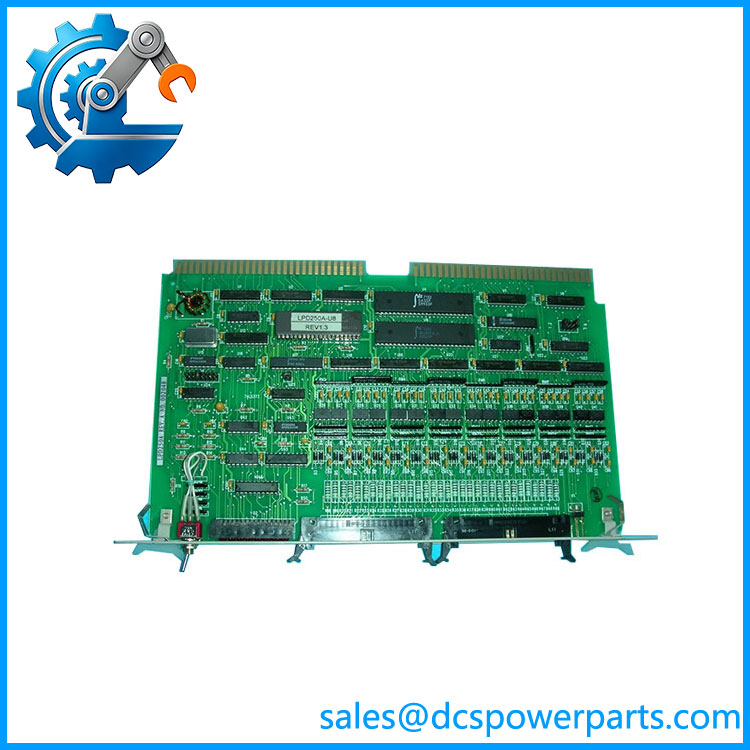
LPD250A
Related Products
- Hitachi LPT020A — The exact position-feedback reference discussed here. Confirm the complete nameplate before sourcing.
- Hitachi LYA020A — A related Hitachi legacy automation model appearing alongside LPT020A in industrial-part references. It should not be treated as a direct substitute without confirming its actual function and electrical interface.
- Hitachi LPD220A — A different Hitachi legacy system module. It belongs to the same general generation of industrial control hardware but should not replace a position-feedback component.
- Hitachi LPD250A — Another legacy Hitachi model. Its system role differs from LPT020A, so model-family similarity is not enough to establish compatibility.
- Hitachi LPD350A — Legacy Hitachi programmable-control hardware. It represents a higher-level control function rather than a position sensor.
- Hitachi LPF240A — Industrial control/inverter hardware from the same broad legacy Hitachi product ecosystem. It is drive-related rather than a direct position-feedback replacement.
- Hitachi LPF240F — Legacy Hitachi AC drive/inverter reference. It may be found in the same machine environment but performs motor-control rather than position-sensing functions.
The Engineer’s Guide: Field Pitfalls to Avoid
⚠️ Do not assume specifications from similarly named Hitachi products.
The publicly indexed information for this part is sparse. Do not invent a supply voltage, travel range, accuracy, or output signal from another Hitachi model.
⚠️ Verify the receiving electronics.
A position sensor is only one part of the feedback chain. Check the sensor, cable, connector, input circuit, scaling parameters, and controller together.
⚠️ Do not substitute a modern sensor without checking signal conditioning.
A replacement may have the correct mechanical travel but an incompatible electrical output. A 4–20 mA, voltage, pulse, or proprietary feedback signal cannot be assumed equivalent.
Practical check: Photograph the complete label, connector, cable termination, and installation location. Record the measured supply voltage and feedback signal from the existing installation before selecting a replacement.
Frequently Asked Questions (FAQ)
What is Hitachi ?
The is identified in available industrial-part references as a linear position sensor / position measurement device for Hitachi industrial automation equipment.
Is a PLC module?
It should not be classified as a conventional PLC CPU or I/O module based on the available identification. It is described as a linear position sensing device, so its role is associated with feedback measurement.
What is the exact output signal of ?
I would not specify the output signal without the original Hitachi documentation or a clear photograph of the unit’s nameplate. The currently available public references do not provide enough reliable information to state whether the particular uses voltage, current, pulse, or another feedback method.
Can I replace with LYA020A?
Do not assume that. Although both model numbers appear in legacy Hitachi industrial automation references, model-number similarity does not establish electrical or functional compatibility.
What should I check when buying a used ?
Ask for photographs of the actual unit, especially:
- Complete model/part-number label
- Connector and terminal arrangement
- Cable condition
- Sensor body and mounting interface
- Any revision or serial information
For a critical machine, request a functional position-feedback test rather than accepting only a continuity or power-up test.
Why is technical information for difficult to verify?
appears to be a legacy Hitachi industrial component, and currently indexed technical documentation is limited. Several commercial listings provide only a short product description without primary electrical specifications. That makes nameplate verification especially important when sourcing a replacement.