Description
Hitachi EH-CPU316A
Product Introduction
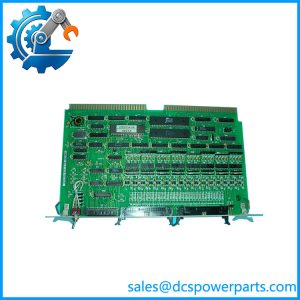
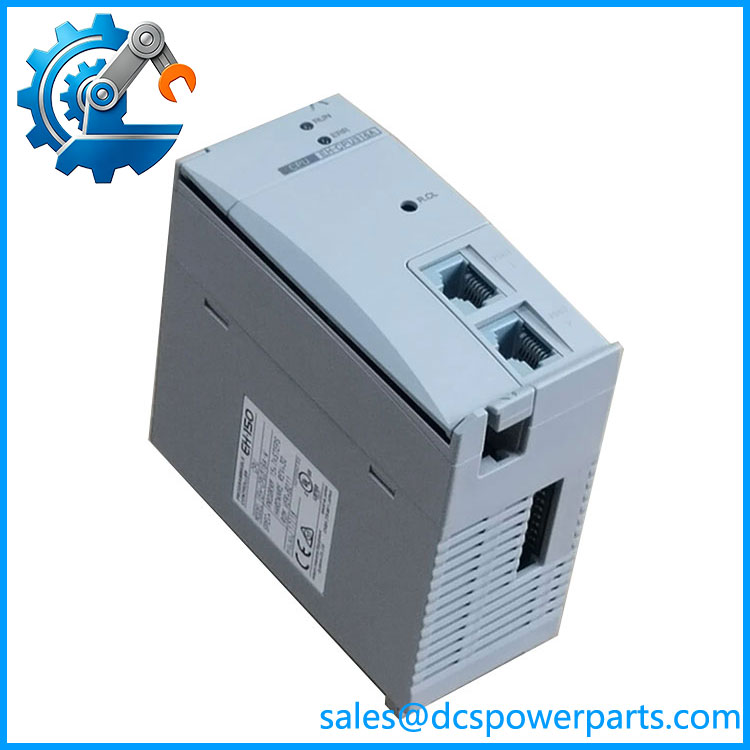
The Hitachi EH-CPU316A is a CPU module in the EH-150 programmable controller family, intended for medium-scale industrial automation systems where deterministic PLC control, expandable I/O, and serial communications are required. Hitachi specifies the EH-CPU316A with 15.7K steps of user program memory, placing it above the smaller EH-CPU104A and EH-CPU208A CPUs in the original EH-150 lineup. The CPU uses a 32-bit RISC processor architecture and executes stored-program cyclic control.
The Hitachi EH-CPU316A supports up to 1,024 I/O points when 64-point I/O modules are used, with one expansion stage in the standalone configuration. The CPU also supports remote I/O architecture, with documentation specifying up to four remote-I/O master stations and 1,024 points per master station. This makes the CPU suitable for distributed machine-control systems rather than only compact local I/O installations.
The Hitachi EH-CPU316A has two serial ports. Port 1 is the more flexible interface and can operate as a dedicated communication port or general-purpose port. Depending on configuration, RS-232C, RS-422, or RS-485 can be selected. Port 2 is a dedicated RS-232C interface. Hitachi documents H-Protocol for dedicated communication and TRNS/RECV-based general-purpose serial communication, making the port configuration an important consideration when replacing a CPU in an existing EH-150 installation.
Technical Specifications
| Parameter | Specification |
|---|---|
| Product Model | EH-CPU316A |
| Manufacturer | Hitachi Industrial Equipment Systems |
| Series | EH-150 |
| Product Type | PLC CPU module |
| Processor Architecture | 32-bit RISC |
| Processing Method | Stored-program cyclic method |
| User Program Memory | 15.7K steps |
| Basic Instruction Speed | 1.0 µs per basic command |
| Application Commands | 145 types documented |
| Maximum Local I/O | 1,024 points with 64-point I/O modules |
| Expansion Stages | 1 |
| Remote I/O | Up to 4 master stations |
| Remote I/O Capacity | 1,024 points × 4 master stations |
| Internal Word Registers | 22,528 words, WR0–WR57FF |
| Internal Bit/Word Memory | 16,384 points / 1,024 words |
| Timer/Counter Capacity | 512 points total |
| Timer Base | 0.01 / 0.1 / 1 second |
| Timer Setting | 0–65,535 |
| Counter Setting | 1–65,535 counts |
| Serial Ports | 2 |
| Port 1 Dedicated Interface | RS-232C; RS-422/485 supported |
| Port 1 General-Purpose Interface | RS-232C / RS-422 / RS-485 |
| Port 2 | RS-232C dedicated |
| Dedicated Protocol | Hitachi H-Protocol |
| General-Purpose Serial | TRNS/RECV commands |
| Programming | Ladder / command language and supported programming tools |
| Self-Diagnostics | CPU, watchdog, memory, program, ROM/RAM and scan-time diagnostics |
| Compatible Series | EH-150 / applicable EHV expansion architecture |
| Installation | EH-150 CPU/base-unit installation |
| Protection Rating | Not specified as a standalone IP-rated device |
| Operating Temperature | Refer to EH-150 system installation specifications |
| Power Supply | Supplied through the EH-150 base/unit architecture; verify system power module |
| Communication Options | PROFIBUS-DP and other network functions available through compatible modules |
The published EH-150 documentation confirms the program-memory, I/O, remote-I/O, register, timer/counter, and serial-port specifications above.
EH-CPU316A
Main Features and Engineering Considerations
1. 15.7K-Step CPU
The EH- provides 15.7K steps of user program memory. This is a significant distinction when comparing it with smaller EH-150 CPUs. A replacement should therefore be matched against the actual application program size and CPU model rather than simply selecting another EH-150 processor.
2. Large I/O Capacity for the EH-150 Platform
Hitachi specifies up to 1,024 local I/O points when 64-point modules are used. The CPU also supports remote I/O through up to four master stations, each with up to 1,024 points. This architecture allows the CPU to control distributed equipment without putting every I/O module beside the processor.
3. Flexible Serial Communications
Port 1 is the most useful integration interface. It can be configured for RS-232C, RS-422, or RS-485 depending on whether it is being used as a dedicated or general-purpose interface. RS-422/485 support is specifically documented for the EH-.
4. H-Protocol and General-Purpose Serial Control
Dedicated communication uses Hitachi’s H-Protocol. In general-purpose mode, TRNS and RECV commands allow the user program to exchange serial data with devices such as barcode readers, printers, PCs, and other serial equipment. This matters when migrating an existing machine because the serial-port mode may be embedded directly in the PLC program.
5. Remote and Network Expansion
The EH- can be paired with compatible communication modules. Hitachi specifically documents PROFIBUS-DP master/slave functionality for EH-, EH-CPU516, and EH-CPU548 systems, with PROFIBUS-DP V0 operation and transmission speeds up to 12 Mbps.
6. Positioning-System Compatibility
Hitachi documentation lists the EH- as a supported CPU for EH-150 positioning modules. This allows the PLC platform to participate in motion-control applications using compatible positioning hardware.
7. Legacy Platform Consideration
Hitachi’s current battery documentation identifies the EH-150 series, including EH-, among discontinued models. This makes preservation of the existing application program, communication configuration, and compatible I/O hardware particularly important for maintenance planning.
Application Scenarios
Machine Automation
Suitable for medium-scale machinery requiring ladder-based sequencing, timers, counters, and distributed digital/analog I/O.
Material Handling
The available I/O capacity and positioning-module support make the EH-150 platform applicable to conveyors, handling systems, and related equipment.
Process Equipment
Serial communication and expandable I/O allow integration with instruments, HMIs, barcode equipment, and other plant devices.
Legacy OEM Machinery
The EH- is particularly relevant when maintaining existing machines built around the Hitachi EH-150 architecture.
Distributed Control
Remote-I/O capability allows field I/O to be separated from the main PLC cabinet while retaining centralized program execution.
Engineer’s Guide: Field Pitfalls
Do not confuse EH- with EH-CPU316. The “A” revision is part of the exact model identity.
Back up the PLC program before replacement. The replacement CPU does not automatically reproduce the site’s application logic, register usage, communication settings, or special-module configuration.
Check Port 1 configuration. RS-232C, RS-422, and RS-485 are not interchangeable wiring arrangements. The physical interface configuration must match the existing machine.
Check Port 2 usage. Port 2 is a dedicated RS-232C interface and may be connected to programming equipment, HMI equipment, or other existing system hardware.
Preserve H-Protocol settings. A communication failure after CPU replacement can come from station addressing, protocol parameters, or interface selection rather than a defective CPU.
Verify the base unit and I/O modules. EH-150 CPU compatibility is system-specific. Do not assume an EH- can be installed into an unrelated Hitachi PLC family.
Check remote-I/O configuration. Remote-I/O master configuration and station assignments must be retained when replacing the CPU.
Check special modules. Positioning, PROFIBUS, link, and other communication modules can impose their own CPU compatibility requirements. Hitachi specifically lists EH- among the CPUs supported by several of these modules.
Check battery condition. The EH-150 CPU uses a battery-backed memory arrangement, and Hitachi lists a dedicated LIBAT-H battery for EH-.
Do not assume modern Ethernet capability. The standard CPU interfaces documented for EH- are serial. Ethernet or other plant-network connectivity requires the appropriate external communication architecture.
Frequently Asked Questions
What is the Hitachi EH-?
The EH- is a Hitachi EH-150 PLC CPU module with 15.7K steps of user program memory and support for up to 1,024 local I/O points when 64-point modules are used.
How much program memory does EH- have?
The documented user program capacity is 15.7K steps.
How many I/O points can EH- support?
The EH-150 system documentation specifies up to 1,024 local I/O points with 64-point I/O modules. Remote-I/O architecture can provide additional capacity through up to four master stations.
Does EH- support RS-485?
Yes. Port 1 supports selectable RS-232C, RS-422, or RS-485 operation in the documented configurations.
Does EH- support PROFIBUS?
Yes, through the appropriate compatible PROFIBUS master/slave module. Hitachi lists EH- as a supported CPU for its EH-150/EHV PROFIBUS architecture.
Is EH- an EHV CPU?
No. EH- belongs to the EH-150 CPU family. It can, however, participate in certain EH-150/EHV system architectures and is explicitly listed as compatible with selected EHV-related modules.
What programming software is used?
Hitachi documentation identifies LADDER EDITOR and other programming tools for the EH-150 family. The exact software version should be matched to the installed CPU and legacy project.
Procurement Note
For a replacement, specify the exact CPU model and verify the surrounding EH-150 hardware before purchase.
Check:
- Exact CPU marking: .
- Existing EH-150 base unit.
- PLC program backup.
- Battery condition.
- Port 1 interface selection.
- Port 1 H-Protocol/general-purpose configuration.
- Port 2 RS-232C wiring.
- Remote-I/O master configuration.
- Special-function modules.
- PROFIBUS or other communication modules.
- Positioning-module compatibility where applicable.
- Existing I/O module mix and expansion stage.
The biggest replacement risk is not the CPU’s basic processing capacity; it is system compatibility and configuration retention. The EH- sits inside a broader EH-150 architecture, and Hitachi documents specific CPU compatibility requirements for communication, positioning, and remote-I/O modules.
For a running legacy machine, preserve the original program and communication configuration before removing the CPU, and verify the replacement against the actual base, I/O, network, and special-module configuration.