Description
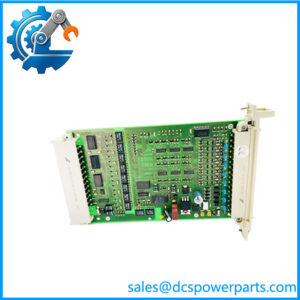
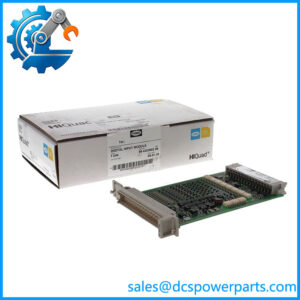
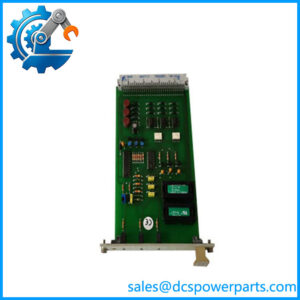
HIMA X-DO3201 Digital Output Module
Product Overview
The HIMA X-DO3201 is a 32-channel digital output module for the HIMax safety-related control platform. Its job is straightforward but safety-critical: it converts commands generated by the HIMax controller into discrete 24 VDC field outputs for actuators and other final control devices. HIMA technical material specifies 32 channels, 24 VDC operation, 0.5 A per channel, short-circuit monitoring, and individual channel shut-off. The module is listed as a SIL 3 digital-output module within the HIMax I/O family.
Unlike a conventional PLC output card, the HIMA X-DO3201 belongs to a safety-system architecture in which diagnostics and controlled channel shutdown are integral to the I/O design. The documented X-DO3201 uses short-circuit monitoring and allows individual channels to be switched off, which is important when a single field fault must be isolated without unnecessarily removing the remaining output functions. HIMA’s HIMax documentation also describes online changes and maintenance as system-level capabilities, so live replacement should be governed by the approved HIMax maintenance procedure rather than assumed solely from the module type.
The HIMA X-DO3201 is also a relatively high-density output module: 32 discrete outputs are provided in a module measuring approximately 310 × 29 × 230 mm. This makes it useful in safety-system cabinets where many discrete final-element commands have to be handled within the HIMax architecture. For procurement, however, channel count and voltage are only the starting checks. The exact HIMax controller generation, module revision, termination board, field power arrangement, and safety configuration should be confirmed before installing a replacement.
Product Introduction
Thirty-two 24 VDC outputs in one HIMax module provide a high-density interface for safety-related discrete control. With a documented 0.5 A maximum per channel and individual channel shut-off, the X-DO3201 is intended for field loads that require controlled switching plus channel-level diagnostics rather than ordinary PLC output functionality.
For legacy HIMax replacement, the termination arrangement deserves attention. HIMA-compatible termination boards are specifically designed around the X-DO 32 01 interface; Pepperl+Fuchs, for example, documents dedicated 32-channel termination boards for this module with 24 VDC supply and HIMA system connectivity.
Key Technical Specifications
| Parameter | Value |
|---|---|
| Product Model | X- |
| HIMA Part Number | 985210219 |
| Manufacturer / Brand | HIMA |
| System Series | HIMax |
| Product Type | Safety Digital Output Module |
| Number of Outputs | 32 channels |
| Output Signal | 24 VDC |
| Maximum Output Current | 0.5 A per channel |
| Output Protection / Diagnostic | Short-circuit monitoring |
| Channel Control | Individual channel shut-off |
| Safety Classification | SIL 3 |
| Module Dimensions | 310 × 29 × 230 mm |
| Field Termination | Dedicated HIMax-compatible termination arrangement |
| Typical Application | Safety-related discrete output control |
HIMA’s HIMax technical reference explicitly lists the X- as a 32-channel, 24 VDC, 0.5 A digital output module with short-circuit monitoring, individual channel shut-off, and SIL 3 classification.
Major Features / Practical Advantages
32-channel digital output density
The X- provides 32 discrete output channels in a single HIMax I/O module. For a large safety cabinet, that density can reduce the number of separate I/O modules required for solenoid valves, contactor interfaces, annunciators, and other discrete field loads.
The important limitation is not channel count but load compatibility. The published HIMax specification identifies 0.5 A per channel; field-device inrush, continuous current, inductive characteristics, and external suppression must therefore be checked against the actual output circuit.
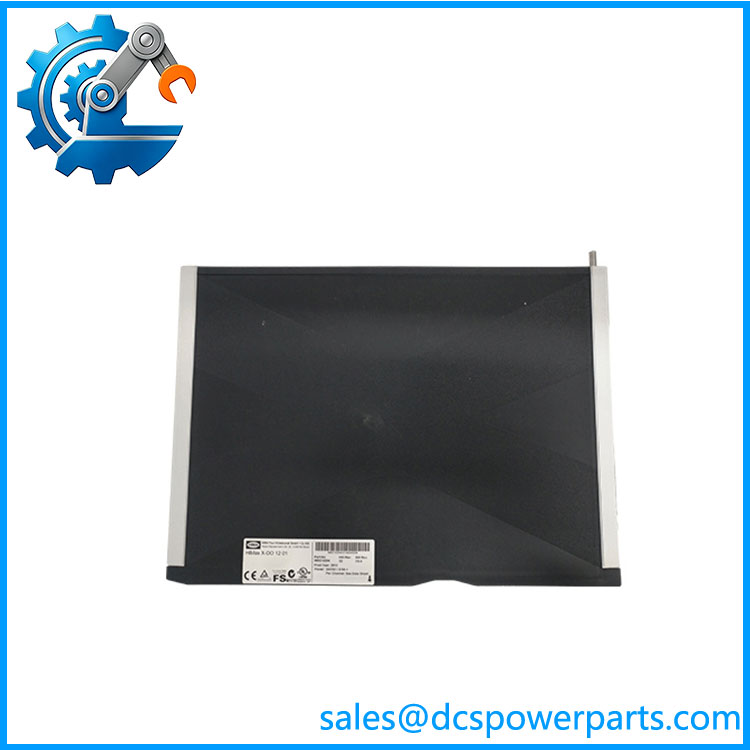
X-DO1201-985210204
24 VDC field interface
The module is specified for 24 VDC digital outputs, matching a common process-industry field voltage. That does not mean every 24 VDC device is automatically suitable. Solenoid valves and relay coils can have substantially different inrush and release characteristics, so the actual load should be checked rather than relying on the nominal voltage printed on the field device.
Short-circuit monitoring
Short-circuit monitoring is one of the defining features of the X-. A field fault is therefore treated as a diagnostic condition rather than simply allowing an output channel to remain electrically stressed.
This matters in safety applications because a failed field circuit should be visible to the control system. It also reduces the risk of treating a standard non-diagnostic PLC output as an equivalent replacement.
Individual channel shut-off
The HIMax technical reference specifically identifies individual channel shut-off. This provides more granular fault handling than a module design that can only disable an entire output group.
From a maintenance perspective, that distinction can be significant. If one output circuit develops a fault, the ability to isolate the affected channel can preserve the intended operating state of other channels, subject to the configured safety logic and system response.
HIMax safety architecture
The X- is part of the HIMax safety-related modular platform rather than a general-purpose I/O family. HIMax documentation describes an XMR architecture with integrated redundancy management, online maintenance capabilities, diagnostic-event storage, and safety-system functions. These are properties of the broader HIMax platform, not independent claims that a single X- can provide a complete safety function by itself.
Dedicated termination hardware
The X- can be paired with dedicated termination boards. Pepperl+Fuchs documents the HiCTB32-HIM-RAC-SP- specifically for the 32-channel X-DO 32 01 and identifies a 24 VDC supply and HIMA 96-pin system connection.
A separate HIMA-compatible termination board is also documented for the X-DO 32 01, with redundant 24 VDC supply inputs and a fault indication interface.
This is worth checking during procurement because the termination hardware is part of the actual field interface. A module can have the correct model number and still be unsuitable if the cabinet’s termination arrangement does not match.
SIL 3 system component
The HIMax technical reference lists X- as a SIL 3 digital output module.
That classification should not be interpreted as meaning that simply installing one module creates a SIL 3 safety function. The achieved safety integrity depends on the complete safety architecture, application logic, diagnostics, proof-test regime, field devices, configuration, and applicable certification basis.
Related Products
- X-DO3251 — 32-channel, 24 VDC, 0.5 A digital output module with protected outputs and group shut-off. Its diagnostic/shut-off architecture differs from the X-‘s individual channel shut-off arrangement.
- X-DO2401 — 24-channel, 24 VDC, 0.5 A digital output module with line monitoring and individual channel shut-off. It has fewer channels and a different diagnostic interface.
- X-DO2402 — 24-channel, 48 VDC, 0.5 A digital output module with line monitoring. The higher field voltage makes it unsuitable as a simple 24 VDC substitute.
- X-DO1201 — 12-channel relay-output module for 230 VAC/DC applications, with current measurement and cycle counting. It is a relay-output architecture rather than the 24 VDC solid-state arrangement of the X-.
- X-DO1202 — 12-channel, 24 VDC digital output module rated at 2 A per channel, with short-circuit monitoring and individual channel shut-off. It trades channel density for higher channel current capability.
- X-AO1601 — 16-channel analog-output module with 4–20 mA outputs and pairwise galvanic isolation. It handles continuous analog commands rather than discrete switching.
- X-AI3201 — 32-channel analog-input module used to acquire process measurements rather than drive discrete field loads.
- X-DI3201 — 32-channel digital-input module for acquiring discrete field states; functionally complementary to the X-.
- HiCTB32-HIM-RAC-SP- — Dedicated termination board for the 32-channel X-, providing the field-side termination/interface arrangement for compatible installations.
FAQ
Can I replace an X- with an X-DO3251?
Not as an automatic drop-in substitution. Both are 32-channel, 24 VDC HIMax digital-output modules with a 0.5 A/channel specification, but their diagnostic and shut-off arrangements differ. The X- uses short-circuit monitoring with individual channel shut-off, while the X-DO3251 is documented with protected outputs and group shut-off. The safety application should therefore be reviewed before substitution.
Can I hot-swap the X-?
HIMax documentation describes online changes, additions, and maintenance as supported system capabilities. However, that is not the same as saying that every X- can be physically removed under every energized condition. Follow the approved HIMax maintenance procedure, including the specific rack, controller, power, and safety-state requirements, before attempting live replacement.
What is the maximum output current?
The published HIMax technical reference specifies 0.5 A per channel for the X-. The actual engineering check should also consider the load’s startup/inrush behavior and whether the field device is inductive.
Does the X- support short-circuit detection?
Yes. Short-circuit monitoring is explicitly listed as a defining feature of the X-. Individual channel shut-off is also specified.
Does the X- support firmware v3.1?
The module model number does not establish a specific firmware revision. HIMax compatibility should be checked against the installed controller, system release, engineering environment, and module hardware revision. Do not infer firmware compatibility from the X- name alone.
Is X- a SIL 3 module?
HIMA’s HIMax technical reference lists the X- as a SIL 3 digital output module. That is a module/system certification characteristic and should not be converted into a claim that any arbitrary application using the module automatically achieves SIL 3. The complete safety function must satisfy its applicable architecture and lifecycle requirements.
What termination board is used with the X-?
Dedicated termination hardware is available. Pepperl+Fuchs documents the HiCTB32-HIM-RAC-SP- for the 32-channel X-DO 32 01 and specifies 24 VDC supply and a HIMA 96-pin system connection. A separate HIMA-compatible termination board, HiDTB16-HIM-RAC-SP-, is also documented for the same output module. The correct choice depends on the installed field-interface architecture.
Is 985210219 the part number for X-?
Multiple product records identify 985210219 with HIMA X-. For procurement, however, the actual module nameplate should be checked rather than relying solely on a seller’s database entry.
Is each output individually galvanically isolated?
Do not assume this from generic supplier descriptions. The reliable HIMax technical reference establishes 32 channels, 24 VDC, 0.5 A, short-circuit monitoring, and individual channel shut-off, but it does not support the stronger claim that all 32 field outputs are individually galvanically isolated. Some third-party listings make that claim without adequate documentation.
Procurement Note
For a replacement, verify the complete assembly rather than matching only the front-panel model. Confirm the 985210219 marking where applicable, the HIMax system generation, installed termination board, field supply arrangement, output load, and safety configuration. The 0.5 A/channel specification should be checked against the actual field devices, especially solenoid and relay loads with significant inrush or inductive behavior.
The termination hardware is particularly important. Dedicated interfaces are documented for the X-, including the HiCTB32-HIM-RAC-SP- and HiDTB16-HIM-RAC-SP- configurations. Their field-side wiring, power arrangement, and system connector should match the existing cabinet design before commissioning.
For legacy spare procurement, request a clear photograph of the actual nameplate and connector area. Confirm whether the unit is new surplus, refurbished, or previously installed, and request functional-test evidence when the application is safety-related. A correct model number does not by itself prove that the module is suitable for the installed safety configuration.