Description
Key Technical Specifications
| Parameter | Value |
|---|---|
| Manufacturer | HIMA Paul Hildebrandt GmbH |
| System | H41q-HS |
| Device Type | B4237-1 |
| Part Number | 997104237 |
| Product Category | Compact Programmable Electronic Safety System |
| Product Family | HIQuad |
| Controller Architecture | QMR — Quadruple Modular Redundancy |
| Safety Architecture | Redundant central processing with diagnostic fault detection |
| System Type | H41q compact safety system |
| Typical Central Rack | Compact 19-inch system architecture |
| Central Processing | Dual CU modules forming the redundant central control structure |
| I/O Capacity | Compact H41q architecture supports up to 13 I/O cards in the central rack |
| Communication | Depends on installed communication modules |
| Power Architecture | Dedicated HIMA safety-system power modules |
| Safety Application | Process safety / emergency shutdown / protective control |
| Certification | TÜV-certified H41q-HS hardware family; verify exact certificate and revision |
| Documented Revision | B4237-1/-2 Revision 03 |
| Lifecycle | Legacy / discontinued family |
HIMA’s current revision documentation explicitly lists B4237-1/-2 as “Automatisierungsgerät, kompakt H41q-HS, HRS” and gives revision 03 as valid under certificate 968/FSP 1254.00/16.
Architecture
The H41q-HS is not just a single processor board.
The H41q/H51q family uses a QMR architecture. Two central processing modules, each containing two microprocessors, form the central control structure. This is fundamentally different from a conventional single-CPU PLC.
The compact H41q architecture integrates the central unit, interfaces, communication hardware, power/distribution, and I/O within the compact system arrangement. Available technical descriptions identify capacity for 13 I/O cards in the central rack.
Product Introduction
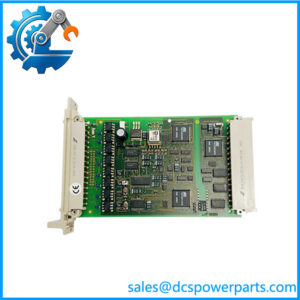
HIMA H41q-HS B4237-1 997104237
The HIMA H41q-HS B4237-1 997104237 is a compact HIQuad programmable electronic safety system intended for safety-related industrial automation. Unlike a conventional PLC CPU, the H41q-HS is a system-level safety controller built around redundant processing and diagnostic mechanisms. HIMA’s certification records specifically identify B4237-1/-2 as the compact H41q-HS HRS system.
Its main value is the fault-tolerant architecture. The controller can execute safety logic while continuously comparing processor results and monitoring internal hardware. That makes the H41q-HS suitable for applications where a controller fault must be detected rather than simply tolerated as an ordinary PLC fault.
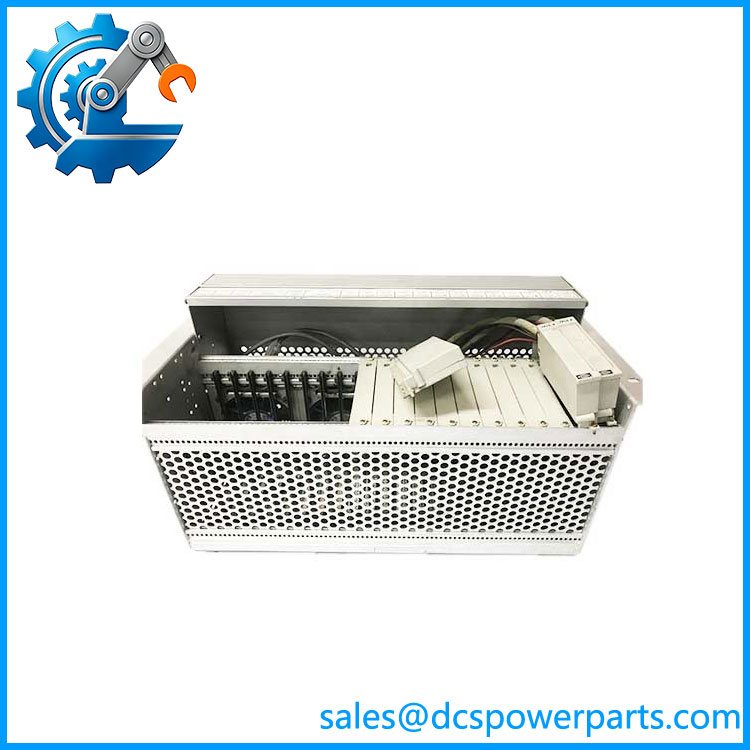
H41q-HS
Application Scenarios & Field Pitfalls
Engineering Pain Point
A legacy safety controller failure is rarely just a “CPU replacement.” The H41q-HS combines central processing, communications, power distribution, and I/O within a certified architecture. Replacing one assembly without checking the exact hardware revision, application configuration, and associated I/O can turn a straightforward maintenance job into a safety-system validation problem.
Typical Applications
- Oil & Gas — Emergency shutdown systems, compressor protection, burner shutdown, and process interlocks.
- Petrochemical — Reactor protection, furnace shutdown, high-pressure trips, and hazardous-process interlocking.
- Power Generation — Turbine auxiliary protection, boiler safety functions, and plant emergency shutdown logic.
- Process Industry — Safety instrumented functions requiring high diagnostic coverage and redundant processing.
Technical Pitfalls to Avoid
- Do not call a standalone CPU.
The official HIMA revision list classifies /-2 as the compact H41q-HS safety automation system, not simply as a processor board. - Verify versus B4237-2.
These are related H41q-HS variants. Do not assume that the two suffixes are interchangeable without checking the installed I/O architecture and safety-system documentation. - Check the hardware revision.
HIMA’s revision list identifies Revision 03 for /-2 in the cited certification record. A replacement should be checked against the revision installed in the plant. - Do not change the safety architecture during troubleshooting.
The QMR structure is part of the safety design. Removing one central module or changing redundancy wiring without following the approved procedure can create a diagnostic state or invalidate the intended safety configuration. - Check the complete system, not just the controller.
Power modules, communication modules, central processing modules, and I/O cards all contribute to system operation. A controller diagnostic may be secondary to another rack fault. - Preserve the application program.
Hardware replacement does not automatically reproduce the plant’s safety application. Back up the existing configuration and verify firmware/software compatibility before commissioning. - Verify I/O compatibility.
HIMA’s H41q family includes numerous digital and analog I/O variants. A physically compatible card is not necessarily approved for the same safety application. - Do not assume modern Ethernet capability.
Communication functionality depends on the communication modules actually installed in the H41q system. Do not assign modern network protocols to the itself without documentation. - Check power modules first when the entire rack is dead.
A total loss of controller indication is not sufficient evidence of a failed CPU. Inspect the safety-system power distribution and rack supply. - Treat replacement as a safety-system intervention.
After hardware replacement, the relevant safety functions require appropriate verification and validation. “It boots” is not an adequate commissioning criterion for a SIL-rated application.
Related Products
- HIMA H41q-HS B4237-2 — Closely related H41q-HS compact safety-system variant. The two B4237 versions should be compared against the installed I/O and redundancy architecture before substitution. HIMA’s certification documentation lists both and B4237-2.
- HIMA B4235 — Compact H41q-MS system. It belongs to the same H41q family but represents a different system configuration from the H41q-HS .
- HIMA B5233-1 / B5233-2 — Modular H51q-HS systems. These use the same broader HIQuad generation but provide a larger modular architecture than the compact H41q-HS.
- HIMA B5231 — Modular H51q-MS system. It is the larger-system counterpart within the H41q/H51q family, useful when a project requires more distributed I/O capacity.
- HIMA F8652E 984865264 — H41q central processing module. This is a component-level central CPU used within the H41q architecture, whereas identifies the compact system assembly.
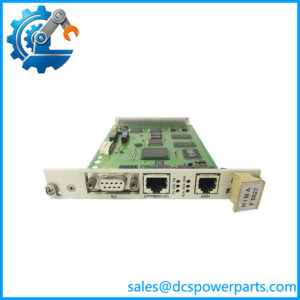
- HIMA F8627 984862702 — Ethernet communication module used in H41q/H51q systems. It handles network communication rather than safety-logic execution.
- HIMA F3236 — 16-channel digital-input module used in H41q/H51q safety systems. HIMA’s revision list identifies F3236 as a safety-related 16-channel input assembly.
- HIMA F3237 — 8-channel input module for initiators/contact devices with line monitoring. It is appropriate where input-line diagnostics are required.
- HIMA F3238 — 8-channel intrinsically safe input module for applicable Ex(i) applications. It is a specialized I/O option rather than a replacement for the system.
- HIMA F3240 — 16-channel 120 VAC/DC input module. It belongs to the H41q/H51q I/O family but serves a different field-voltage requirement.