Description
Key Technical Specifications
| Parameter | Specification |
|---|---|
| Manufacturer | HIMA |
| Model | F7553 |
| Order Number | 984755302 |
| Product Type | Safety-System Communication / Interface Module |
| System Family | H41q / H51q |
| Product Generation | HIMA F-series |
| Primary Role | System communication/interface |
| Field I/O Function | No direct analog measurement function |
| Application | HIMA safety control system infrastructure |
| Installation | HIMA safety-system rack |
| Condition | New Surplus or Fully Tested Refurbished |
Procurement note: F7553 is an older HIMA component, and public part databases often provide incomplete or conflicting descriptions for legacy F-series hardware. For this reason, the 984755302 nameplate, PCB revision, rack position, and HIMA system documentation should be used as the final identification criteria.
Application Scenarios & Pain Points
Communication faults in a safety rack can be deceptive. A controller may remain powered, LEDs may look normal, and field devices may test correctly—yet the logic solver still reports missing or unavailable system data.
- H41q/H51q safety systems: F7553 is used as system-level interface hardware within the HIMA safety architecture rather than as a conventional field input card.
- Legacy shutdown systems: Useful when maintaining older HIMA installations where replacing the complete safety rack is not practical.
- Plant turnaround spares: Keeping a tested F7553 available can reduce troubleshooting time when system communication diagnostics point toward the rack interface.
- Safety-system refurbishment: Appropriate for maintenance programs where original F-series hardware must remain in service.
Field note: Before condemning the F7553, inspect the rack power rails and connector contacts. A loose backplane connection or oxidized contact can produce communication symptoms that look like a processor or interface failure.
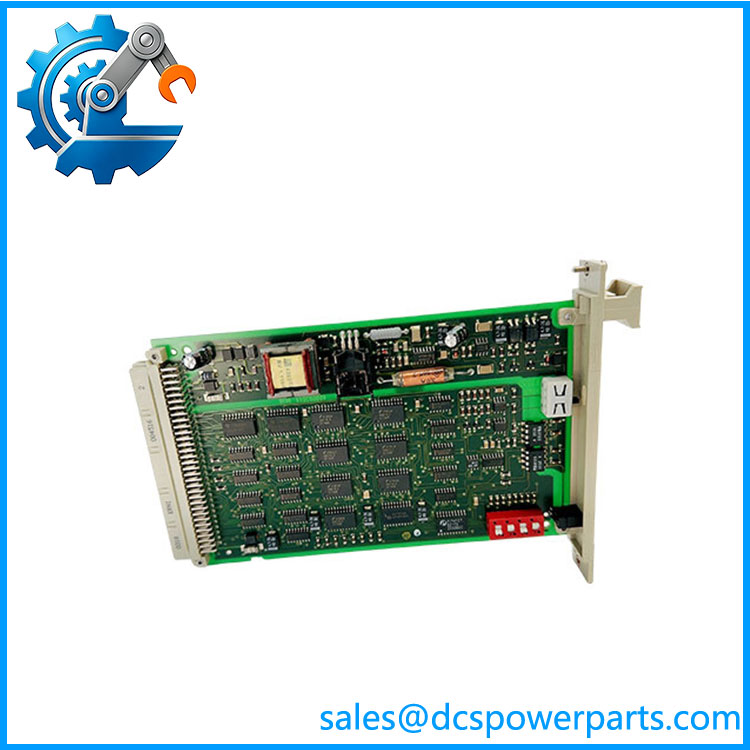
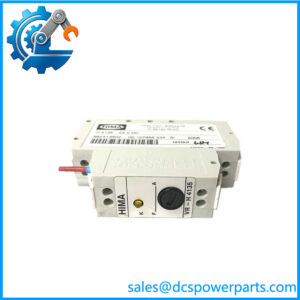
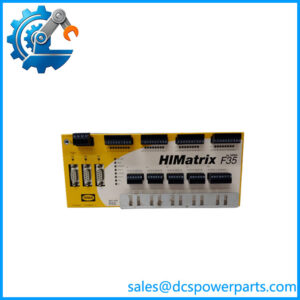
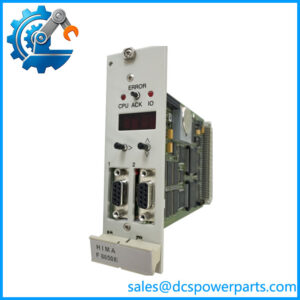
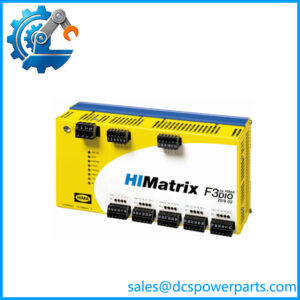
F7553
Related Products
- HIMA F7553 / 984755302 — The subject system communication/interface module for the applicable HIMA safety architecture.
- HIMA F7551 — Related HIMA F-series communication/interface hardware. It should be evaluated by exact system function and revision rather than model-number similarity.
- HIMA F7552 — Another related HIMA communication module. Application and interface characteristics need to be checked before substitution.
- HIMA F7554 — Related F-series communication/interface hardware that may appear in comparable HIMA installations. It is not automatically a drop-in replacement for .
- HIMA F3237 / 984323702 — Safety digital input hardware. It handles discrete field signals, while operates at the system/interface level.
- HIMA F3330 / 984333002 — Safety digital output module. It executes discrete safety output commands and complements the communication/interface function.
- HIMA F6217 / 984621702 — Safety analog input module for transmitter signals. It serves the field measurement layer rather than system communication.
- HIMA F8652X — HIMA safety controller hardware. The controller performs the logic-solving function, while supports the associated system architecture.
- HIMA F8650X — Related HIMA safety controller platform. It represents a controller-level component, not a direct replacement.
The Engineer’s Guide: Field Pitfalls to Avoid
WARNING 1 — Do not treat as a generic communication card.
The module’s role is tied to the HIMA safety-system architecture. A physically similar communication board can have a completely different bus or system function.
How to avoid it: Match / 984755302 against the original rack documentation, controller family, slot position, and hardware revision.
WARNING 2 — Check rack power before replacing the interface module.
A communication fault can originate from undervoltage, backplane problems, or poor connector contact.
How to avoid it: Measure the rack supply under operating load and inspect the module’s connector contacts. Look for discoloration, oxidation, bent pins, or signs of localized heating.
WARNING 3 — Preserve the existing system configuration.
A replacement interface module may require the correct hardware revision or system configuration to communicate properly with the installed controller and I/O architecture.
How to avoid it: Record controller diagnostics, module revision, rack position, and system configuration before removing the original board. Do not change multiple modules at once unless the maintenance procedure specifically requires it.
Frequently Asked Questions (FAQ)
What is HIMA 984755302?
HIMA 984755302 is a system-level communication/interface module associated with HIMA’s legacy safety-system architecture. It is different from field I/O modules such as F3237 or F6217 because its primary role is system communication/interface rather than direct process-signal acquisition.
Is an input or output module?
No. should be considered communication/interface hardware, not a conventional digital or analog field I/O card.
That distinction is important when troubleshooting. If an F3237 input channel fails, you normally investigate the field circuit and input channel. If the is involved in a system communication fault, the investigation should include the controller, backplane, rack power, interface connections, and system bus architecture.
Which HIMA systems use ?
is associated with H41q/H51q-era HIMA safety systems. For an installed legacy system, verify the exact controller and rack generation before ordering a spare.
The complete 984755302 identification should be retained when sourcing a replacement.
Can another HIMA F-series communication module replace ?
Not without an engineering compatibility check.
Compare:
- Complete order number
- Hardware revision
- Controller family
- Rack/backplane
- Slot assignment
- Communication architecture
- Firmware/system configuration
- Safety-system documentation
A similar enclosure or connector arrangement is not sufficient evidence of compatibility.
How should I troubleshoot an communication fault?
Start with the infrastructure rather than immediately replacing the module:
- Check rack power voltage.
- Review controller diagnostics.
- Inspect the connector.
- Check adjacent module seating.
- Inspect backplane contacts.
- Compare status LEDs with the HIMA diagnostic documentation.
- Check system communication/configuration.
- Substitute a known-good only after the basic checks.
This approach helps avoid replacing a good communication module when the actual fault is a backplane or power problem.
What should I request for a refurbished ?
For a critical HIMA spare, request:
- Photograph of the actual / 984755302
- Hardware revision
- PCB condition
- Connector inspection
- Power-up test
- Communication/interface test
- Controller recognition test
- Extended operating test
- Test date and measured results
- Warranty terms
A “tested” label without evidence of communication testing is weak procurement documentation for a safety-system component.
Is still suitable for a legacy HIMA safety system?
If the installed system was designed around and the replacement has the correct hardware revision and configuration, maintaining a tested spare can be practical.
The larger question is lifecycle status. Before committing to a long-term maintenance strategy, determine whether your installed HIMA platform remains supportable and whether critical spares are still available in the required condition. For an aging safety system, spare availability and revision compatibility can become more restrictive than the initial hardware price.