Description
Key Technical Specifications
| Parameter | Value |
|---|---|
| Manufacturer | GE |
| Product Family | Mark VIe |
| Model | IS220PSCAH1A |
| Board / PCB Number | 336A4940CSP9 |
| Functional Acronym | PSCA |
| Product Type | Serial Communication I/O Pack |
| Serial Channels | 6 |
| Serial Channel Configuration | Individually configurable |
| Serial Standards | RS-232, RS-422, RS-485 half-duplex |
| Primary Protocol | Serial Modbus Master |
| Ethernet Protocol | Ethernet Modbus Master on supported simplex networks |
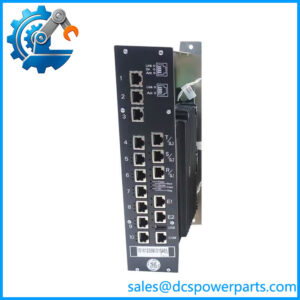
| Ethernet Ports | 2 × RJ45 |
| Network Function | Mark VIe IONet interface |
| Power Input | 28 VDC nominal |
| Supply Range | 27.4–28.6 VDC for H1A |
| Maximum Current | 0.36 A |
| RS-232 Cable Distance | Up to 50 ft / 15 m |
| Dimensions | Approximately 3.25 × 1.65 × 4.78 in |
| Approx. Metric Dimensions | 8.26 × 4.19 × 12.14 cm |
| Terminal Board | IS200SSCAH1A or IS200SSCAH2A |
| Hazardous Location Compatibility | Approved with specified SSCA terminal boards |
| Typical Application | Turbine control and industrial serial-device integration |
GE documentation identifies the IS220PSCAH1A as the Mark VIe PSCA Serial Communication Module, with IS200SSCAH1A and IS200SSCAH2A listed as compatible accessory terminal boards for hazardous-location applications.
Important correction: Some secondary listings incorrectly identify this part as a power-supply module. That is not the appropriate functional classification. The PSCA is a serial communications I/O pack.
Product Introduction
GE IS220PSCAH1A 336A4940CSP9
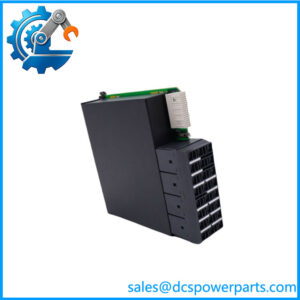
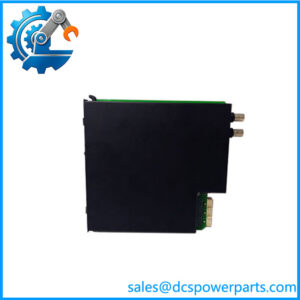
The GE IS220PSCAH1A 336A4940CSP9 is a Mark VIe PSCA Serial Communication I/O Pack used to connect external serial equipment to the Mark VIe control architecture. It provides six individually configurable serial channels supporting RS-232, RS-422, and RS-485 half-duplex communication.
Its practical value is in legacy and mixed-vendor equipment integration. A turbine control cabinet may contain meters, drives, protection devices, PLCs, and other intelligent equipment that still communicate over serial links. The PSCA provides the serial interface while the Mark VIe communicates with the I/O pack through its Ethernet-based IONet architecture.
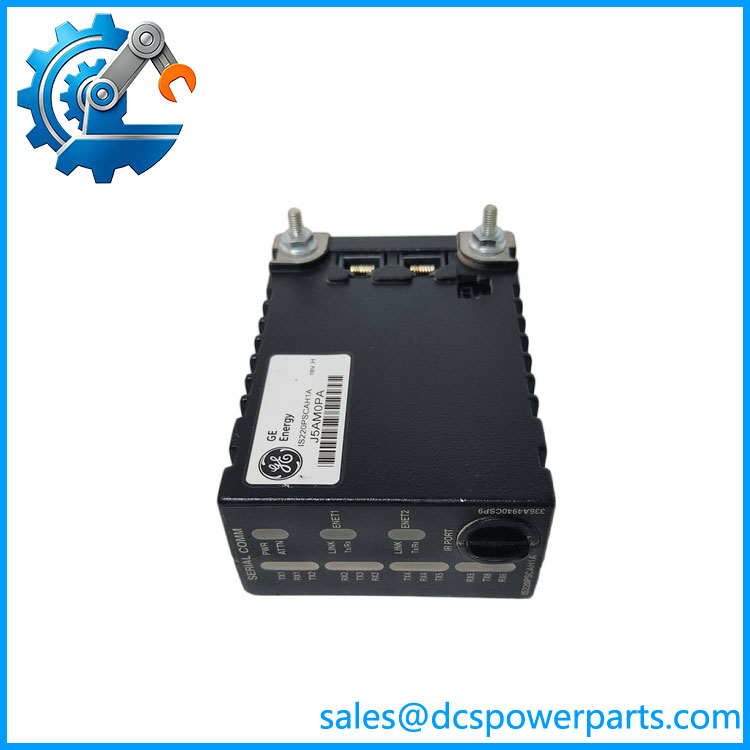
IS220PSCAH1A
Application Scenarios & Field Pitfalls
Engineering Pain Point
A common turbine-control problem is a serial device that works perfectly when connected to a laptop but fails when connected to the plant control system. The PSCA has multiple configurable serial channels, so the problem is often not the hardware. Wrong RS-232/RS-422/RS-485 selection, incorrect termination, mismatched baud settings, or an incorrect Modbus master configuration can stop communication completely.
Typical Applications
- Gas Turbine Control — Interface Modbus-compatible instruments, meters, and auxiliary controllers with a Mark VIe turbine-control system.
- Steam Turbine Systems — Connect serial monitoring and auxiliary control equipment to the Mark VIe architecture.
- Power Generation — Integrate protection, metering, excitation, and balance-of-plant devices using serial communications.
- Industrial Compressor Systems — Provide serial Modbus connectivity between intelligent field equipment and the central control system.
Technical Pitfalls to Avoid
- Do not identify PSCA as a power-supply module.
The IS220PSCAH1A is a serial communication I/O pack. Several secondary product listings misclassify it. GE documentation identifies PSCA specifically as a Serial Communication Module. - Six channels does not mean six identical physical interfaces.
Each channel can be configured for RS-232, RS-422, or RS-485 half-duplex. The electrical interface must match the connected device. - RS-485 wiring deserves attention.
Check polarity, signal reference, termination, cable topology, and shield arrangement. A single wiring mistake can make a healthy PSCA appear dead. - Do not use RS-232 cable-length assumptions for RS-485.
GE-related documentation specifies an RS-232 distance of approximately 50 ft / 15 m. RS-485/RS-422 installations require their own cable and topology assessment. - Check the Modbus master configuration.
The PSCA operates as a Serial Modbus Master. Verify slave addresses, baud rate, parity, stop bits, register addresses, and data types before replacing hardware. - Ethernet Modbus has an architectural limitation.
The PSCA can support Ethernet Modbus Master functionality, but the available documentation specifies this capability in simplex network configurations. Do not assume the Ethernet ports turn the PSCA into a general-purpose redundant Modbus TCP gateway. - Use the correct terminal board.
GE documentation identifies IS200SSCAH1A and IS200SSCAH2A as accessory terminal boards for the IS220PSCAH1A. The I/O pack should be evaluated together with its terminal-board assembly. - Check the power supply at the connector.
For the H1A variant, the hazardous-location documentation specifies 27.4 VDC minimum, 28.0 VDC nominal, and 28.6 VDC maximum, with maximum current of 0.36 A. Do not simply assume any nominal 24 VDC source is acceptable. - Check the H1A revision before substitution.
and IS220PSCAH1B are not interchangeable by part-number similarity alone. Their electrical ratings differ; for example, the H1B documentation specifies a 24 V nominal supply while H1A is specified at 28 V nominal. - Commission communications one channel at a time.
Record the port mode, baud rate, parity, slave address, termination, and register map. Then test each serial link independently. This is considerably faster than troubleshooting six active channels simultaneously.
Related Products
- GE IS200SSCAH1A — Serial communication terminal board associated with the PSCA I/O pack. It provides the field connection interface for compatible PSCA installations. GE specifically lists it with for hazardous-location applications.
- GE IS200SSCAH2A — Alternative PSCA serial communication terminal board. It is also listed as an approved accessory terminal board for .
- GE IS220PSCAH1B — Related PSCA serial communication I/O pack variant. It performs the same broad serial-communications function but has different electrical characteristics. Verify the required power architecture before considering substitution.
- GE IS221PSCAH1B — Coated PSCA serial communication I/O pack intended for applications requiring the corresponding coated hardware. GE documentation pairs it with IS201SSCAH1A or IS201SSCAH2A terminal boards.
- GE IS220PSCHH1A — Mark VIe Specialized Serial Communication Module. It belongs to the same general communication family but serves a specialized serial-communications function. GE lists the same SSCA terminal-board family for this module.
- GE IS220PPRFH1A — Mark VIe PROFIBUS Master Gateway I/O pack. It is the appropriate family reference when the external equipment uses PROFIBUS rather than the PSCA’s serial Modbus-oriented architecture.
- GE IS220PCNOH1A — Mark VIe CANopen Master Gateway module. It is used when CANopen device integration is required instead of the PSCA serial interface.
- GE IS220PSVOH1A — Mark VIe servo-control I/O pack. It is used for servo/position-control applications and is functionally different from the PSCA communications module.
- GE IS420UCSBH1A — Mark VIe UCSB controller hardware. It provides controller-level processing and is complementary to I/O packs such as PSCA rather than being a replacement for them.
- GE Mark VIe IONet — The Ethernet-based communication architecture used by Mark VIe I/O packs. The PSCA uses its two RJ45 ports to interface with the Mark VIe network architecture.