Description
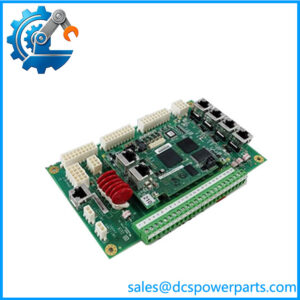
GE IS200TVBAH2A Vibration Input Terminal Board
Product Introduction
The GE IS200TVBAH2A is a TVBA vibration input terminal board used in GE Mark VIe turbine control systems. Its role is to provide the field-side termination and signal-interface path for vibration monitoring equipment rather than performing the complete vibration-monitoring function itself. GE documentation identifies the IS200TVBAH2A as an accessory terminal board for the Mark VIe PVIB vibration monitor module. The board is used with the PVIB architecture to interface vibration and dynamic-pressure instrumentation installed around turbine machinery.
The GE IS200TVBAH2A supports 14 vibration-related sensor connections and is designed to accommodate signals from proximity/eddy-current probes, seismic sensors, Velomitor-type velocity transducers, accelerometers, and dynamic-pressure measurement circuits. Technical records also describe buffered signal outputs for monitoring and diagnostic purposes. The terminal board can be used in simplex and TMR Mark VIe configurations, but the complete system arrangement must be checked rather than treating the board as an independent vibration monitor.
A critical procurement detail for the GE IS200TVBAH2A is its relationship with the negative power-supply accessory. GE’s Mark VIe documentation specifies the board as an accessory to PVIB modules together with an IS200WNPSH1A negative power-supply daughterboard in applicable configurations. The WNPS arrangement provides the negative sensor supply required by the vibration interface.
Technical Specifications
| Parameter | Specification |
|---|---|
| Product Model | IS200TVBAH2A |
| Manufacturer | General Electric |
| Functional Acronym | TVBA |
| Product Type | Vibration Input Terminal Board |
| Control System | GE Mark VIe |
| Primary Associated Module | Mark VIe PVIB Vibration Monitor Module |
| Sensor Inputs | 14 |
| Supported Sensor Types | Proximity/eddy-current, seismic, Velomitor, accelerometer |
| Dynamic Pressure Interface | Supported through appropriate charge-amplifier arrangement |
| Negative Sensor Supply | -28 VDC arrangement via WNPS accessory where required |
| Associated Daughterboard | IS200WNPSH1A |
| Signal Outputs | Buffered vibration signal outputs on applicable board configuration |
| Architecture | Simplex / TMR depending on system configuration |
| Termination | Field terminal-board interface |
| PCB Construction | Multilayer printed circuit board |
| Diagnostic Interface | Terminal-board identification and input diagnostics |
| Hazardous-Area Association | Mark VIe configurations include Class I Division 2 / Zone 2 applications subject to the applicable system certification and installation conditions |
| Documentation | GEH-6721; GEH-6725 series |
| Replacement Assessment | Must be checked against exact Mark VIe I/O pack, terminal-board revision, and system configuration |
GE’s equipment documentation specifically lists as an accessory for the Mark VIe vibration-monitoring module and identifies applicable hazardous-location certifications for the associated equipment.
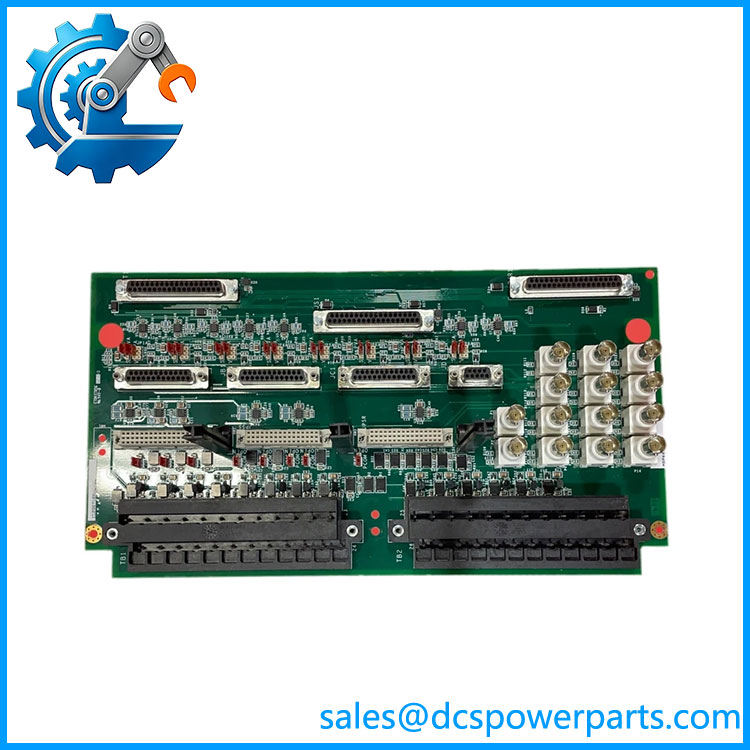
IS200TVBAH2A
Main Features and Engineering Considerations
1. Field Interface for Vibration Monitoring
The main purpose of the is field signal termination. It sits between the installed turbine vibration instrumentation and the Mark VIe PVIB electronics. This distinction matters when troubleshooting: replacing the TVBA board does not replace the vibration-processing electronics contained in the PVIB module.
2. Multi-Sensor Vibration Interface
The board supports multiple vibration measurement technologies, including proximity/eddy-current probes, seismic sensors, Velomitors, and accelerometers. This allows one terminal-board architecture to accommodate different machinery-monitoring points. Dynamic-pressure measurements are also supported when the appropriate signal-conditioning arrangement is used.
3. Fourteen-Point Input Architecture
Available technical documentation identifies 14 sensor connections. Procurement records and technical descriptions should therefore be checked against the actual board layout before assuming that a differently revised TVBA board has identical termination arrangements.
4. Negative Sensor Supply
One of the less obvious issues with this board is the negative supply arrangement. The is associated with the IS200WNPSH1A negative power-supply daughterboard in the Mark VIe PVIB architecture. The WNPS arrangement generates the negative voltage needed by applicable vibration sensors. GE certification documentation explicitly identifies this accessory relationship.
5. Buffered Monitoring Signals
Technical descriptions of the TVBA identify buffered signal outputs that can be used for monitoring or diagnostic access. The buffer circuitry is not simply a passive terminal connection, so field wiring and test equipment should be connected according to the applicable Mark VIe wiring documentation rather than assumed from the terminal-board name alone.
6. Board Identification and Diagnostics
The terminal board contains identification information used by the Mark VIe I/O processor. Technical documentation describes identification of the board type, serial number, revision information, and connector configuration. A mismatch can therefore generate a hardware incompatibility diagnostic.
Application Scenarios
- Gas turbine vibration monitoring
- Steam turbine auxiliary vibration monitoring
- Turbine bearing vibration measurement
- Shaft and casing vibration instrumentation
- Proximity-probe monitoring
- Seismic and accelerometer measurement
- Velomitor-based vibration measurement
- Dynamic-pressure monitoring
- Mark VIe simplex turbine-control systems
- Mark VIe TMR turbine-control systems
- Existing GE Mark VIe control-system refurbishment projects
Engineer’s Guide: Field Pitfalls
Do not confuse TVBA with PVIB.
The is the terminal/interface board. The PVIB module performs the associated vibration-monitoring processing. GE documentation explicitly identifies the as an accessory terminal board for PVIB.
Check the WNPS configuration.
The negative power-supply daughterboard is not an incidental accessory. Applicable configurations require the WNPS arrangement to provide the negative sensor supply. Verify whether the existing cabinet uses IS200WNPSH1A and confirm its revision before commissioning a replacement.
Do not substitute by appearance.
Mark VIe terminal boards can have visually similar layouts while serving different sensor types. Verify the exact catalog number, revision, connector arrangement, and associated I/O pack.
Verify sensor wiring before energizing.
Proximity probes, seismic devices, Velomitors, and accelerometers do not have identical electrical requirements. A wiring error can create misleading vibration data or cause sensor-power problems.
Check the actual system architecture.
A TVBA used in a TMR installation should be evaluated as part of the complete redundant I/O arrangement. Do not assume that a board removed from a simplex cabinet is automatically equivalent to every TMR installation.
Confirm hazardous-area requirements.
GE documentation lists Mark VIe PVIB/TVBA combinations for classified-location applications, including Class I Division 2 and Zone 2 configurations. Certification applies to specified equipment combinations and installation conditions, not simply to the bare PCB in isolation.
Frequently Asked Questions
What is GE ?
It is a GE Mark VIe TVBA Vibration Input Terminal Board used as the field interface for vibration-monitoring instrumentation.
How many vibration inputs does support?
Technical records identify 14 sensor connections for the board.
Is a vibration processor?
No. It is a terminal/interface board. The Mark VIe PVIB I/O module provides the associated vibration-monitoring electronics.
Which I/O module is associated with ?
GE documentation identifies the as an accessory terminal board for the Mark VIe PVIB vibration monitor module.
Does support proximity probes?
Yes. The documented sensor interface includes eddy-current/proximity probes along with seismic, Velomitor, and accelerometer types.
What is the IS200WNPSH1A used for?
The WNPS accessory provides the negative sensor supply required in the applicable TVBA/PVIB configuration. GE documentation identifies IS200WNPSH1A as an accessory to the vibration-monitoring arrangement.
Can be used in TMR systems?
Yes, the board is used within Mark VIe simplex and TMR configurations, provided the complete I/O architecture and associated hardware are compatible.
What should be verified before purchasing a replacement?
At minimum, verify the complete catalog number, board revision, PVIB module revision, WNPS requirement, terminal wiring, sensor types, cabinet architecture, and applicable hazardous-location requirements.
Procurement Note
For a replacement , the part number alone is not enough for a high-confidence interchange decision. Request clear photographs of the board label and connector area, record the installed PVIB and WNPS part numbers, and compare the hardware revision against the existing Mark VIe configuration. For turbine vibration systems, matching the signal architecture and sensor-power arrangement is more important than simply obtaining a board with the same general TVBA description.