Description
Product Overview
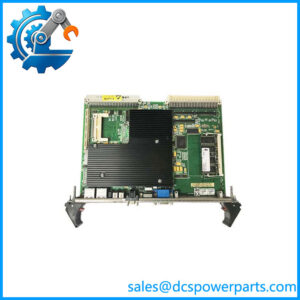
The GE DS200SIOBH1ACA is an SIOB input/output board used in GE’s legacy control hardware. Available technical references identify the board as a VME-based I/O board associated with the GE Mark V/LS2100 family. Its VME interface allows the board to exchange data with the control system, while front-panel I/O connectors J1 and J2 provide the connection path to external terminal boards. The documented architecture supports up to 16-bit data transfers and standard VME I/O addressing functions.
Within the system, GE DS200SIOBH1ACA should be regarded as an interface board rather than a standalone controller. The available documentation identifies the board’s functional acronym as SIOB and lists GE manuals GEI-100250, GEH-6371, and GEH-6373 as applicable references. The board can be used with compatible control hardware to provide additional I/O capability, with J1 and J2 connected by dedicated cables to TBA and TBB terminal boards.
A replacement requires more than matching the DS200 catalog number. The board is reported to contain 20 jumpers and three switch blocks containing 18 switches, so the configuration of the replacement should be compared with the removed board before commissioning. In a legacy turbine or drive-control cabinet, those settings can determine how the board interacts with the surrounding hardware. To be completely transparent, public listings contain contradictory descriptions of this part, including incorrect generic analog-I/O specifications. The VME/SIOB documentation is considerably more useful for engineering identification than those generic listings.
Product Introduction
A VME interface fault can disable communication with an entire group of external I/O points even when the terminal boards themselves remain functional. GE DS200SIOBH1ACA provides the SIOB interface layer between compatible GE control hardware and external terminal assemblies.
The board supports 16-bit VME data transfers and uses J1 and J2 for connections toward the external terminal-board side. For a Mark V legacy replacement, preserving the original jumper and switch configuration is one of the first checks I would make.
Key Technical Specifications
| Parameter | Value |
|---|---|
| Manufacturer | General Electric (GE) |
| Model | DS200SIOBH1ACA |
| Functional Acronym | SIOB |
| Product Type | VME I/O Control / Serial I/O Board |
| Product Family | DS200 |
| Associated System | GE Mark V / LS2100 |
| Bus Interface | VME |
| Data Transfer | Up to 16 bits |
| I/O Connectors | J1, J2 |
| External Connections | TBA / TBB terminal boards via dedicated cables |
| Jumpers | 20 |
| Switch Blocks | 3 |
| Switches | 18 total |
| Status Indicator | LED reported |
| Board Architecture | VME-based I/O interface |
| Applicable Manuals | GEI-100250, GEH-6371, GEH-6373 |
| Installation | GE control rack / VME architecture |
| Condition | New Surplus, subject to inspection and testing |
The VME, SIOB, J1/J2, 16-bit transfer, jumper, and switch information is supported by available technical references.
Specification caution: I would not publish a generic 24 VDC input, analog-channel count, Ethernet, Modbus, or hot-swap specification for this board. One secondary listing gives such specifications, but they conflict with the more specific VME/SIOB documentation and should not be used for engineering decisions.
Related Products
- DS200SIOBH1AAA — Closely related SIOB board revision. It belongs to the same DS200 SIOB family, but the final revision differs; verify hardware revision and configuration before substitution.
- DS200SIOBH1ABA — Another SIOB revision in the same family. It can be useful as a cross-reference, but jumper, switch, and system compatibility should be confirmed rather than assumed.
- DS200SDCCG1AFD — GE Mark V drive control board. It serves the control-processing function and is complementary to SIOB hardware rather than a direct replacement.
- DS200TCCAG1BAA — GE Mark V control/interface board used elsewhere in the control architecture. Its function differs from the SIOB VME interface.
- DS200DCFBG1BLC — GE control power/interface board. It supports power-related functions and does not replace the SIOB.
- TBA Terminal Board — External terminal hardware connected to the SIOB through one of the dedicated I/O cables. Its role is field termination rather than VME data processing.
- TBB Terminal Board — Complementary terminal-board connection for the SIOB’s external I/O paths.
- UC2000V — Controller hardware referenced with the SIOB architecture in available technical descriptions. The SIOB provides additional I/O interfacing rather than replacing the controller.
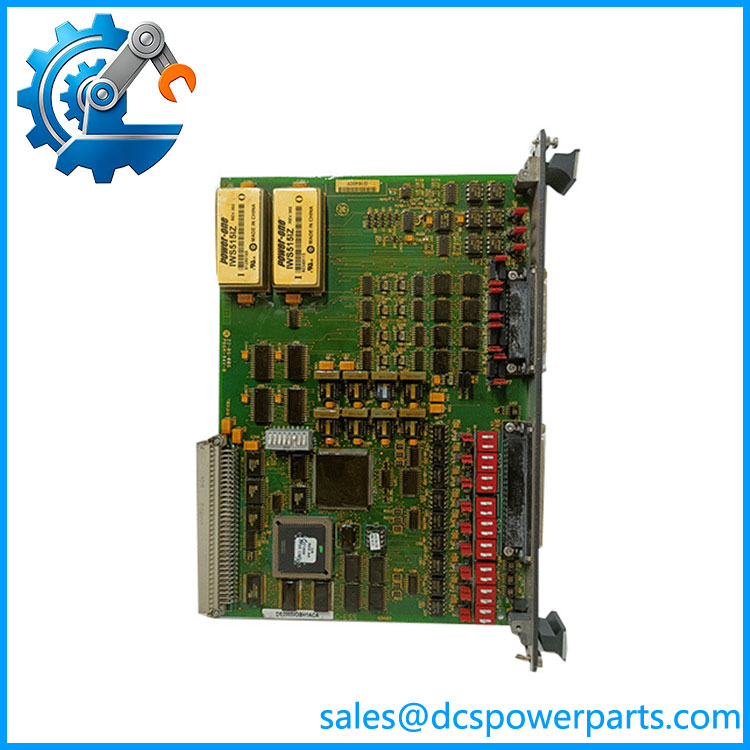
DS200SIOBH1ACA
Frequently Asked Questions
What is GE DS200SIOBH1ACA used for?
The DS200SIOBH1ACA is a VME-based SIOB input/output interface board. Its function is to exchange I/O data with compatible GE control hardware and connect toward external terminal boards through J1 and J2.
It should not be classified as a standalone PLC CPU or conventional analog-input card.
Is a Mark V board?
Yes. Available references associate the board with GE Mark V and also identify the broader LS2100 series. The SIOB designation and applicable GE manuals further support this classification.
For an installed system, however, confirm the actual rack documentation because DS200 boards were used across several GE control applications.
What are the J1 and J2 connectors used for?
The two front-panel I/O connectors are identified as J1 and J2. They connect through dedicated cables to the external TBA and TBB terminal boards, allowing the VME board to interface with external I/O circuitry.
Cable routing and connector identification should be recorded before removing the original board.
Can I hot-swap the ?
Do not assume that it is hot-swappable.
The is part of a VME control architecture. Removing it while the rack is energized can interrupt communications and I/O operation.
Unless the specific GE installation documentation explicitly permits live insertion, isolate the rack and follow the plant’s approved maintenance procedure.
Do I need to copy the jumper and switch settings from the old board?
Yes. This is one of the most important replacement checks.
The board is reported to have 20 jumpers and 18 switches across three switch blocks.
Before removing the original:
- Photograph every jumper.
- Record all switch positions.
- Record the rack and slot position.
- Label J1/J2 cables.
- Compare the replacement board revision.
- Reproduce the required configuration.
- Perform an I/O communication test after installation.
A replacement board with the wrong hardware configuration can appear healthy while communicating incorrectly with the system.
Will replacing erase my Mark V control logic?
The SIOB is an I/O interface board, not the primary location of the complete Mark V control application.
Replacing the board should therefore not be treated as replacing the controller’s application memory. The practical risk is configuration mismatch: jumper/switch settings, terminal-board wiring, rack position, and associated control hardware must correspond to the existing installation.
How should I verify a New Surplus ?
For this legacy board, I would check both the hardware and configuration.
Recommended incoming inspection:
- Confirm exact part number.
- Record PCB revision and serial information.
- Inspect VME connector pins.
- Inspect J1/J2 connectors.
- Check all 20 jumpers.
- Record all 18 switch positions.
- Inspect the status LED.
- Check PCB for corrosion, contamination, or heat damage.
- Verify compatibility with the installed TBA/TBB terminal boards.
- Perform controlled VME communication testing.
- Verify representative I/O points before returning the system to service.
One final procurement warning: several online listings misidentify this board as a generic analog/digital I/O module and publish specifications that do not match the documented SIOB/VME architecture. For an actual plant replacement, I would give priority to the GE board number, PCB revision, applicable GE manuals, original jumper/switch configuration, and functional test results.