Description
Foxboro RH924WA | FCP280 Fiber Optic Network Adapter | Foxboro DCS
Key Technical Specifications
| Parameter | Specification |
|---|---|
| Product Model | RH924WA |
| Manufacturer | Foxboro / Schneider Electric |
| Associated Controller | FCP280 |
| Product Type | Fiber Optic Network Adapter |
| Network Role | FCP280-to-Control Network interface |
| Fiber | Multimode fiber |
| Typical Fiber | 62.5/125 μm MMF |
| Adapter-Side Connector | LC |
| Switch-Side Connection | MT-RJ or LC depending on cable arrangement |
| Maximum Supplied Fiber Cable Length | Up to 50 m |
| Maximum System Fiber Distance | Up to 2 km |
| Power Source | FCP280 baseplate |
| Environmental Rating | Class G3 harsh environment |
| Certifications | CE; UL-listed configurations available |
Foxboro documentation states that the FCP280 connects to a pair of fiber or copper adapters, with each adapter connecting to one Ethernet switch in the Control Network. The FCP280 baseplate passes incoming traffic from either switch to both controllers and allows the primary controller to transmit through either switch.
The RH924WA is the fiber adapter, while RH924UQ is the corresponding copper adapter. Foxboro documentation specifies multimode fiber cabling and distances up to 2 km between the Ethernet switch and the network adapter; Foxboro-supplied fiber cables are specified up to 50 m.
Product Introduction
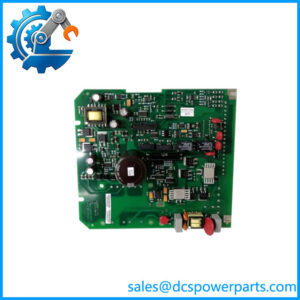
The Foxboro RH924WA is a Fiber Optic Network Adapter for the Field Control Processor. It provides the optical connection between the baseplate and the Foxboro Control Network, making it part of the controller’s network infrastructure rather than a process I/O module.
In a fault-tolerant installation, two network adapters can be used so the controller pair has connections to separate Ethernet switches. This architecture allows network traffic to continue through the available network path when one side of the redundant arrangement is unavailable.
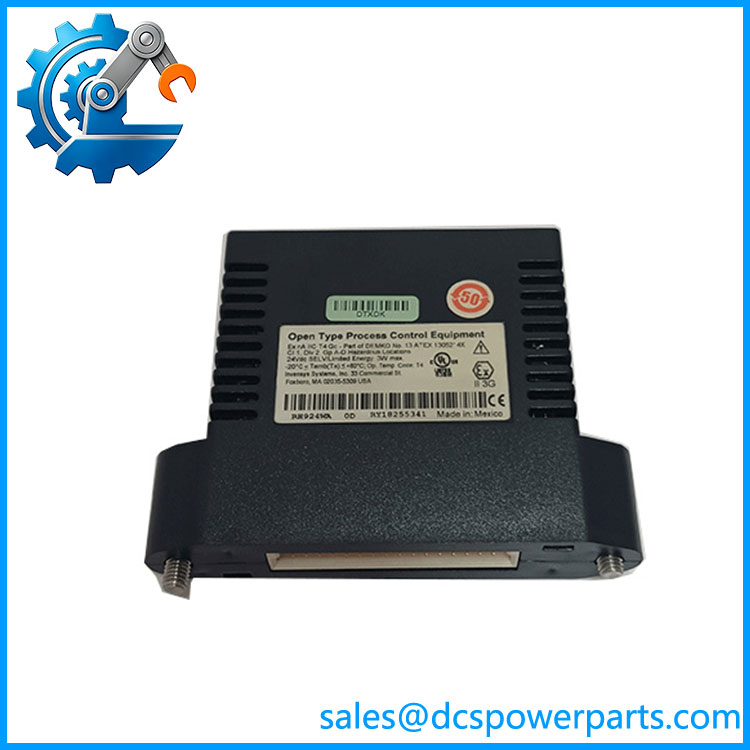
RH924WA
Application Scenarios & Field Pitfalls — The Engineer’s Perspective
Engineering Pain Point
When an loses Control Network communication, the controller itself is not automatically the problem. The fault can originate in the RH924WA, fiber patching, switch port, adapter seating, baseplate, or redundant network path. Replacing the controller before checking this interface can create unnecessary downtime.
Typical Applications
- Foxboro control stations
- Fault-tolerant Foxboro Control Network installations
- Fiber-based DCS controller networks
- Plant DCS maintenance and spare-parts replacement
- Remote or distributed installations
Technical Pitfalls
- Do not confuse RH924WA with the processor.
is the fiber network adapter. The processor is a separate component. Some reseller databases incorrectly describe as a Field Control Processor or discrete input module. The Foxboro documentation identifies the part as the fiber adapter. - and RH924UQ are different network interfaces.
is the fiber adapter, while RH924UQ is the copper adapter. The choice depends on the installed Control Network cabling architecture. - Check the fiber type before replacement.
Foxboro documentation specifies multimode fiber for this adapter arrangement. Do not assume that an arbitrary single-mode fiber transceiver or patch cable is equivalent. - Inspect both network paths.
In a fault-tolerant arrangement, each adapter connects toward a separate Ethernet switch. A communication fault on one side does not necessarily mean the itself has failed. - Check the connector and patch cable first.
Optical contamination, damaged LC connectors, excessive bend radius, or a damaged fiber patch cable can produce symptoms that look like an adapter failure. - Do not use generic Ethernet specifications to define the part.
is part of the Foxboro Control Network architecture. The system’s network design and supported Foxboro hardware should be used when evaluating compatibility.
Related Products
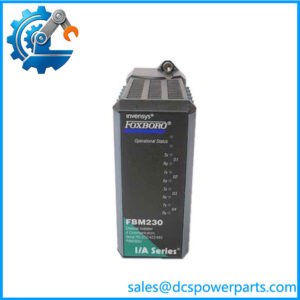
- — Field Control Processor associated with .
- Foxboro RH924UQ — copper network adapter alternative to .
- Foxboro RH924YL — horizontal-mounted baseplate.
- Foxboro RH924YA — Field Control Processor module.
- Foxboro RH924YB — related hardware configuration.
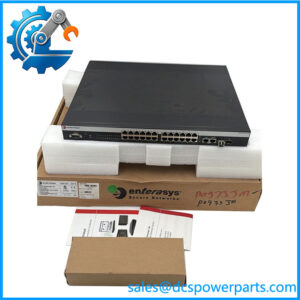
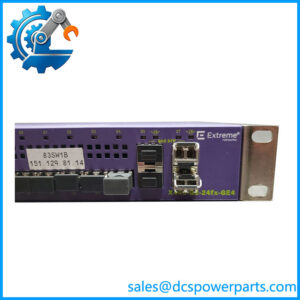
- Foxboro Control Network Ethernet Switches — network infrastructure connected through the adapter.
- Foxboro FDC280 — distributed field controller platform using the same fiber adapter family. Foxboro documentation shows and RH924UQ as the fiber/copper network-adapter options.
Procurement Note
For , the most important check is the host platform and network architecture. Verify that the installation uses an -compatible baseplate, fiber network architecture, and the correct Foxboro Control Network arrangement.
Do not purchase this part based on listings that describe as a 32-channel digital input module or standalone FCP processor. Those descriptions conflict with Foxboro/Schneider Electric documentation, which identifies specifically as the Fiber Optic Network Adapter.
For a replacement spare, record the marking, /baseplate model, fiber connector arrangement, switch type, and existing fiber cable specification before approving the part.