Description
Key Technical Specifications
| Parameter | Value |
|---|---|
| Manufacturer | Foxboro (Schneider Electric) |
| Model | E69F-TI2-S |
| Product Type | Current-to-Pneumatic Signal Converter |
| Input Signal | 4–20 mA DC |
| Input Impedance | Approx. 170 Ω |
| Output Signal | 3–15 psi (20–100 kPa) pneumatic |
| Action | Direct action |
| Supply Pressure | Instrument air supply required |
| Mounting | Field mounted |
| Enclosure Option | Weatherproof bolted cover with supply/output gauges |
| Connection | Field conduit entry |
| Application | Pneumatic valve actuator control |
| Signal Conversion | Electrical current to pneumatic pressure |
| Typical Use | Process control loops |
Product Introduction
Foxboro E69F-TI2-S Overview
The Foxboro E69F-TI2-S is a field-mounted current-to-pneumatic converter designed to transform a 4–20 mA control signal into a proportional pneumatic output signal. It is commonly installed between electronic control systems and pneumatic control valves where the actuator requires a pressure-based command signal.
The Foxboro E69F-TI2-S remains relevant in legacy process control installations using pneumatic actuators and older valve positioning systems. Replacement requires checking input range, output pressure range, air supply quality, and mechanical mounting because incorrect calibration can affect valve positioning accuracy.
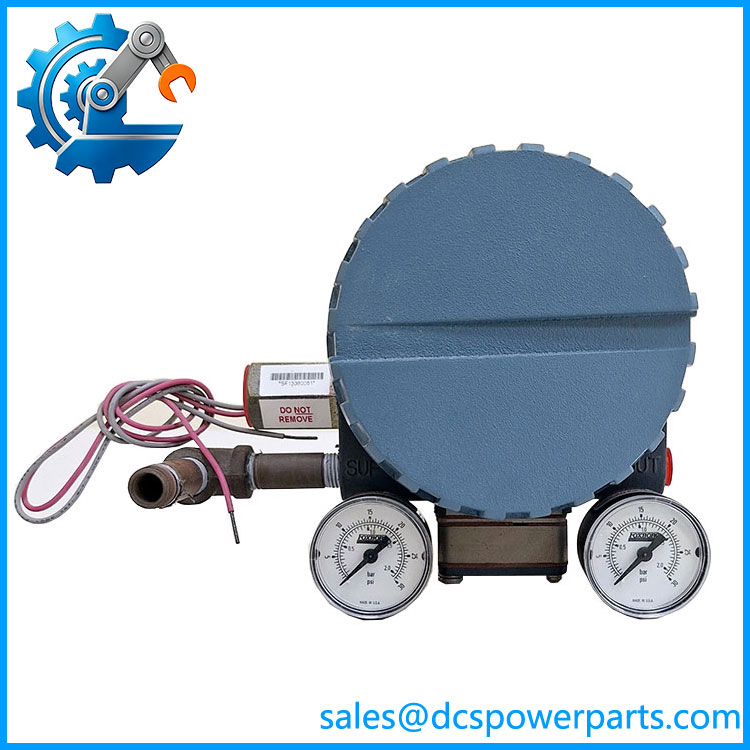
E69F-TI2-S
Application Scenarios & Field Pitfalls (The Engineer’s Perspective)
Engineering Pain Point
A control loop can appear healthy from the DCS side while the actual valve response is poor. One common cause is degradation in the signal conversion layer. A failed or poorly calibrated I/P converter can create slow valve movement, incorrect actuator position, or unstable process control. The Foxboro E69F-TI2-S is typically maintained in existing plants where pneumatic final control elements remain in service.
Typical Applications
- Oil & Gas Facilities – Pressure, flow, and level control valves using pneumatic actuators.
- Chemical Processing – Modulating valves for reactors, mixers, and process temperature control.
- Power Generation – Steam control valves and auxiliary process regulation systems.
- Water Treatment Plants – Pneumatic valve positioning for flow and chemical dosing systems.
Technical Pitfalls to Avoid
- Instrument Air Quality Problems
Dirty or wet instrument air can damage internal pneumatic components. Check filtration, moisture removal, and supply pressure before replacing the converter.
- Incorrect Signal Range Selection
Verify the electrical input and pneumatic output range. The E69F family includes multiple configurations, and similar-looking models may have different output requirements.
- Calibration After Installation
Do not assume factory calibration eliminates field adjustment. Verify zero and span performance after installation using actual loop conditions.
Field note: When replacing an I/P converter, record the original calibration values, valve fail position, supply air pressure, and actuator response before removing the old unit. This information speeds up loop restoration.
Related Products
- Foxboro E69F-TI2-J
Similar E69F converter configuration with junction box option. Used where additional field wiring protection is required. - Foxboro E69F-TI2
Base 4–20 mA to pneumatic converter configuration without the -S gauge option. - Foxboro -TI3-S
Related model configured for different pneumatic output requirements. Verify output range before substitution. - Foxboro -HI2-S
variant designed for different input current ranges, including higher current signal applications. - Foxboro Series I/P Converters
Complete family of electrical-to-pneumatic converters used in legacy Foxboro process control loops. - Foxboro 43AP Pneumatic Controller Series
Related Foxboro pneumatic control equipment used in older process automation installations. - Foxboro I/A Series DCS
Process control platform frequently connected with pneumatic final control elements through devices such as converters. - Foxboro Positioners and Valve Accessories
Complementary pneumatic control components used with converters for actuator positioning applications.