Description
Product Overview
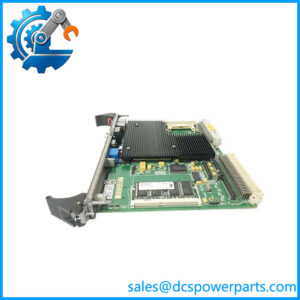
IS220PSVOH1A is the servo control pack of GE’s Mark VIe turbine control system. It is the layer that stands between the controller on the IONet Ethernet backbone and the electrohydraulic servo valves that actually move fuel, steam and air on a turbine. One pack manages two servo valve position loops: it reads the LVDT position feedback, computes the drive demand, and outputs the bipolar current that positions the valve’s torque-motor coil. Fuel valve, inlet guide vane, governor valve and bleed valve loops are all built on this pack.
The functional architecture is deliberately spread across three physical parts, and this is the single most important thing to understand before ordering or replacing one. The pack itself — an IS220 special assembly in a black chassis, carrying a processor board with flash, RAM and an internal temperature sensor — holds the intelligence and the network interface. The servo driver board, IS210WSVOH1A for this revision, holds the power stage that delivers the ±120 mA output. The TSVO terminal board, IS200TSVCH2A, carries the field terminations for the LVDT windings, the servo coil, the speed inputs and the pack supply. The pack plugs into the assembly; the terminal board is where the wires land.
GE’s own certification documents make the consequence explicit: the servo control I/O pack IS220PSVOH1A is approved for use with terminal board IS200TSVCH2A and servo driver IS210WSVOH1A, and the later IS220PSVOH1B pairs with a different driver, IS410WSVOH1A. The approved unit is therefore the trio, not the pack. A spare pack on the shelf with the wrong driver board beside it, or a pack swapped into a cabinet whose terminal board has been changed, is a configuration that GE has not certified — and the revision pairing is easy to get wrong because the packs look alike.
Electrically the pack is a turbine-grade servo interface rather than a general analog output card. LVDT excitation is generated internally at 7.14 V AC and 3.2 kHz, with up to 127 mA AC of excitation current available; the servo output swings ±10 V and ±120 mA DC into the valve coil; two speed inputs accept ±15 V DC with 24 V DC sensor power; and the assembly is fed from a 28 V DC, 1 A supply. Eight LVDT input channels serve the two axes, which is what allows dual redundant position feedback per valve — the arrangement that keeps a loop controllable when one LVDT or its wiring fails.
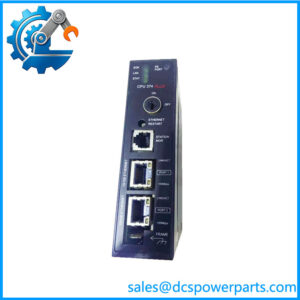
Front-panel indication is diagnostic rather than decorative: separate LEDs for ENet1 and ENet2 (the two I/O networks), a Power and an Attention indicator, and ENA1 and ENA2 for the two enable states. The infrared port on the faceplate is present but not used on this pack. Replacement behaviour is software-defined: the pack can be configured to auto-reconfigure itself on replacement, with that behaviour enabled or disabled in the ToolboxST Component Editor, and it must be reconfigured manually whenever the terminal board rather than the pack is the part that was changed.
Environmentally it is built for a turbine cabinet, not a clean room. The certified ambient range is −30 to +65 °C, the boards are conformally coated, and the hazardous-location approvals cover Class I Division 2 and Zone 2 — but the certification conditions require the assembly to sit in an enclosure of at least IP54, in a location of pollution degree 2 or better, fed from a switching power supply rated no more than 20 A. Those conditions are part of the approval, not installation advice.
Technical Specifications
| Parameter | Value |
|---|---|
| Model | IS220PSVOH1A |
| Manufacturer | GE (GE Vernova) |
| Product type | Servo control I/O pack, Mark VIe IS220 special assembly |
| Servo loops per pack | 2 |
| Servo output | −10 to +10 V DC, −120 to +120 mA DC |
| LVDT channels and excitation | 8 input channels; 7.14 V AC at 3.2 kHz; excitation output 127 mA AC |
| Speed inputs | 2 channels, −15 to +15 V DC; sensor power output 24 V DC, 40 mA |
| Supply | 28 V DC, 1 A |
| Network | 2 × IONet Ethernet (ENet1, ENet2), redundant |
| Approved combination | IS220PSVOH1A + IS200TSVCH2A terminal board + IS210WSVOH1A servo driver |
| Ambient temperature | −30 to +65 °C |
| Hazardous location | Class I Div 2 A–D T4; Zone 2 Ex nA nL / Ex ic nA IIC T4 Gc; UL DEMKO 12 ATEX 1114875X |
| Installation conditions | Enclosure ≥ IP54, pollution degree ≥ 2, supply from SMPS ≤ 20 A |
| Construction | Conformal coating, black IS220 chassis, internal temperature sensor |
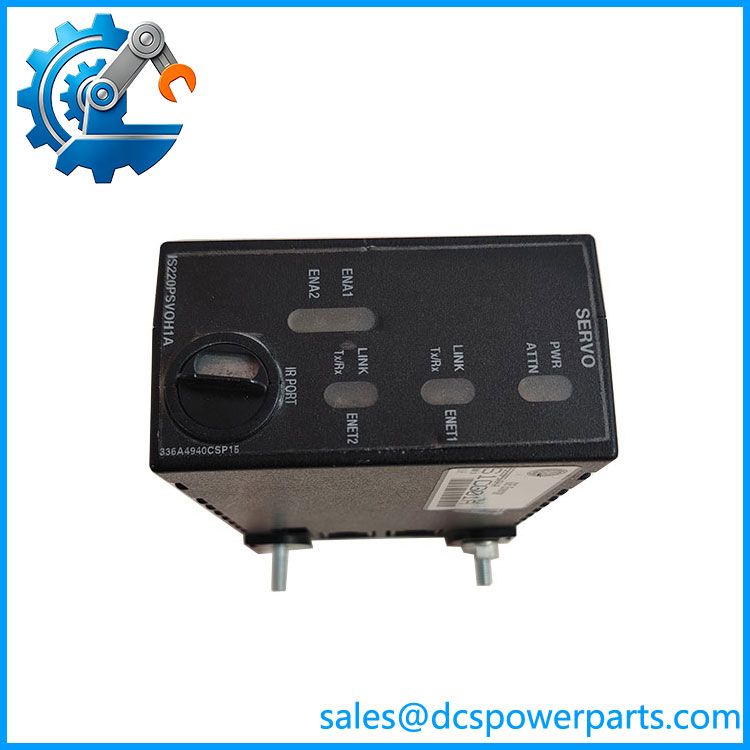
IS220PSVOH1A
Key Features and Advantages
Two axes per pack, with the feedback to match: a single IS220PSVOH1A covers two independent servo loops and eight LVDT input channels, so a dual-LVDT valve can be wired for redundant position feedback without adding hardware. On a turbine where the fuel valve and the inlet guide vane must both be positioned continuously, that density keeps the cabinet small and the IONet node count low.
Feedback conditioning inside the pack, not in an external amplifier: the 3.2 kHz carrier is generated and demodulated within the assembly, which removes the separate LVDT signal conditioner and its adjustment potentiometers that older turbine control architectures needed. Calibration becomes a software activity performed through ToolboxST, and the configuration, not the trim pot, is what has to be preserved when hardware is replaced.
A three-part assembly that makes spares a system question: because the approved unit is pack plus driver plus terminal board, a maintenance strategy that stocks only packs is incomplete. The IS220PSVOH1A is useless as a spare if the cabinet’s driver board is the IS410WSVOH1A used with the H1B revision, and the pairing rule is documented by GE rather than inferred.
Software-defined replacement behaviour: the pack can auto-reconfigure on replacement, and that behaviour can be switched off in the Component Editor when a site prefers a controlled, manual configuration step. The distinction matters during an outage: auto-reconfiguration shortens the swap, while manual reconfiguration is what GE requires when the terminal board, rather than the pack, is the changed part.
Network redundancy without extra hardware: two IONet ports, ENet1 and ENet2, with separate front-panel indicators, mean the pack can sit on redundant I/O networks and report which side is live. On a TMR Mark VIe system that is part of how the controller keeps talking to the servo layer through a single network failure.
Diagnostics that survive the cabinet door being closed: Power, Attention, ENA1 and ENA2 in addition to the network LEDs, plus an internal temperature sensor reported through the software. Combined with the trend recorder, a stroke irregularity or a drifting enable state shows up as a trend before it becomes a trip.
Built for the environment it lives in: −30 to +65 °C certified ambient, conformal coating, and Division 2 / Zone 2 approval with explicitly stated enclosure and supply conditions. Those conditions are worth reading before the pack is mounted, because they define what “approved” actually means in that cabinet.
Applications
Gas turbine fuel control: the fuel control valve and, on DLN combustors, the split between fuel stages, where the closes the position loop locally and the valve follows demand closely enough to keep combustion stability and emissions inside their limits.
Inlet guide vane and bleed valve positioning: compressor airflow control on heavy-duty and aeroderivative machines, where two servo axes on one pack match the two actuators that usually sit in the same loop group.
Steam turbine governor and intercept valves: speed and load control on fossil and combined-cycle steam plants, where valve position accuracy translates directly into frequency and load response.
TMR servo configurations on Mark VIe: three packs driving a voted servo demand, with position feedback compared across channels so that a single pack, LVDT or cable fault is annunciated rather than acted upon.
Compressor and auxiliary servo loops in oil and gas: anti-surge and recycle valve actuation where the same IONet-based pack design is used outside the turbine enclosure.
Mark VIe retrofit and life-extension work: replacing an ageing pack in a cabinet where the terminal board and driver board are already the approved parts, which is the case in which the pack-level part number alone is the right purchase.
Related Products
IS200TSVCH2A — TSVO terminal board carrying the field terminations; part of the approved trio with this pack. IS210WSVOH1A — WSVO servo driver board paired with the ; the power stage that delivers the valve current. IS220PSVOH1B — later revision of the servo pack, approved with the IS410WSVOH1A driver instead. IS410WSVOH1A — servo driver board used with the H1B pack; not interchangeable with the H1A pairing. IS400BSVOH1A — internal acquisition board used in the RoHS-compliant H1B build, paired with the same IS200TSVCH2A terminal board. IS220PAICH1B — analog I/O pack in the same IS220 family, for conventional analog signals rather than servo loops. IS220PDIAH1B / IS220PDOAH1B — discrete input and discrete output packs, same platform, different function. IS220PTCCH1B — thermocouple input pack for exhaust and metal temperature measurement on the same IONet. IS220PPRFH1B — PROFIBUS master gateway pack, for third-party devices on the same controller. IS420UCPAH1A — Mark VIe controller module that the servo pack serves over IONet.
Installation and Maintenance
Before installation: confirm the cabinet holds the approved combination — with IS200TSVCH2A terminal board and IS210WSVOH1A driver board — and check whether the pack being replaced is an H1A or an H1B, since the driver board differs between the two revisions. Verify the enclosure provides at least IP54, the location is pollution degree 2 or better, and the 28 V supply comes from a switching source rated no more than 20 A. Record the existing configuration in ToolboxST, decide in advance whether auto-reconfiguration will be left enabled, and confirm the pack’s own configuration can be restored if the replacement arrives blank.
Maintenance practice: use the faceplate to triage — a single network LED out points at cabling or the switch, an Attention indication with the loop still running points at configuration or feedback quality, and an ENA state that will not assert points at the enable path rather than the valve. After any pack replacement, prove the loop by stroking the actuator in manual, ramping position and applying a step current, then read the result on the trend recorder; a linear response over the full stroke with no flat spots is the acceptance criterion. Whenever the terminal board rather than the pack is changed, reconfigure the pack manually instead of relying on auto-reconfiguration. Keep the trio — pack, driver board and terminal board — as the spare definition, keep the LVDT and coil wiring untouched during a pack swap, and treat hydraulic oil cleanliness as part of servo reliability, because contamination in the valve destroys position accuracy long before the electronics wear out.
Warranty and Quality
Every is supplied as GE’s Mark VIe servo control I/O pack, with the revision letter, the conformal coating and the approved pairing confirmed before dispatch, so that a pack is not delivered into a cabinet whose terminal board or driver board puts it outside GE’s certified combination. Units are inspected for chassis and connector condition, faceplate and LED integrity, and label and revision marking; where a Mark VIe test assembly is available they are checked for boot behaviour, network port activity and configuration acceptance in ToolboxST. They carry a 12-month repair, replacement or refund commitment. Support covers the questions this pack actually generates on site: whether a spare pack is enough or the driver and terminal boards must be stocked too, how the A and B revisions differ in their approved pairing, how to restore configuration after a replacement, how to prove a servo loop after a swap, and what the Division 2 and Zone 2 conditions require of the enclosure and supply so that the installation remains within its approval.