Description
EPRO MMS 6220 Dual-Channel Shaft Eccentricity Monitor
Product Overview
The EPRO MMS 6220 is a dual-channel shaft eccentricity monitor from the MMS 6000 machine monitoring system. It is designed to process relative radial shaft vibration signals from eddy-current measuring chains and is used on rotating machinery including turbines, compressors, fans, and gearboxes. The monitor supports two principal measurement modes: peak-to-peak shaft eccentricity and minimum/maximum radial shaft displacement. These measurements are intended for machinery protection and can also be supplied to higher-level analysis and diagnostic systems.
Each channel uses a differential sensor input and is designed for eddy-current measuring chains based on the EPRO PR 642x series with the associated converter. The documented nominal sensor input range is -1.0 to -22.16 VDC, with a wider permissible limit range of 0 to -30 VDC. Input impedance is greater than 100 kΩ. The monitor processes sensor signals over a frequency range extending to 16 kHz at its signal-conditioning stage, while the configured shaft-eccentricity measurement corresponds to machine speeds from approximately 1.2 to 4200 rpm.
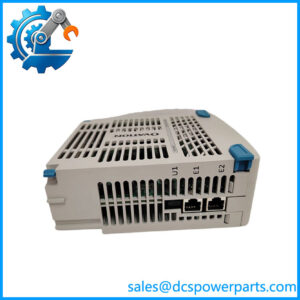
The EPRO MMS 6220 is a card-level component of the MMS 6000 monitoring platform rather than a standalone PLC module. It uses a 48-pin connection, redundant +24 VDC supply inputs, RS-232 for configuration, and RS-485 for communication with the EPRO MMS analysis and diagnosis system. The module can record and store characteristic values from the last run-up or run-down, which is useful when investigating transient shaft behavior rather than relying only on steady-state measurements.
Product Introduction
Rotor eccentricity is a different measurement problem from ordinary bearing vibration. The MMS 6220 uses eddy-current displacement signals to evaluate relative shaft motion and can calculate peak-to-peak eccentricity or minimum/maximum radial position. That makes it particularly relevant to turbine and rotating-equipment protection systems where rotor-to-stator clearance is a critical concern.
For a legacy MMS 6000 replacement, the sensor chain and rack configuration must be checked along with the monitor itself. The documentation identifies PR 642x eddy-current measuring chains and a 48-pin rack connection, while the MMS 6000 rack documentation lists the MMS 6220 among the supported monitor cards.
Key Technical Specifications
| Parameter | Value |
|---|---|
| Product Model | MMS 6220 |
| Manufacturer / Brand | EPRO |
| Product Series | MMS 6000 |
| Product Type | Dual-channel shaft eccentricity monitor |
| Measurement Channels | 2 |
| Primary Measurement | Relative shaft eccentricity |
| Secondary Measurement | Radial shaft displacement, minimum/maximum |
| Sensor Technology | Eddy-current measuring chain |
| Compatible Sensor Family | EPRO PR 642x with associated converter |
| Sensor Input | Differential |
| Nominal Sensor Input Range | -1.0 to -22.16 VDC |
| Limit Input Range | 0 to -30 VDC |
| Input Impedance | >100 kΩ |
| Sensor Signal Frequency Range | 0–16 kHz, signal-conditioning stage |
| Shaft-Speed Measurement Range | Approximately 1.2–4200 rpm when configured for eccentricity measurement |
| Minimum Configurable Measurement Range | 400 mVpp |
| Maximum Configurable Measurement Range | 8000 mVpp |
| Dynamic Output | 0–20 Vpp nominal |
| Scaled DC Output | 0–10 VDC |
| Current Outputs | 0–20 mA or 4–20 mA, configuration dependent |
| Current Output Accuracy / Resolution | ±1% FSD / 16-bit |
| Current Output Maximum Load | 500 Ω |
| Alarm Outputs | Alert / Danger, configurable supervision |
| Logic Input | 24 V logic |
| Key Pulse Input | One pulse per revolution for system control |
| Configuration Interface | RS-232 |
| System Communication | RS-485 |
| Power Supply | +24 VDC nominal |
| Permitted Supply Range | 18–31.2 VDC |
| Supply Arrangement | Two redundant inputs, diode-decoupled |
| Rack Connection | 48-pin connector |
| Module Format | Standard Euro-format monitor card |
| Approximate Card Size | 100 × 60 mm |
| Front Width | Approximately 6 TE / 30 mm |
The detailed electrical values above come from the MMS 6220 operating documentation. Some values are configuration-dependent and should not be treated as fixed output settings for every installed unit.
Major Features / Practical Advantages
Dual-channel shaft eccentricity measurement
The MMS 6220 provides two independent monitoring channels for relative shaft eccentricity. The documentation describes peak-to-peak eccentricity measurement as well as minimum/maximum distance evaluation. In practical terms, this allows the same monitor architecture to be used for rotor-motion monitoring and for detecting radial shaft-position conditions that could precede rotor contact with surrounding stationary components.
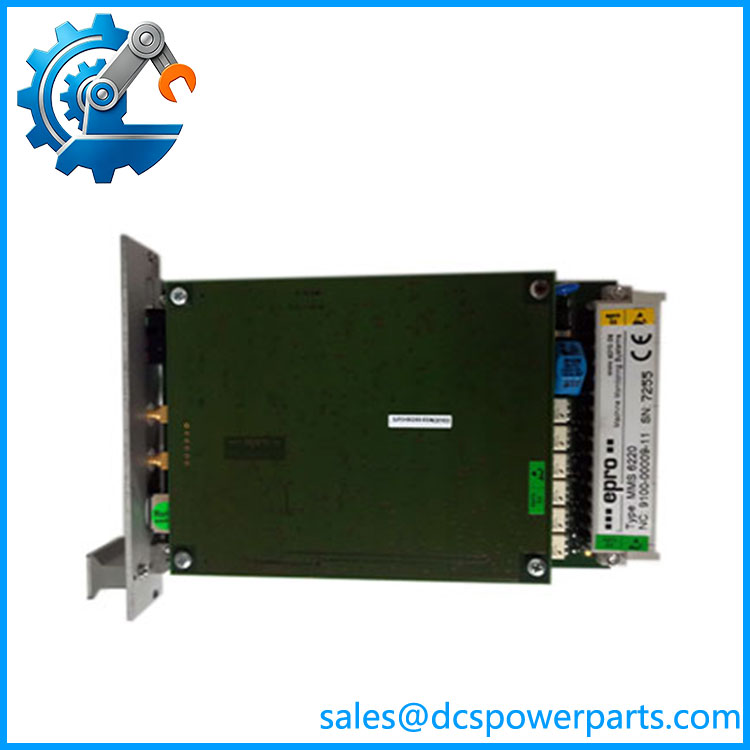
MMS6220
Eddy-current displacement measurement
The monitor is designed around eddy-current measuring chains rather than accelerometers or velocity sensors. EPRO identifies the PR 642x sensor family and associated converters as the intended measuring chain. The sensor input is differential, with an input impedance above 100 kΩ, reducing the loading imposed on the measurement circuit.
Wide configurable measurement span
The signal-conditioning stage supports configurable measurement ranges from approximately 400 mVpp to 8000 mVpp. This allows the measurement to be matched to the installed eddy-current sensor chain and the actual shaft-motion application rather than forcing every installation into one fixed signal span.
Peak-to-peak eccentricity mode
In eccentricity mode, the characteristic value represents shaft eccentricity measured peak-to-peak. The documentation specifies operation across the shaft-speed range from approximately 1.2 to 4200 rpm when configured for this application. This makes the monitor applicable to both slow-speed and normal operating conditions on suitable rotating machinery.
Minimum / maximum radial position mode
The second operating concept evaluates minimum or maximum radial shaft distance. This is useful when the engineering objective is not simply to trend eccentricity, but to establish whether the rotor is approaching a mechanically critical clearance condition.
Configurable analog outputs
The monitor provides characteristic-value current outputs configurable for either 0–20 mA or 4–20 mA operation. The documented current-output accuracy/resolution is ±1% of full-scale deviation and 16 bits, with a permissible load of 500 Ω.
That makes integration into a DCS, PLC, recorder, or supervisory system straightforward, provided the configured output range is known before commissioning.
RS-232 configuration
An RS-232 front interface allows connection of a computer for configuration and visualization. The documentation describes configuration and retrieval of measured results through this interface. This is particularly useful on legacy installations where the monitor parameters need to be checked before removing a card from service.
RS-485 system communication
An RS-485 interface connects the monitor to the EPRO MMS 6850 analysis and diagnosis system or compatible host systems. The MMS 6000 rack documentation also describes RS-485 bus integration between monitor cards and interface hardware.
Run-up and run-down recording
The MMS 6220 can record and store characteristic values associated with the last completed run-up or run-down. This provides useful transient information when investigating rotor behavior during acceleration or deceleration, where a steady-state trend may miss the relevant event.
Built-in supervision
The monitor continuously supervises key parts of its measurement system, including supply voltage, processor watchdog, configuration/parameter integrity, and sensor-signal validity. An enable delay is applied after startup or after certain fault conditions before the channel returns to an OK state.
Redundant 24 VDC supply inputs
Two supply inputs are provided and decoupled through diodes. The documented permissible supply range is 18–31.2 VDC. This arrangement supports redundant supply strategies within the MMS 6000 installation.
Related Products
- MMS 6210 — Thrust-position monitor in the MMS 6000 family. It addresses axial shaft position rather than the radial eccentricity measurement performed by the MMS 6220.
- MMS 6310 — Key-pulse monitor used to provide rotational reference signals for machine-monitoring measurements.
- MMS 6312 — Rotational-speed and key-pulse monitor, providing a more extensive speed/reference function than the MMS 6310.
- MMS 6120 — Bearing vibration monitor for electrodynamic sensors; intended for a different vibration measurement point than the shaft-eccentricity function of the MMS 6220.
- MMS 6125 — Bearing vibration monitor for piezoelectric sensors. It uses a different sensor technology from the eddy-current chain used with the MMS 6220.
- MMS 6140 — Absolute rotor vibration monitor within the same MMS 6000 platform.
- MMS 6410 — Shift monitor for inductive sensors, serving a different displacement/position-monitoring application.
- MMS 6824 — Modbus interface card for MMS 6000 system integration. It provides a communication-interface function rather than direct shaft measurement.
- MMS 6825 — Ethernet TCP/IP interface for MMS 6000 integration.
- IMR 6000/30 — MMS 6000 system rack supporting monitor cards including the MMS 6220 and providing the required rack-level power, bus, and external connections.
FAQ
Can I replace an MMS 6220 with an MMS 6312?
No. These modules perform different measurements. The MMS 6220 is a dual-channel shaft-eccentricity monitor, while the MMS 6312 is a rotational-speed and key-pulse monitor. They may operate together within the same MMS 6000 system, but they are not functional substitutes.
What sensors does the MMS 6220 use?
The documented intended measuring chain is based on EPRO PR 642x eddy-current sensors with the associated converter. The monitor can technically accept equivalent measuring chains when their electrical characteristics are appropriate, but an alternative sensor should not be assumed compatible merely because it is described as an eddy-current probe.
Can the MMS 6220 measure shaft eccentricity while the machine is turning slowly?
Yes. In its eccentricity measurement mode, the documentation states that eccentricity can be measured at very low shaft speed, with the configured speed range extending from approximately 1.2 rpm to 4200 rpm.
Can I hot-swap the MMS 6220?
Do not treat it as a universally hot-swappable PLC card. The MMS 6220 is a rack-mounted machine-monitoring module with a 48-pin connection and system-level alarm/protection functions. Any live replacement should follow the installed MMS 6000 maintenance procedure and machine-protection bypass/interlock requirements.
What is the MMS 6220’s firmware version?
The later operating manual identifies firmware version 1.20 and later for the documented software generation. That does not mean every existing MMS 6220 has the same firmware. When replacing a legacy module, record the installed firmware/configuration information before removal where possible.
Does the MMS 6220 provide 4–20 mA outputs?
Yes. The characteristic-value outputs can be configured for 0–20 mA or 4–20 mA, depending on configuration. The specified permissible load is 500 Ω, with ±1% FSD accuracy and 16-bit resolution.
Does the MMS 6220 communicate over Ethernet?
Not directly according to the documented interfaces. The module provides RS-232 for configuration/data exchange and RS-485 for connection to the MMS 6850 analysis/diagnosis system or host computers. Ethernet connectivity can be achieved through suitable MMS 6000 interface equipment rather than by treating the MMS 6220 itself as an Ethernet card.
What is the power requirement?
The monitor uses a nominal +24 VDC supply. Two redundant supply inputs are provided, and the documented permissible supply range is 18–31.2 VDC.
Is the MMS 6220 a general-purpose vibration monitor?
No. Its specific function is shaft eccentricity and radial shaft-position monitoring using eddy-current displacement signals. The MMS 6000 family contains other monitor cards for bearing vibration, absolute rotor vibration, thrust position, speed, and other measurements.
Can the MMS 6220 be used without an MMS 6000 rack?
The module is documented as a component of the MMS 6000 machine-monitoring system and uses a 48-pin rack connection and rack-level supply/interface architecture. It should therefore be treated as a rack-integrated monitor rather than a standalone DIN-rail instrument.
Procurement Note
For an EPRO MMS 6220 replacement, verify the complete measurement chain, not just the card designation. The critical checks are the two-channel configuration, PR 642x sensor/converter compatibility, configured measurement range, alarm settings, analog-output scaling, RS-485 integration, firmware/configuration version, and the installed MMS 6000 rack/interface arrangement.
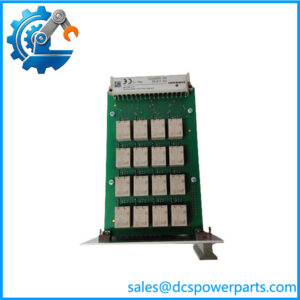
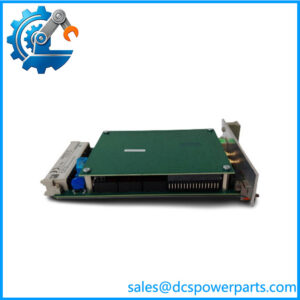
The physical module is a relatively narrow Euro-format card with a 48-pin connection. The MMS 6000 rack documentation specifically lists the MMS 6220 among supported monitor cards, and the IMR 6000/30 provides eight monitor positions for supported MMS 6000 monitor types.
For legacy spare procurement, obtain the type number, order number, serial number, and firmware/configuration information from the actual nameplate/module where possible. EPRO’s own operating manual specifically requests the type number, device number, and software version when corresponding about the instrument.
One practical warning: do not substitute a similarly sized MMS 6000 card based on connector compatibility. The MMS 6220’s signal conditioning, measurement algorithm, alarm logic, and sensor interface are specific to shaft-eccentricity monitoring. A physically compatible card can still be functionally wrong for the machine-protection application.