Description
Key Technical Specifications
| Parameter | Value |
|---|---|
| Manufacturer | Emerson |
| System | DeltaV SIS |
| Model | KJ2221X1-BA1 |
| Product Type | SISNet Repeater |
| Network | SISNet |
| Local Bus Power | 24 VDC |
| Maximum Current | 300 mA |
| Operating Temperature | -40°C to +70°C |
| Relative Humidity | 5–95%, non-condensing |
| Shock | 10 g, ½-sine, 11 ms |
| Vibration | 1 mm peak-to-peak from 2 to 13.2 Hz; 0.7 g from 13.2 to 150 Hz |
| Airborne Contaminants | ISA-S71.04-1985 Class G3 |
| Hazardous Area | Zone 2 / Class I Division 2 applications under applicable approvals |
| Maintenance | No user-serviceable parts |
| Calibration | Not required |
| System Function | SISNet signal repeating / network extension |
The Emerson instruction sheet specifies 24 VDC at 300 mA maximum for local-bus power and an operating temperature range of -40°C to +70°C. It also states that calibration is not required and that the unit contains no user-serviceable parts.
The DeltaV Zone 2 documentation identifies KJ2221X1-BA1 specifically as the SISNet Repeater, while KJ2221X1-EA1 is the associated SISNet Repeater Carrier.
Product Introduction
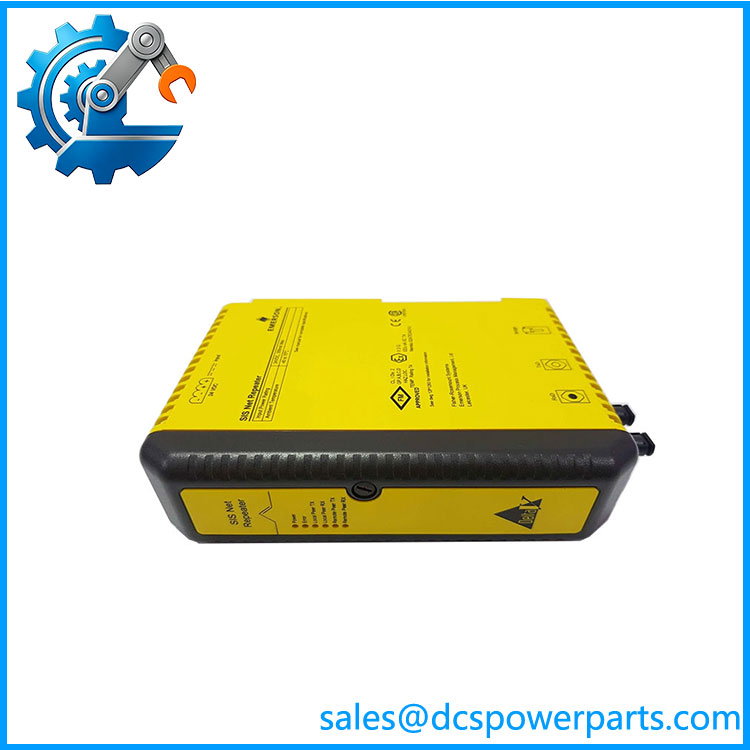
KJ2221X1-BA1
Emerson KJ2221X1-BA1 Product Introduction
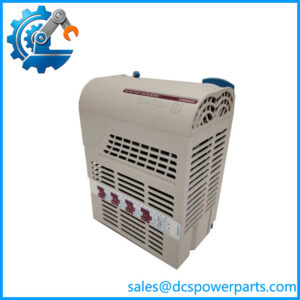
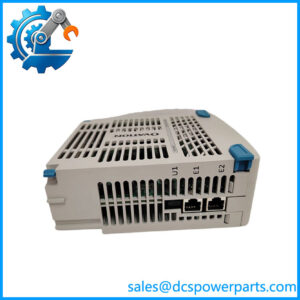
The Emerson KJ2221X1-BA1 is a DeltaV SISNet Repeater used within Emerson Safety Instrumented Systems to repeat SISNet communication and support the required network architecture. It is installed as part of the DeltaV SIS hardware platform rather than operating as a conventional Ethernet switch or general-purpose serial repeater.
Its main value is maintaining the SISNet communication path where repeater hardware is required by the system layout. The module uses 24 VDC local-bus power at up to 300 mA and is specified for -40°C to +70°C, making it suitable for demanding plant environments when installed within its certified application limits.
Application Scenarios & Field Pitfalls
Engineering Pain Point
A SISNet communication problem can affect more than one safety-system node, which makes a repeater fault easy to mistake for a broader DeltaV SIS network problem. Before replacing controllers or SIS I/O, check the repeater, carrier, local-bus power, and network connections. The repeater is a small component, but its position in the safety communication architecture makes correct identification important.
Typical Applications
- Oil & Gas — SISNet communication infrastructure for emergency shutdown and process safety systems.
- Refining — Safety instrumented systems supporting shutdown logic around process units and critical equipment.
- Chemical Processing — SIS communication between safety-system nodes in distributed plant architectures.
- Power & Utilities — DeltaV SIS installations requiring SISNet repeater hardware between system segments.
Technical Pitfalls to Avoid
- Do not confuse the repeater with its carrier.
KJ2221X1-BA1 is the SISNet Repeater. KJ2221X1-EA1 is the SISNet Repeater Carrier. They are separate catalog items and serve different physical functions. - Do not treat it as a generic Ethernet repeater.
This is SISNet-specific DeltaV SIS hardware. Substituting a conventional network repeater does not reproduce the required DeltaV SIS architecture. - Check the 24 VDC local-bus supply.
The specified maximum current is 300 mA. A low-voltage or overloaded local-bus supply can create communication symptoms that resemble a failed repeater. - Respect hazardous-area removal requirements.
Emerson’s instruction sheet states that the unit must not be removed or inserted with system power energized unless the area is known to be non-hazardous. Follow the applicable DeltaV Zone 2 installation procedure. - Do not open the module for routine troubleshooting.
The manufacturer documentation states that there are no user-serviceable parts and that the module should not be disassembled. Calibration is also not required.
Related Products
- KJ2221X1-EA1 — SISNet Repeater Carrier. This is the mechanical/system carrier associated with the KJ2221X1-BA1 repeater. It is a companion component, not an electrical substitute.
- KJ2222X1-BA1 — SISNet Distance Extender. It addresses a different requirement: extending SISNet network distance rather than simply serving as the standard SISNet repeater. Emerson’s Zone 2 documentation identifies it as a separate SISNet component.
- KJ2201X1-BA1 — SLS 1508 Controller. This is a Safety Logic Solver-related controller and is functionally different from the SISNet repeater. It belongs to the same DeltaV SIS hardware ecosystem.
- KJ2201X1-HA1 — SLS Terminal Block. Used with the SLS controller architecture for field termination. It does not replace the communication repeater.
- KJ2201X1-JA1 — SLS Redundant Terminal Block. Intended for redundant SLS-related installations and serves a field-interface role rather than SISNet signal repetition.
- KJ2231X1-BA1 — Auxiliary Relay Module, Energize-to-Actuate. This is a safety-system output interface component and is used for relay interfacing rather than SISNet communication.
- KJ2231X1-BB1 — Auxiliary Relay Module, De-Energize-to-Actuate. Similar relay-interface hardware with a different actuation philosophy. It should be selected according to the SIS output design rather than network requirements.
- KJ2231X1-EE1 — SIS Current Limiter. Used for energy-limited SIS field circuits; it has a completely different electrical function from the .