Description
Emerson 7379A31G03 — Westinghouse Q-Line QAW Analog Input Card
Key Technical Specifications
| Parameter | Specification |
|---|---|
| Model | 7379A31G03 |
| Board designation | QAW G03 |
| Manufacturer lineage | Westinghouse / Ovation |
| Product family | Q-Line |
| Product type | Analog input point card |
| Input signal | DC voltage |
| Listed input range | 0 to +10 VDC |
| Input channel count | Verify from the applicable manual |
| Input impedance | Not independently confirmed |
| Conversion resolution | Not independently confirmed |
| Measurement accuracy | Not independently confirmed |
| Channel isolation | Not independently confirmed |
| Backplane / rack compatibility | Verify against the installed Q-Line system |
| Operating temperature | Verify from the original technical documentation |
| Dimensions | Verify against the physical board and equipment drawings |
| Lifecycle status | Listed as discontinued by a secondary catalog; confirm current support |
Specification note: The 0–10 VDC range is supported by product catalog descriptions. Do not assume the card accepts negative voltage, bipolar signals, 4–20 mA current loops, or signals outside the stated range without the correct manual.
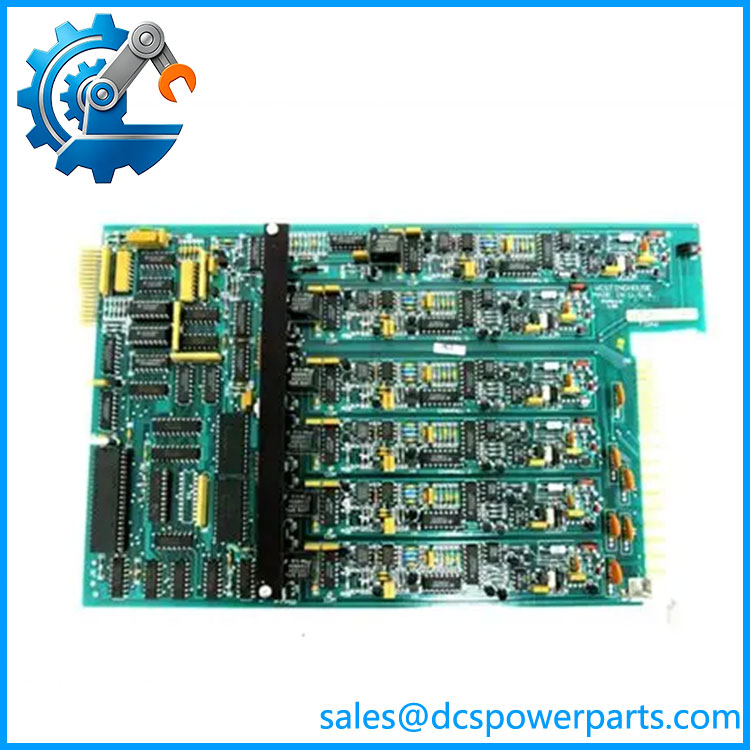
7379A31G03
Product Introduction
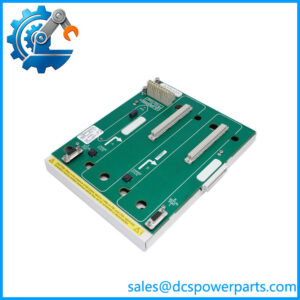
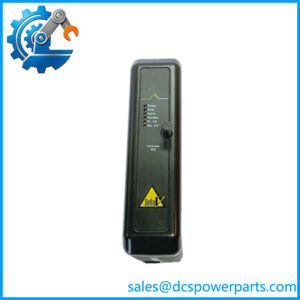
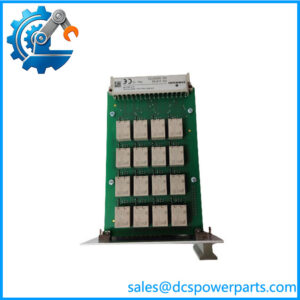
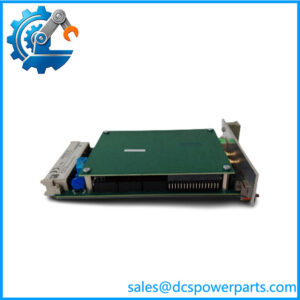
The Emerson / Westinghouse 7379A31G03 is a Q-Line QAW analog input point card intended for compatible legacy control-system installations. Its listed 0–10 VDC input range makes it suitable for applications where field instrumentation or signal-conditioning equipment provides a corresponding voltage output. The card’s actual role depends on the installed rack, field wiring, and control-system configuration.
For maintenance engineers, the main concern is electrical compatibility. A voltage-input card must not be assumed to accept a current-loop signal, and a visually similar card with another suffix may have a different input range. Before replacing the 7379A31G03, confirm the board label, field signal type, terminal assignments, rack compatibility, and the control-system documentation.
Application Scenarios & Field Pitfalls — The Engineer’s Perspective
Engineering Pain Point
Legacy analog input cards can be difficult to replace when the original documentation is incomplete. The field signal may appear correct at the transmitter but still be interpreted incorrectly if the replacement card has a different input range or if the control-system scaling does not match the actual signal.
Typical Applications
- Legacy DCS signal acquisition: Monitoring voltage signals from compatible field instruments or signal-conditioning devices.
- Process measurement: Acquiring voltage outputs used for process variables such as pressure, temperature, level, or flow, where the instrumentation design specifies a compatible voltage signal.
- Control-system maintenance: Replacing a failed QAW card while retaining the existing Q-Line architecture.
- Outage and obsolescence planning: Identifying a correctly configured spare card for a legacy control installation.
These are typical analog-input use cases, not confirmation of the specific field instruments connected to an individual card.
Technical Pitfalls to Avoid
- Confirm the input range. The G03 variant is listed for 0–10 VDC. Do not assume that it supports 4–20 mA, bipolar voltage, or another signal type.
- Check the signal-conditioning arrangement. If the field device outputs current, verify whether a compatible external converter or interface is present. Do not wire a current loop directly to a voltage input without an approved design.
- Verify the terminal assignment. Compare the existing wiring against the correct Q-Line documentation. Similar card designations do not guarantee identical terminal layouts.
- Review scaling and engineering units. Confirm the relationship between the input voltage and the configured process range. A correctly functioning card can still produce incorrect displayed values if the scaling is wrong.
- Confirm rack compatibility. Verify the Q-Line rack, slot, backplane connection, and associated hardware before inserting a replacement.
- Inspect connectors and board condition. Look for damaged contacts, corrosion, contamination, and signs of overheating. A visual inspection does not replace the required electrical checks.
- Do not assume undocumented performance figures. Input accuracy, resolution, impedance, filtering, and channel isolation must be checked against the applicable manual before using the card for precision measurement or safety-related functions.
- Test the complete signal path. After replacement, verify representative input values, controller diagnostics, configured scaling, alarms, and downstream control behavior according to the site’s approved procedure.
Related Products
The following Q-Line models are useful for comparison within the same legacy card family. They are not confirmed direct replacements for 7379A31G03.
- 7379A31G01 — QAW G01: Related QAW analog input card; verify its input specification.
- 7379A31G02 — QAW G02: Related QAW variant; confirm electrical characteristics before substitution.
- 7379A31G04 — QAW G04: Listed for 0–20 mA analog input; different signal range and interface requirements.
- 7379A31G05 — QAW G05: Listed for 0–20 mA input, with a catalog description indicating a self-powered configuration.
- 7379A31G06 — QAW G06: Listed for 0–50 mA input; not equivalent to the G03 voltage-input variant.
- 7379A36G01 — QAH G01: High-speed analog input card with a listed ±10 VDC range; a different card type and function.
- 7379A62G01 — QRT family: RTD input amplifier card for a different measurement application.
- 7379A29G01 — QDT family: Q-Line diagnostic test board; not an analog input substitute.
The listed functions and signal ranges are based on catalog descriptions. Confirm complete specifications and any approved replacement relationships against the relevant engineering documentation.
Procurement Note
When sourcing Emerson / Westinghouse 7379A31G03, request a photograph showing the complete model number and board revision. Confirm that the offered card is the G03 voltage-input variant rather than a G04, G05, or G06 current-input version.
Before installation, verify the field signal range, terminal assignments, rack compatibility, controller configuration, and required functional tests. For legacy equipment, request condition details and available test evidence for the actual unit being supplied. Do not infer that a card is new, unused, refurbished, or tested solely from its part number.