Description
Product Introduction
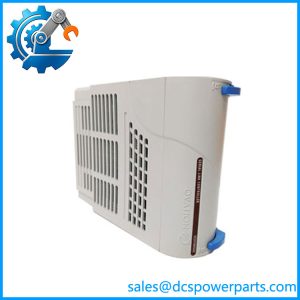
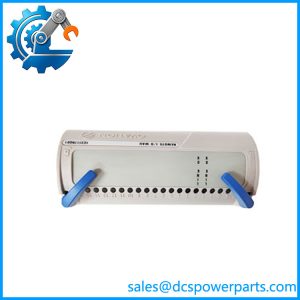
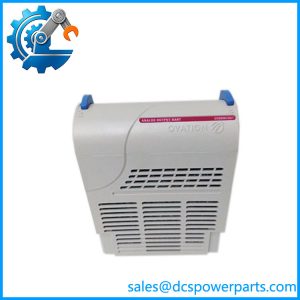
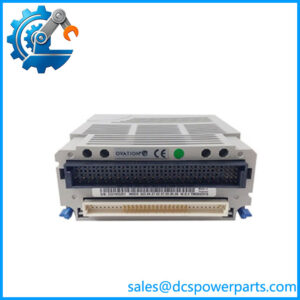
When a remote I/O node drops out of an Ovation distributed control system, the fault can affect communication with multiple local I/O modules rather than a single field signal. The Emerson 1C31203G01 is the remote-node electronics assembly responsible for handling messages between the remote I/O controller and the local I/O subsystem.
The companion 1C31204G01 is identified in the Ovation spare-parts list as the remote-node controller personality module with an 850 nm fiber port. Before replacing the EMOD, check the existing PMOD, fiber connection, node configuration, and controller diagnostics. The correct part number is essential, but it does not by itself confirm that a replacement will work in every installed system revision.
Key Technical Specifications
| Parameter | Specification |
|---|---|
| Model | 1C31203G01 |
| Manufacturer | Emerson / Westinghouse |
| Platform | Ovation DCS |
| Product type | Remote Node Controller EMOD |
| Primary function | Remote I/O message processing and exchange |
| Associated PMOD | 1C31204G01 |
| Fiber interface context | 850 nm fiber port on the associated PMOD |
| System application | Remote I/O node |
| Supply voltage | Verify against the applicable hardware documentation |
| Operating temperature | Confirm from the relevant specification for the installed revision |
| Mounting / installation | Ovation I/O hardware assembly; verify the correct chassis and slot arrangement |
| Condition | Confirm individually for each unit |
The official-style Ovation spare-parts list establishes the module designations and EMOD/PMOD relationship. Detailed processor, capacity, and environmental figures found in some reseller listings are not included here because they have not been independently established from the identified parts documentation.
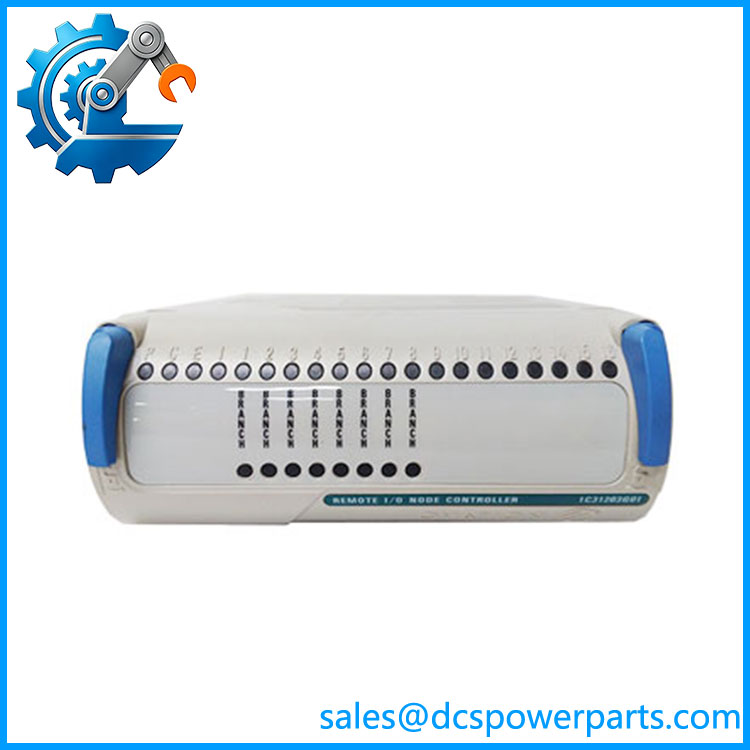
1C31203G01
Application Scenarios & Pain Points
- Remote I/O node replacement: Restore a node where diagnostics point to a failed remote-node electronics module.
- Fiber-link communication troubleshooting: Check the fiber path, connectors, and the associated 1C31204G01 PMOD before concluding that the EMOD itself has failed.
- Plant maintenance and spare planning: Keep the complete node configuration documented, including the EMOD, PMOD, hardware revision, and installed system version.
- Intermittent node faults: Correlate node alarms with fiber-link status, power conditions, and I/O communication diagnostics before replacing multiple modules unnecessarily.
Related Products
These models are related to the Ovation I/O platform but serve different functions; they should not be treated as direct substitutes.
- 1C31204G01 — Remote Node Controller PMOD with 850 nm fiber port; the closest companion part to the 1C31203G01.
- 1C31166G02 — Link Controller EMOD with R1120 CPU; a different communication-controller function.
- 1C31179G02 — Four-channel Media Attachment Unit EMOD.
- 1C31181G02 — Four-channel, 850 nm Media Attachment Unit PMOD.
- 1C31219G01 — 16-channel relay output module assembly.
- 1C31224G01 — Eight-channel, 14-bit analog input EMOD for 4–20 mA current signals.
- 1C31227G01 — Eight-channel analog input current PMOD.
- 1C31122G01 — 16-channel digital output EMOD, specified for 5–60 VDC.
- 1C31194G03 — Valve positioner EMOD variant for Ovation 3.5 and later systems.
The listed functions and revision notes are drawn from the Ovation spare-parts documentation. Confirm the required system revision and module pairing before substituting any related part.
The Engineer’s Guide: Field Pitfalls to Avoid
Pitfall 1 — Replacing only the electronics module without checking its PMOD
The remote-node EMOD and its fiber-port PMOD are distinct assemblies. Confirm that the installed 1C31204G01 and fiber interface are compatible with the replacement arrangement.
Pitfall 2 — Treating a fiber fault as an EMOD failure
Inspect connector condition, fiber routing, link status, and node diagnostics. A communication fault elsewhere in the path can produce symptoms similar to a failed node controller.
Pitfall 3 — Accepting unverified condition or revision claims
Ask for photographs of the actual module label, full part number, revision markings, and connectors. For repaired or refurbished stock, request the test scope and written warranty terms. “Tested” should mean more than visual inspection if the application depends on reliable remote I/O communication.
Q1: What is the Emerson 1C31203G01 used for?
It is the remote-node controller electronics module in an Ovation DCS remote I/O subsystem. Its function is to handle message exchange between the remote I/O controller and local I/O modules.
Q2: Which PMOD is associated with the 1C31203G01?
The Ovation spare-parts list identifies 1C31204G01, the Remote Node Controller PMOD with an 850 nm fiber port. Confirm the installed hardware configuration before ordering.
Q3: Is the 1C31203G01 an analog or digital I/O card?
No. It is a remote-node controller EMOD. Dedicated analog input, digital input, and output assemblies have separate part numbers and functions.
Q4: Can it be used as a direct replacement in any Ovation system?
Not without checking the installed configuration. Verify the EMOD/PMOD pairing, node architecture, hardware revision, and system documentation. Matching the model number is necessary, but it is not a complete compatibility check.
Q5: What should be checked if the node does not communicate after replacement?
Check module seating, power and status indications, fiber connections, the companion PMOD, and controller diagnostics. Compare the node configuration with the plant’s approved records before changing software or replacing further hardware.
Q6: How can I verify whether a replacement is genuinely tested?
Request the unit’s identification photographs, condition declaration, and test report where available. For a refurbished unit, ask whether testing included node communication or only basic electrical checks.
Q7: What is the expected lead time?
Lead time depends on the actual stock condition, testing requirements, and availability of the exact revision. Obtain written confirmation of the specific unit’s availability, dispatch estimate, and warranty before planning a maintenance window.