Description
Product Introduction
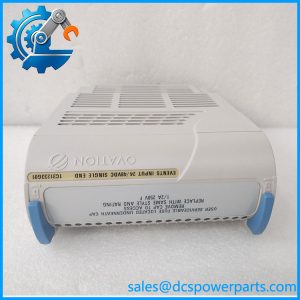
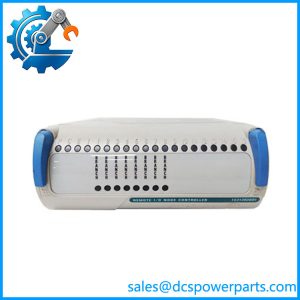
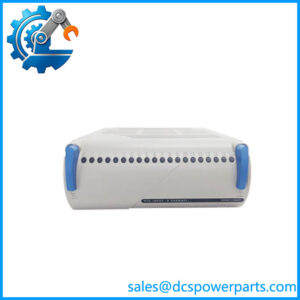
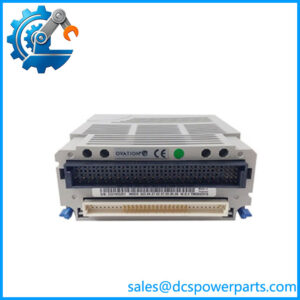
When a legacy Ovation system loses communication with a serial-connected device, the fault may involve the link controller, its personality module, port configuration, or external wiring. The Emerson 1C31166G02 is identified in Emerson’s Ovation spare-parts documentation as an EMOD assembly, link controller (R1120 CPU). It is a communication component, not a conventional analog input or digital output module.
Before ordering a replacement, check the host CPU architecture, the installed EMOD and PMOD combination, and the required serial interface. Do not assume that every 1C31166G02 listing includes the same personality module or supports the same field-device connection.
Key Technical Specifications
| Parameter | Details |
|---|---|
| Manufacturer | Emerson / Westinghouse |
| Model | 1C31166G02 |
| Product type | EMOD assembly, link controller |
| System platform | Ovation DCS |
| Associated CPU | R1120 |
| Primary function | Serial-link communication control |
| Module architecture | EMOD; compatible personality-module configuration must be verified |
| Programming port | RS-232 is reported in supplier documentation |
| Application port | Depends on the installed configuration; RS-485/RS-422 variants are reported |
| Maximum data rate | Configuration-dependent; confirm from the applicable manual |
| Supply voltage | No reliable model-specific value confirmed |
| Operating temperature | Supplier listings commonly report 0°C to 60°C; verify against official documentation |
| Protection rating | Not confirmed |
| Installation | Compatible Ovation hardware assembly; verify the correct slot and module combination |
| Condition | Confirm with the supplier |
Emerson’s spare-parts document provides the clearest identification of the module as an R1120 CPU link-controller EMOD. Detailed serial-interface and operating specifications should be confirmed for the exact installed configuration.
Application Scenarios & Pain Points
- Serial device integration: Connects supported serial equipment to an Ovation control system through the configured application port.
- Legacy DCS maintenance: Provides a replacement option when an installed R1120-based link controller fails.
- Communication fault diagnosis: Helps address controller-side faults after checking external cabling, port settings, and the associated PMOD.
- Spare-parts planning: Maintaining the correct controller and personality-module combination can reduce delays during an unplanned shutdown.
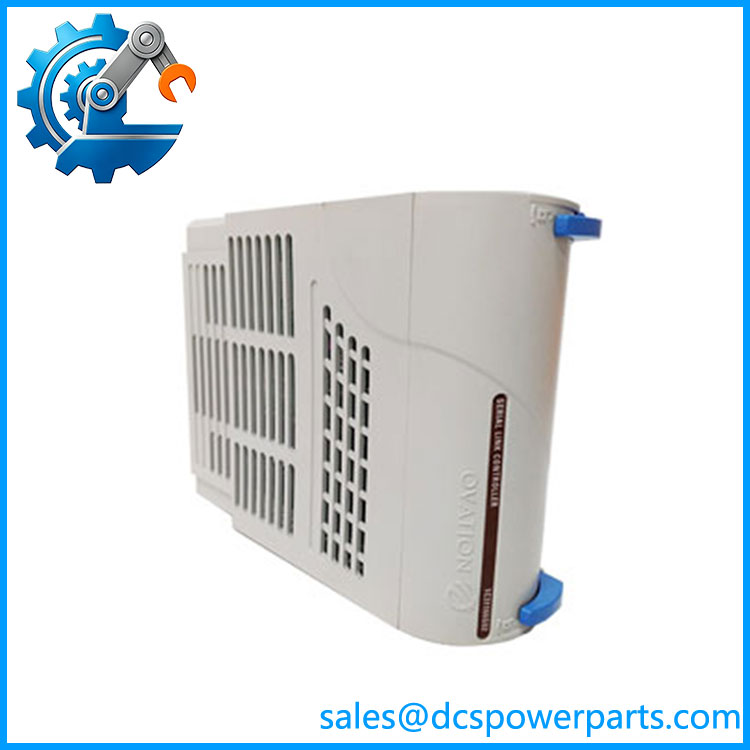
1C31166G02
Related Products
These products are associated with the broader Ovation platform or serial-link architecture. They are not confirmed drop-in replacements for 1C31166G02.
- 1C31179G02 — EMOD assembly, media attachment unit (4-channel), according to Emerson’s spare-parts list.
- 1C31181G02 — PMOD assembly, media attachment unit (4-channel, 850 nm).
- 1C31116G04 — PMOD assembly for 8-channel analog voltage input with temperature-sensor support.
- 1C31122G01 — EMOD assembly, 16-channel digital output, 5–60 VDC.
- 1C31203G01 — EMOD assembly, remote node controller.
The Engineer’s Guide: Field Pitfalls to Avoid
Pitfall 1 — Treating the EMOD and PMOD as interchangeable
The link controller is identified as an EMOD assembly, and the personality module may determine the applicable interface.
- Record both installed module numbers before removal.
- Confirm the required PMOD and its interface type.
- Check the host R1120 architecture and applicable hardware documentation.
Pitfall 2 — Assuming all serial ports use the same electrical standard
RS-232, RS-422, and RS-485 are not interchangeable simply because they carry serial data.
- Verify the port pinout, signal standard, wiring arrangement, and device settings.
- Check whether the application uses two-wire or four-wire RS-485.
- Confirm baud rate, parity, stop bits, and protocol configuration before commissioning.
Pitfall 3 — Replacing hardware before isolating the communication fault
The fault may originate in external cabling, configuration, the connected device, or the personality module.
- Save the original configuration where possible.
- Inspect connectors and serial wiring.
- Test communication using the approved site procedure after replacement.
Q1: What is the Emerson 1C31166G02?
It is an Ovation DCS EMOD link-controller assembly associated with the R1120 CPU architecture. Emerson’s spare-parts documentation identifies it by this function.
Q2: Is 1C31166G02 an analog input module?
Emerson’s spare-parts list identifies it as a link controller, not an analog input module. Be cautious of listings that classify the same part number as an AI, DI, or analog output module without supporting documentation.
Q3: Which communication protocol does it support?
The exact supported protocol depends on the application configuration and associated interface hardware. Supplier listings mention serial interfaces, but the protocol and electrical standard should be checked against the original system documentation.
Q4: Can I replace it with another Ovation serial communication module?
Not automatically. Verify the CPU compatibility, EMOD/PMOD combination, port configuration, and approved replacement reference.
Q5: What should I provide when requesting a quotation?
Provide the complete part number, label photographs, host Ovation controller details, associated PMOD number, and the required serial interface.
Q6: How can I verify the condition of a replacement?
Request current photographs, written condition disclosure, and available inspection or functional-test records. Confirm whether the unit is new, unused surplus, or refurbished.
Q7: What warranty and lead time apply?
These depend on the supplier’s stock and commercial terms. Request written confirmation of dispatch timing, warranty coverage, return conditions, and testing documentation before ordering.